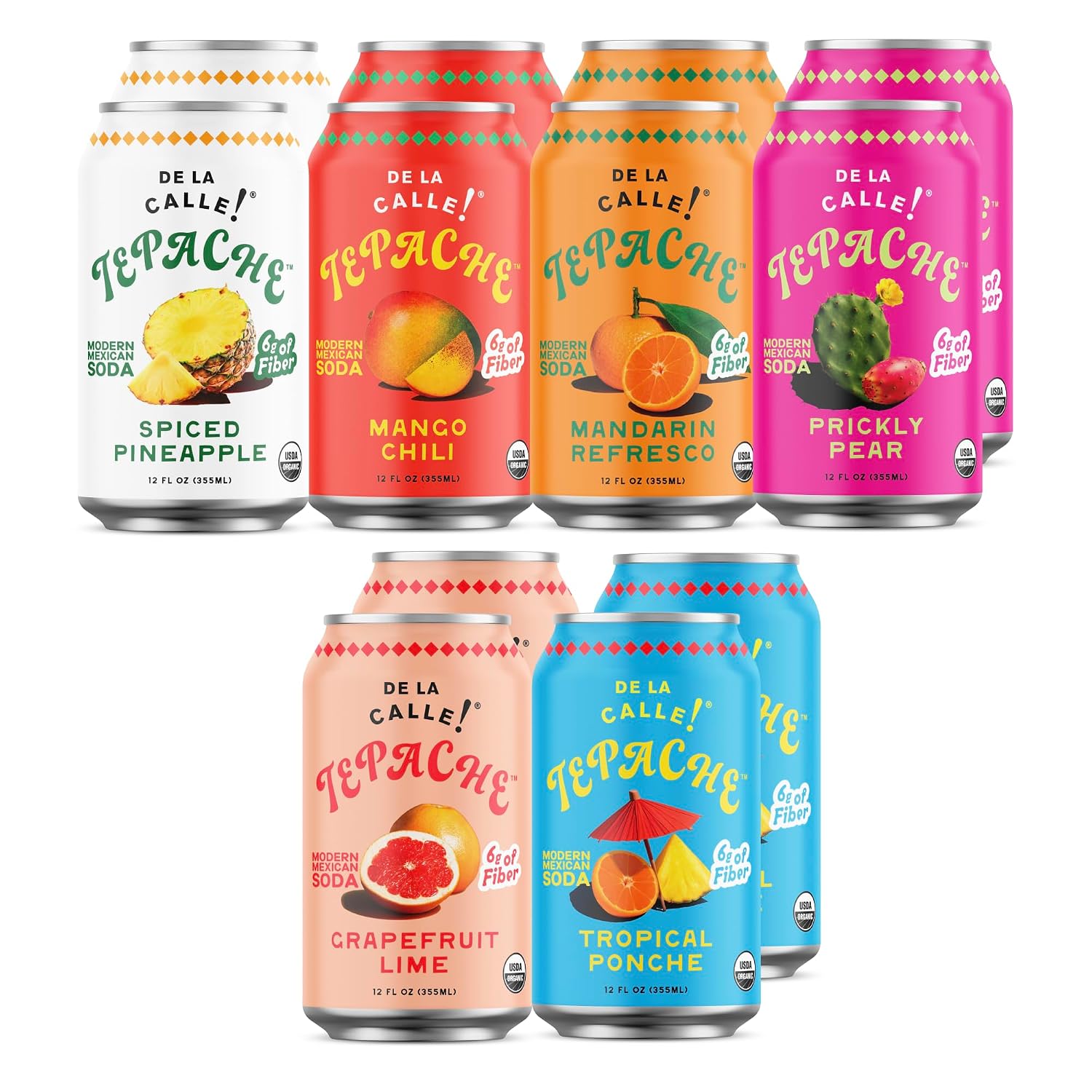
If you’ve walked past a can labeled “tepache” at a specialty grocery and had a moment of honest confusion, you’re not alone. Tepache (teh-PAH-cheh) is a fermented drink from Mexico, traditionally made from pineapple rinds, brown sugar, and spices. Think of it as the middle ground between a fruit soda and a very mild kombucha — lightly fizzy, subtly tangy, and far more complex than its ingredient list suggests. It’s been made in Mexican homes for centuries, but in the past few years it’s crossed over into the American craft beverage market in a big way, led by brands like De La Calle. This article is for buyers who’ve already heard the buzz, maybe sampled a can or two, and are now asking the harder questions: Is it worth buying in volume? How does it stack up against other small-batch fermented sodas? And where do you actually buy this stuff reliably? We’ll walk through all of it.
| EDITOR'S PICKDublin Bottling Works Craft Soda | Mid-tierWild Bill's 4 Flavor Craft Soda… | Budget pickFun Times Soda Pop Variety Pack | |
|---|---|---|---|
| Pack size | 12 Pack | — | 12 Pack |
| Bottle size | — | — | 12 oz |
| Variety | Assorted | 4 flavors | — |
| Sweetener | Pure cane sugar | Pure cane sugar | Real cane sugar |
| Caffeine free | — | ✓ | — |
| Gluten free | ✓ | ✓ | — |
| Price | $44.95 | $33.99 | $29.99 |
| See on Amazon → | See on Amazon → | See on Amazon → |
What Makes Fermented Sodas Different — and Why It Matters for Buyers
The term “fermented soda” covers more ground than it looks. At the practical level, it means the carbonation and flavor development happen through a biological process — wild yeasts or added cultures consuming sugars — rather than through forced carbonation alone. The result is a flavor profile with more moving parts: residual fruit character, mild acidity, and a depth that shelf-stable cane-sugar sodas rarely achieve.
This is the exact territory VinePair explored in their 2023 piece on tepache’s mainstream crossover, noting that the drink’s natural fermentation gives it a “funkiness that reads as complexity to the adventurous drinker.” Bon Appétit’s 2022 overview of the category made a similar point, comparing the flavor arc of a well-made tepache to stone fruit that’s just begun to caramelize — sweet upfront, tart in the middle, warm on the finish.
For buyers, this matters in two concrete ways. First, fermented sodas command a premium that the flavor actually justifies — you’re not paying extra for a marketing claim. Second, that biological process introduces variability. Batch consistency is the central quality-control challenge across every fermented soda brand, and it’s the thing that separates a repeat-purchase product from a one-time curiosity.
By the Numbers
| Format | Price Range (2026) | Best For |
|---|---|---|
| De La Calle 12-pack variety | $28–$36 | Discovery, gifting, bar use |
| Wild Bill’s 12-flavor craft pack | $38–$48 | Variety, party/event spreads |
| Rocky Mountain Soda 12-pack | $50–$58 | Premium single-flavor investment |
| Dublin Bottling Works 12-pack | $30–$42 | Nostalgia buyers, gift sets |
De La Calle Tepache: The Category Anchor
De La Calle is the brand that put canned tepache on the American radar, and it earns that position. Their production scales the traditional formula — fermented pineapple, piloncillo (unrefined cane sugar), cinnamon, and clove — into a consistent, commercially packaged product without stripping out the character.
The variety pack is the right starting point. Across aggregated buyer reviews, the tamarind lime flavor is the consistent overperformer. Multiple reviewers have noted, with evident surprise, that it delivers something close to a natural-Coke flavor profile — a striking comparison that signals the blend of sweet, tart, and earthy notes is hitting a deeply familiar register. That’s not a marketing claim; it’s a pattern that surfaces repeatedly in honest purchase reviews.
The flavors are calibrated for different use cases. The classic pineapple reads as the most versatile mixer. The mango chili skews spicy-forward and performs well alongside grilled food or in casual outdoor settings. The tamarind lime is the one reviewers reach for when they want something that feels substantive without being heavy.
The DIY objection is real and worth taking seriously. One documented buyer response to tepache is: “I love this, but I know I could make it at home for almost nothing.” That’s not wrong. Tepache is genuinely among the most accessible ferments in the DIY repertoire — pineapple rind, water, piloncillo, a few spices, and 24 to 48 hours. Eater’s 2024 craft soda analysis noted that the category’s biggest retention challenge is buyers who convert from purchase to home production once they understand the process.
Here’s the honest decision frame: if you’re buying for personal consumption and have the time and inclination to ferment, DIY is a legitimate path and we won’t pretend otherwise. If you’re buying for entertaining, gifting, stocking a bar program, or you simply want batch consistency without the babysitting, De La Calle solves a real problem. The can is also shelf-stable, travels well, and photographs cleanly — practical advantages that matter when you’re managing an event or a back bar.
Fun Times Soda: The Parent-Demographic Sleeper
Fun Times Soda occupies a specific and interesting niche. It draws buyers who are thinking about what goes in their kids’ drinks but who are also tired of the functional-fiber marketing arms race. The brand’s pitch isn’t “prebiotic” or “adaptogen-infused” — it’s closer to “cane sugar, real flavor, nothing weird.”
That positioning resonates with a buyer cohort that overlaps significantly with the Olipop and Poppi audience but comes at the category from a different angle. Where prebiotic soda buyers often lead with the health claim and accept the flavor, Fun Times buyers lead with the flavor claim and appreciate the cleaner label as confirmation rather than primary motivation.
Per Tasting Table’s 2025 craft soda roundup, the brand scores consistently well on “would buy again” metrics, particularly among buyers who found Olipop too aggressively functional-tasting. It’s worth noting that “cleaner label” doesn’t automatically mean lower sugar — check the panel if that’s a priority — but it does mean you’re not navigating chicory root fiber, inulin, or botanical additives that some buyers find divisive.
For buyers stocking a home event or a family gathering where the age range runs wide, Fun Times is a genuinely useful middle-ground option: interesting enough for adults, approachable enough for kids, and unlikely to generate complaints from either end of the table.
Rocky Mountain Soda and the Consistency Problem
Rocky Mountain Soda sells at a significant premium — over $50 for a 12-pack at most specialty retailers. At that price, the quality-control tolerance is essentially zero. And there is a documented quality-control problem here that buyers should factor into their decision.
The pattern in buyer reviews is consistent enough to flag clearly: a buyer opens the first bottle and is genuinely impressed — complex, well-crafted, worth the price. They open the second or third bottle from the same case and find the flavor profile has shifted sharply, with one buyer describing the difference as tasting like “bad medicine.” This isn’t a rounding error in reviewer sentiment; it’s a specific, repeated complaint that points to batch variability at the production level.
Fermented beverages are more susceptible to this than conventionally carbonated sodas, because the living cultures involved respond to temperature, shipping conditions, and time in ways that a shelf-stable cane-sugar product doesn’t. Rocky Mountain hasn’t publicly addressed this issue in any documentation reviewed for this piece.
The decision rule here is direct: if you’re buying a single four-pack to try, the risk is manageable. If you’re buying a 12-pack as a gift or for a bar program where consistency is expected, Rocky Mountain’s current quality-control record is a meaningful risk at this price tier. Other premium craft options in the same range offer more predictable outcomes.
Wild Bill’s and Dublin Bottling Works: Volume Value and Nostalgia
Wild Bill’s 12-flavor variety packs are one of the better tools for mapping a group’s taste preferences before you commit to larger quantities. The packs are broad by design, and broad means some flavors will land and some won’t. The orange flavor is the documented weak link — this complaint appears in reviews consistently enough to call it a category-wide pattern rather than a Wild Bill’s-specific flaw. Orange is simply a difficult flavor to execute at craft scale: the natural citrus oils oxidize quickly, and the flavor benchmark (a fresh-squeezed orange) is one most buyers carry clearly in their sensory memory. When it misses, it misses obviously.
The value case for Wild Bill’s is strongest when you’re running an event tasting, stocking a variety for a party, or trying to identify which two or three flavors to reorder in volume. Buy the variety pack first, identify your winners, then source those specific flavors in larger quantity. That’s the efficient use of this product.
Dublin Bottling Works is doing something different. The brand carries the most concentrated nostalgia signal of any product in this cluster — buyers describe it in terms of sensory memory, the soda they had as a child, the taste of a specific place and time. That’s a powerful emotional purchase driver, and Dublin leans into it deliberately through its branding, glass bottle formats, and flavor roster.
For gifting, particularly to buyers over 40 who grew up with regional bottlers, Dublin is a strong choice. The emotional resonance is real and consistent across reviews. For buyers who prioritize functional complexity or innovative flavor development, it’s not the right fit — it’s not trying to be. Dublin is doing what it does with intention, and the buyer who understands that tends to be satisfied.
Frequently Asked Questions
What does De La Calle Tepache actually taste like — is it sweet, sour, or fizzy like soda? It’s all three, but in a more balanced way than that list implies. The sweetness is lighter than conventional soda, the sourness is mild and fruity rather than sharp, and the carbonation is softer. Buyers consistently describe it as closer to a sparkling juice or a mild kombucha than a traditional soda.
Is De La Calle Tepache alcoholic even though it’s fermented? No. The fermentation process produces trace amounts of alcohol, but De La Calle is produced and regulated as a non-alcoholic beverage. The ABV is below 0.5%, which is the legal threshold for alcohol content in the United States — the same threshold that applies to many fruit juices and kombucha products.
Where can I buy De La Calle Tepache if it’s not at my local grocery store? Distribution is still spotty in many markets. The most reliable sourcing path that buyers document is online retail — specifically multipack orders, which also bring the per-can price down meaningfully from specialty market single-can pricing.
Is Fun Times Soda actually healthier than regular craft soda or just cleaner-labeled? Primarily cleaner-labeled. The brand avoids functional additives and unusual sweeteners, but it uses cane sugar, so the caloric and sugar content is comparable to other craft sodas. The “healthier” framing is more about what’s absent than what’s present.
Why does Rocky Mountain Soda get complaints about taste inconsistency between bottles? Fermented beverages are sensitive to temperature fluctuation and time in transit. Without tight cold-chain controls, the active cultures in the drink can continue fermenting unevenly, producing flavor variation between bottles in the same case. This is an industry-wide challenge, but Rocky Mountain’s premium price point makes it more consequential.
Are Wild Bill’s craft sodas worth the premium price over supermarket cane-sugar sodas? For variety and discovery, yes. For daily drinking of a single flavor you already know you love, probably not — you’d be better served finding that specific flavor from a brand that produces it as a flagship. Wild Bill’s earns its price in the variety-pack context, not as a per-bottle comparison against a focused craft producer.