If you’ve ever driven through Milwaukee, spotted a Sprecher root beer at a gas station, and thought why can’t I get this at home — this article is for you. Regional craft sodas are small-batch, often independently owned carbonated beverages made with real cane sugar, fruit extracts, or spice blends that you won’t find in the national soda aisle. They’re the opposite of the big two: short production runs, strong regional followings, and flavor profiles that reward paying attention. The catch is distribution — most of these brands sell within a few hundred miles of their brewery or bottling facility. Getting them shipped to your door costs real money and requires knowing which brands are actually worth the freight premium. That’s exactly what this guide works through.
If you’re already buying craft sodas occasionally and want a sharper framework for deciding when to pay for shipping and which brands justify the splurge, read on. We’ve built this around the brands reviewers and enthusiasts consistently name — and we’ll give you the decision math at the end.
| EDITOR'S PICKUltimate Cream Soda Sampler - P… | Mid-tierSprecher Brewing Company Best S… | Budget pickStubborn Soda | |
|---|---|---|---|
| Pack count | 6 | 12 | 12 |
| Can size | 12 oz | 16 fl oz | 12 fl oz |
| Flavor count | — | 4 | 3 |
| Flavors listed | Cream soda | Root Beer, Cream Soda | — |
| Gift box | ✓ | — | — |
| Packaging | — | Cans | Cans |
| Price | $39.97 | $37.49 | $22.97 |
| See on Amazon → | See on Amazon → | See on Amazon → |
Why Regional Craft Soda Commands a Premium (and When It Doesn’t)
The short answer is ingredients and volume. National brands carbonate at industrial scale, use high-fructose corn syrup or proprietary sweetener blends, and optimize for shelf stability over months. Craft producers — especially those doing fewer than 50,000 cases annually — are more likely to use cane sugar, honey, or pure fruit juice, and to carbonate at pressures that produce a different mouthfeel: softer, rounder, less aggressive.
VinePair’s craft soda coverage consistently notes that the flavor gap between regional and national brands is most pronounced in root beer, cream soda, and ginger varieties — categories where the spice and extract quality matters enormously. A mass-market root beer is built around a standardized sassafras-adjacent flavor compound. A small-batch root beer from a producer like Sprecher is using fire-brewed production with actual honey and a proprietary spice blend — and drinkers reliably pick up the difference.
The premium compounds when you add shipping. A 12-pack of Sprecher root beer retails around $18–$22 when you can find it locally. Shipped to the East Coast via standard ground, that same pack lands at $35–$50 depending on the retailer and your location. That math only works if the product delivers something you genuinely can’t replicate at your local grocery store — and for a meaningful subset of craft sodas, it does.
The decision-frame question isn’t is this soda good? It’s is this soda different enough from what I can buy within 10 miles to justify the freight cost? We’ll come back to that at the end.
The Brands Worth Knowing
Sprecher Brewing (Milwaukee, Wisconsin)
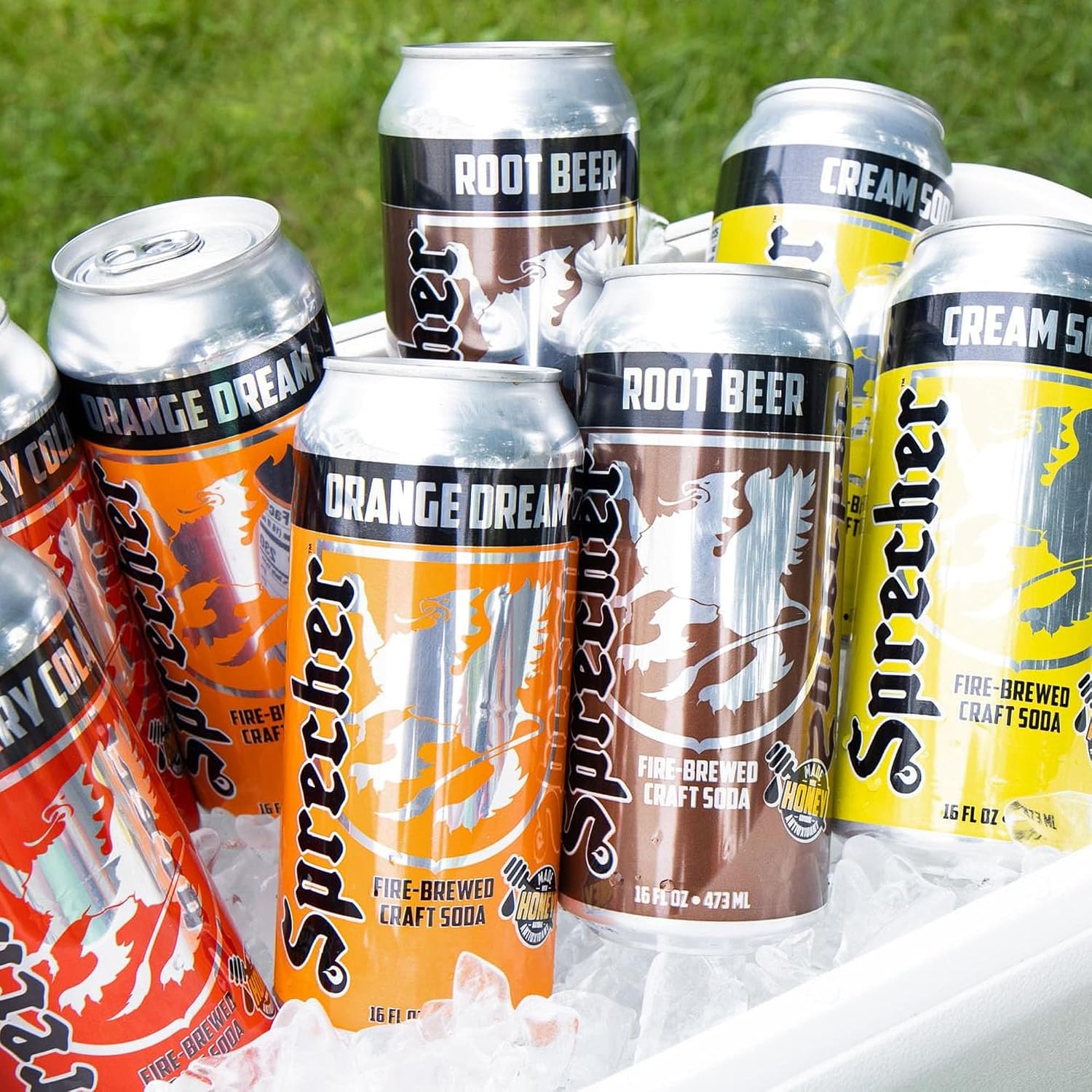
Sprecher is the brand that most often converts skeptics. Founded in 1985 primarily as a craft brewery, Sprecher has built one of the most recognized craft soda lines in the Midwest — root beer, cream soda, orange dream, and a ginger ale among them. The root beer uses a fire-brewing process (direct flame under the brew kettle, not steam-jacketed heat exchangers) and a honey-forward sweetener blend that reviewers across Serious Eats and Tasting Table consistently call out as a differentiator.
What makes Sprecher worth shipping specifically: the root beer is genuinely hard to replicate in the national market. Reviewers at Serious Eats note that Sprecher’s root beer has a vanilla-and-honey depth that puts it in a separate category from both mainstream brands and many other craft competitors. The cream soda earns similar praise — VinePair’s craft soda roundup has named it among the top U.S. cream sodas multiple times.
Where to buy: Sprecher ships direct through their website in mixed variety packs and single-flavor cases. Goldbelly stocks Sprecher periodically, particularly around fall and holiday seasons. For Subscribe & Save bulk purchasing on core flavors, check the brand’s own DTC storefront before defaulting to third-party resellers, where markup varies significantly.
Best use case: Home bar setup, gifting, or stocking up for an event where you want a root beer float station that actually impresses people.
Wild Bill’s Olde Fashioned Soda Pop (Various U.S. Regional Presence)
Wild Bill’s is a different category of regional craft: it’s built primarily around the draft soda experience — kegs and fountain setups at fairs, carnivals, and specialty food events — with a bottled line that’s expanded meaningfully over the past decade. The brand covers a wide flavor spectrum (birch beer, sarsaparilla, black cherry, orange cream) and leans hard into the nostalgia angle with vintage-style labeling and cane sugar sweetening across the lineup.
Where Wild Bill’s earns its reputation is in the sarsaparilla and birch beer categories specifically. Food & Wine’s coverage of the craft soda movement calls out birch beer as one of the most region-locked flavors in American soda culture — it’s a Northeast and mid-Atlantic staple with almost no national distribution. Wild Bill’s birch beer is one of the more accessible ways for buyers outside that corridor to experience the category.
The tradeoff: Wild Bill’s bottled line is less consistent in availability than Sprecher. Stock levels on third-party platforms fluctuate, and shipping a mixed case requires more planning. Operators sourcing for bar programs should contact Wild Bill’s directly about wholesale or event accounts, which offer better per-unit economics than retail shipping.
Where to buy: Beverages Direct carries Wild Bill’s periodically. The brand’s own website lists regional distributors and handles direct-to-consumer orders for cases and variety packs.
Best use case: Variety packs for parties or events; birch beer specifically for anyone who wants to understand the flavor without committing to a full regional sourcing project.
Other Small-Batch Names Making Noise in 2026
Bruce Cost Ginger Ale (Chicago, Illinois): Bruce Cost has been a fixture in premium soda conversations for years, and its unfiltered, cloudy ginger ale remains a genuine benchmark in the category. Tasting Table’s ginger ale rankings have consistently placed it at the top tier alongside Fever-Tree, but Bruce Cost is meaningfully different — it’s a pure ginger soda, not a mixer-optimized product, and it carries real fiber and pulp from the ginger root. Available through Beverages Direct and select DTC channels.
Boylan Bottling (Hackensack, New Jersey): Boylan is technically a mid-sized regional brand at this point, but its cane sugar birch beer, creme, and orange flavors still punch well above their price tier. Eater’s coverage of bar-menu craft sodas has cited Boylan as the go-to for operators who want a craft-adjacent product at a price point that doesn’t break food-cost math. Wide availability on Amazon makes it one of the easiest entry points in this guide.
Dry Sparkling (Seattle, Washington): Dry occupies a distinct niche — it’s positioned as a culinary soda, lighter in sweetness and built to complement food the way a sparkling wine might. Reviewers at VinePair have called Dry’s cucumber and vanilla flavors “genuinely useful at the table in a way that most sodas aren’t.” At $30–$60 per 12-pack, it’s the highest price-per-unit brand in this guide. The value proposition only holds if you’re using it as a mixer or pairing with food — straight-sipping, the low sweetness will frustrate anyone expecting a traditional soda experience.
By the Numbers: Craft Soda Shipping Math
| Brand | Avg. Retail (12-pack, local) | Shipped to East Coast | Premium Over Local |
|---|---|---|---|
| Sprecher Root Beer | $18–$22 | $38–$52 | ~90–130% |
| Wild Bill’s Birch Beer | $16–$20 | $32–$46 | ~100–130% |
| Bruce Cost Ginger Ale | $24–$28 | $38–$48 | ~50–80% |
| Boylan Cane Sugar Variety | $22–$26 | $28–$34 | ~20–35% |
Estimates based on 2026 DTC and third-party platform pricing; shipping costs vary significantly by destination ZIP and carrier.
Boylan’s lower shipping premium is worth noting: because it has the widest distribution and highest volume of the four, carrier rates are better and fulfillment is more optimized. For buyers who are price-sensitive but still want a step up from national brands, Boylan is the lowest-friction entry point.
How to Actually Buy These Without Getting Burned
A few patterns that come up repeatedly in buyer reviews and retailer forums:
Buy in mixed variety packs first. Most of these brands offer mixed cases specifically because they know buyers are discovering them. A 12-bottle variety pack at $28–$40 is a far lower-risk way to audit a brand than committing to a single-flavor case. Sprecher’s mixed packs, in particular, are designed to hit all the flagship flavors in one order.
Factor in weather windows for shipping. Glass bottles and summer heat are a bad combination in transit. Experienced craft soda buyers on forums consistently recommend ordering between September and May if you’re in a warm-climate state and want to avoid the (rare but real) issue of bottles that arrive hot after sitting in a delivery truck. This applies especially to Bruce Cost, whose unfiltered product is more temperature-sensitive than filtered sodas.
Check Goldbelly for curated regional packs. Goldbelly has become a reliable aggregator for regional food and beverage producers, and several craft soda brands use it as their primary DTC channel. The platform handles fulfillment logistics that smaller brands aren’t set up to manage, which reduces the risk of orders being mishandled.
Subscribe & Save economics apply to Boylan, not the others. Boylan’s Amazon availability makes it the only brand in this guide where recurring subscription ordering makes financial sense. The others are better sourced direct or through specialty retailers where stock levels and freshness are more controllable.
The Decision Rule
Here’s the honest framework for deciding whether to pay shipping on regional craft soda:
If you’re buying for personal consumption and the brand makes something you genuinely cannot find within 20 miles — particularly Sprecher root beer, Wild Bill’s birch beer, or Bruce Cost ginger ale — the shipping premium is defensible. You’re paying for access to a product that doesn’t exist at your local price point, not just a marginally better version of something you already have.
If you’re buying for a bar program or home entertaining event, the calculus shifts. A case or two of Sprecher or Bruce Cost as a featured ingredient in a mocktail or mixer lineup earns its keep on the menu — Eater’s bar-menu craft soda coverage consistently notes that named-brand craft sodas create genuine upsell opportunities that anonymous house sodas don’t.
If you’re price-shopping and just want better-than-national craft soda, Boylan is your answer. It’s available on Amazon, the shipping math is mild, and it delivers cane sugar quality without the regional scarcity premium.
If you’re building a variety pack for gifting, Sprecher’s mixed cases are the strongest option in this tier — recognizable brand, broad flavor range, attractive packaging, and a story (Milwaukee, fire-brewed, honey) that lands well with food-curious recipients who haven’t encountered it before.
Regional craft soda rewards patience and intentionality. The brands covered here have earned their reputations over years of consistent production — and the flavor payoff, sourced through the right channel at the right time of year, is real.