If you’ve ever stood in a grocery aisle staring at a wall of cans — LaCroix, Polar, Spindrift all lined up, all claiming to be “naturally flavored sparkling water” — and genuinely wondered whether there’s any real difference between them, you’re in the right place. Sparkling water (plain water that’s been carbonated under pressure, sometimes with natural fruit flavoring added) has become the go-to category for people trying to drink less soda without giving up the fizz and flavor ritual they actually enjoy. These three brands dominate that category, and on the surface they look almost identical: zero sugar, no artificial sweeteners, a fruit name on the front. But reviewers who’ve done side-by-side comparisons consistently report something surprising — they aren’t the same at all, and the differences matter a lot depending on what you’re switching from and what you actually want.
This article lays out those differences honestly. We’ll look at how Spindrift, LaCroix, and Polar compare on flavor delivery, calorie count, carbonation, and price — and give you a clear decision frame for which one belongs in your cart.
| EDITOR'S PICKSpindrift Sparkling Water | Mid-tierSpindrift Sparkling Water | Budget pickPolar Seltzer Water Sampler Var… | |
|---|---|---|---|
| Pack size | 24 cans | 20 cans | 18 cans |
| Flavors | 1 (Lemon) | 4 (Variety) | Sampler variety |
| Real fruit juice | ✓ | ✓ | — |
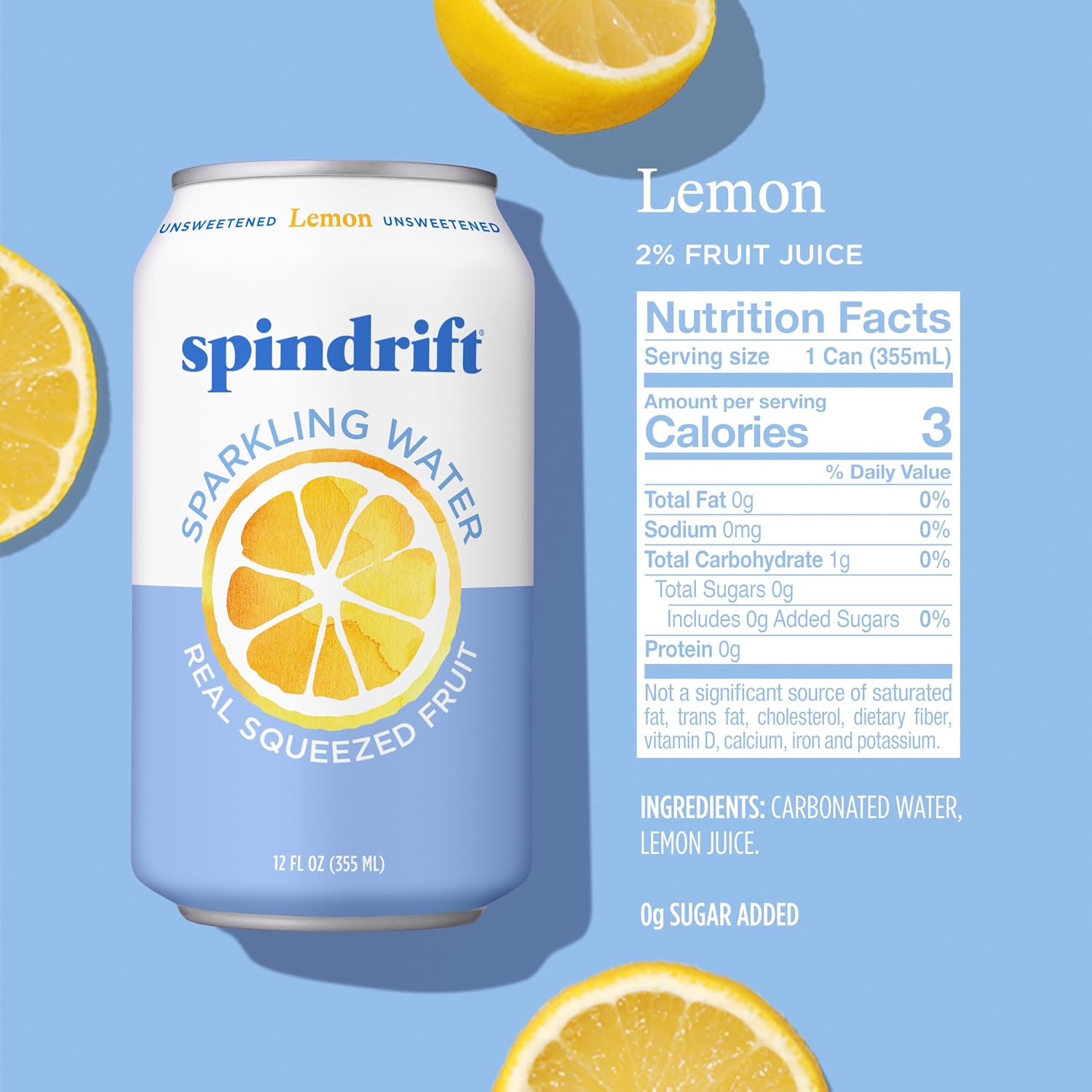
| Calories per can | 3 | — | — |
| Price | $17.60 | $17.34 | $12.99 |
| See on Amazon → | See on Amazon → | See on Amazon → |
The Core Difference: What’s Actually in the Can
This is where the fork in the road happens, and it’s the reason reviewers keep saying Spindrift “surprised” them.
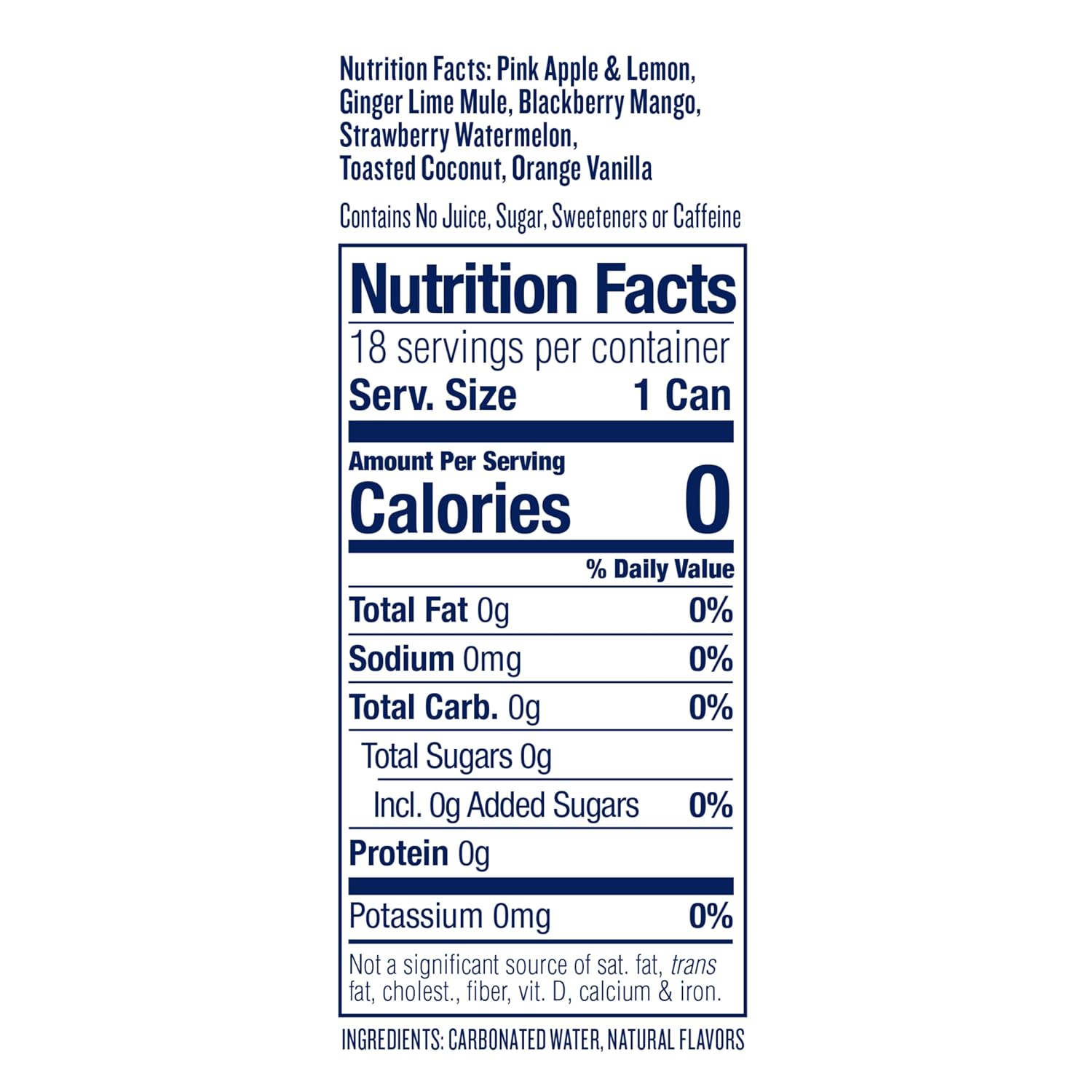
LaCroix and Polar both use natural flavors — the FDA-regulated term that covers a wide range of extraction and concentration methods, provided the flavoring originates from a natural source such as a fruit or plant. The actual fruit content in both brands is functionally zero. What you’re getting is carbonated water flavored with a compound derived from fruit. The result can be genuinely pleasant, but it’s an abstraction of the fruit rather than the fruit itself.
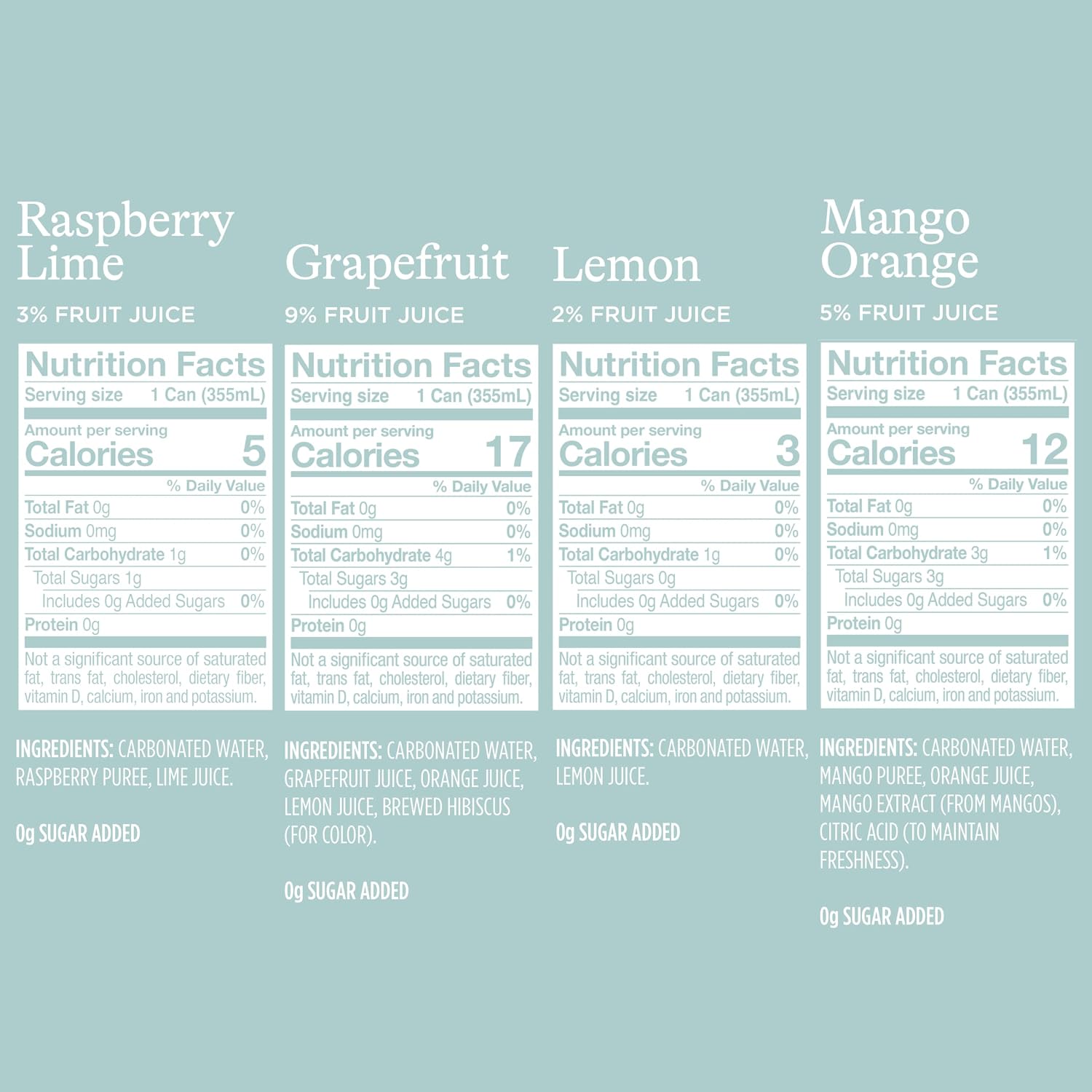
Spindrift does something structurally different: it adds actual squeezed fruit juice — a small amount, ranging from roughly 1–6% depending on the flavor — directly to the carbonated water. That’s what creates the slight cloudiness you’ll notice when you pour a Spindrift into a glass. It’s not a manufacturing flaw; it’s the juice. And it’s also why Spindrift carries calories when LaCroix and Polar do not.
In The Kitchn’s blind sparkling water tasting panel, documented in the article “We Tried 6 Sparkling Waters to Find the Best One,” tasters who assumed sparkling water “all tastes the same” were consistently stopped short by Spindrift’s more immediate, rounded fruit character. The phrase that keeps surfacing across aggregated reviews is some version of “it actually tastes like the fruit.” That’s not marketing language; it’s the predictable sensory outcome of adding real juice.
Brand by Brand: What Reviewers Actually Say
Spindrift
Across sparkling water coverage from Serious Eats (“The Best Sparkling Waters, Ranked”) and Bon Appétit (“The Best Sparkling Waters for Every Occasion”), the pattern is consistent: Spindrift occupies a genuinely different sensory category. It reads closer to a very lightly sweetened juice water than to traditional sparkling water. The Lemon and Grapefruit flavors are routinely called out as the strongest performers — the kind of thing you’d reach for at a restaurant if it were on the menu. The Raspberry Lime generates similarly enthusiastic feedback, with reviewers describing it as “cocktail-adjacent.”
The tradeoff is real, though: Spindrift has calories. The Lemon clocks in at around 9 calories per 12 oz can; the Strawberry sits near 13–17 depending on the batch. For someone tracking macros or managing a medical condition, that gap versus zero-calorie options matters. But for someone switching from regular soda — where 12 oz of a standard cola runs 140–150 calories — Spindrift’s calorie count is barely a rounding error, and the flavor payoff is substantially higher.
Spindrift
$17.60
In stock on Amazon
Check price on AmazonLaCroix
LaCroix is the brand that effectively created the current sparkling water market as most people know it, and its staying power is earned. Tasting Table’s comprehensive flavor ranking, published under the title “Every LaCroix Flavor Ranked Worst To Best,” identifies Strawberry Peach as the standout, and the enthusiasm from reviewers is notably high for a zero-calorie product. The framing that appears in that review is worth noting: reviewers compared it to a non-alcoholic cocktail in the sense that it delivered psychological satisfaction — the sense of drinking something special rather than just drinking water.
That’s an important signal for soda switchers specifically. A lot of the difficulty in reducing soda consumption isn’t just about sugar; it’s about the ritual and the sense of occasion. LaCroix Strawberry Peach threads that needle better than most zero-calorie options, according to reviewer consensus. Pamplemousse (grapefruit) is the brand’s perennial bestseller and is generally described as “classic” — reliable, present, not aggressive. Limoncello and Pastèque (watermelon) generate more divided opinions.
One real LaCroix limitation: carbonation retention. Consumer Reports’ sparkling water taste test coverage, published under the title “Sparkling Water Taste Tests and Ratings,” has flagged carbonation longevity as a meaningful variable across brands, and LaCroix consistently falls toward the lower tier on that dimension. Drink it cold, drink it fast — it’s better that way.
Spindrift
$17.34
In stock on Amazon
Check price on AmazonPolar
Polar’s price point is its most defensible asset. It’s routinely the cheapest of the three in multipack format, sometimes by a meaningful margin, and for households going through a case a week that gap adds up. The flavor lineup is wide — Polar offers dozens of SKUs, including seasonal releases that generate genuine collector interest.
Here’s the honest assessment, though: The Kitchn’s sparkling water comparison, “We Tried 6 Sparkling Waters to Find the Best One,” describes Polar’s flavors as attenuated — further from the source than LaCroix, let alone Spindrift. The image one reviewer reached for was getting the idea of the fruit rather than anything that signals it directly. That’s not a fatal flaw, but it is a real one.
If you are already comfortable drinking plain sparkling water — if you’ve been on this journey for a while and you mainly want fizz with a mild directional note — Polar is perfectly serviceable and the price is genuinely good. If you’re early in the soda-switching journey and you need flavor that meets you partway, Polar is the riskiest of the three for that use case.
The strongest Polar flavors by reviewer consensus are Cranberry Lime and Pomegranate, which are described as more detectable than the brand’s lighter citrus options. If you’re sampling Polar for the first time and you want the best chance at tasting something, start there rather than the Lemon or the Raspberry.
Polar
$12.99
In stock on Amazon
Check price on AmazonBy the Numbers
| Brand | Calories (12 oz) | Fruit Content | Relative Flavor Intensity | Best For |
|---|---|---|---|---|
| Spindrift | 9–17 | Real juice (1–6%) | Highest | Soda switchers, flavor-first buyers |
| LaCroix | 0 | Natural flavors only | Medium | Zero-calorie seekers, ritual drinkers |
| Polar | 0 | Natural flavors only | Lowest | Budget-focused, plain-water converts |
The Soda-Switching Question (The Real Reason Most People Are Here)
Let’s be direct about this, because it’s the unifying motivation across nearly every review in the dataset: most people exploring sparkling water are doing it because they want to drink less regular soda and they need something that doesn’t feel like deprivation.
The honest guidance, based on the aggregated reviewer pattern:
If you drink soda primarily for the sweetness, none of these three will fully satisfy that craving on their own. They are unsweetened. The brain’s reward response to sugar is real, and sparkling water doesn’t replicate it. Functional options that use low-calorie sweeteners alongside prebiotic fiber and real juice close that gap more effectively for sugar-craving soda switchers — Serious Eats’ sparkling beverage coverage, “The Best Sparkling Waters, Ranked,” notes this distinction when sorting products by use case.
If you drink soda primarily for the ritual and the occasion — the cold can, the fizz, the flavor note — LaCroix Strawberry Peach or Spindrift Lemon are very credible substitutes. The ritual is intact; the specific sensory payload is different but satisfying in its own right.
If you drink soda primarily for the carbonation intensity, note that Spindrift and Polar both trend toward medium carbonation in reviewer descriptions, while LaCroix sits toward the lighter end. Heavy-carbonation fans often prefer the mineral-water category (Topo Chico, San Pellegrino) over any of these three — a point Bon Appétit’s sparkling water guide, “The Best Sparkling Waters for Every Occasion,” makes explicitly when sorting by carbonation level.
The Decision Frame
You’re making a trade-off between flavor intensity, calorie neutrality, and price. Here’s how to resolve it:
-
If you’re switching from soda and flavor is the make-or-break variable, Spindrift is the highest-probability win. The calorie count is negligible compared to what you’re coming from, and the juice content creates genuine sensory satisfaction that natural-flavor-only products cannot replicate.
-
If you need zero calories and you want something that still feels special, LaCroix Strawberry Peach is the editorial pick. It overperforms for what it is, and the cocktail-adjacent quality reviewers describe gives it an occasion feel that’s rare in this tier.
-
If you’re already comfortable with plain sparkling water and you’re buying on volume, Polar delivers acceptable results at the best per-can cost. Go for Cranberry Lime or Pomegranate if you want detectable flavor; don’t expect more than a whisper from the lighter citrus SKUs.
-
If you’re buying for a bar program or a catered event and you want sparkling water that reads as premium without requiring explanation, Spindrift wins on both optics and flavor — guests who didn’t specifically ask for sparkling water will reach for it anyway.
Frequently Asked Questions
Does Spindrift actually taste noticeably different from LaCroix or is it marketing? It’s not marketing. The structural difference is real: Spindrift uses actual fruit juice; LaCroix uses natural flavors without juice content. Reviewers who’ve done blind comparisons — including The Kitchn’s tasting panel, “We Tried 6 Sparkling Waters to Find the Best One” — consistently identify Spindrift as noticeably more fruit-forward. The cloudiness in the can is a visual confirmation of the juice content.
How many calories does Spindrift have compared to LaCroix? LaCroix is zero calories across all flavors. Spindrift ranges from roughly 9 calories (Lemon) to 17 calories (Strawberry) per 12 oz can, depending on the fruit’s natural sugar content. For context, a 12 oz regular soda runs 140–150 calories.
Can sparkling water really satisfy a craving for regular soda? Partially, and it depends on what’s driving the craving. If the craving is primarily for carbonation and a flavor ritual, sparkling water — especially Spindrift or LaCroix Strawberry Peach — handles it reasonably well. If the craving is for sweetness, the honest answer is “no” for plain sparkling water, and lightly sweetened functional sparkling options are worth considering instead.
Does LaCroix maintain its carbonation if you leave the can open or drink it slowly? No — this is a documented weakness. Consumer Reports’ sparkling water taste test coverage, “Sparkling Water Taste Tests and Ratings,” consistently notes that LaCroix goes flat faster than average once opened. If carbonation longevity matters to you, Polar holds up somewhat better in this regard, or consider brands with higher initial carbonation intensity like Topo Chico.
Which flavor of Polar seltzer is the strongest and most detectable? By reviewer consensus, Cranberry Lime and Pomegranate are Polar’s most flavor-forward options. The lighter citrus SKUs (Lemon, Lime) are frequently described as faint to the point of being nearly imperceptible. Start with the berry-forward flavors if you want the best chance at tasting something.