If you’ve ever grabbed a case of bubbly water at the grocery store without giving it much thought, you’re in good company. Sparkling water is simply water that’s been carbonated — CO₂ is pumped in under pressure to create bubbles — sometimes with natural flavoring added. It’s become one of the fastest-growing segments in the beverage aisle, and for good reason: it scratches the itch for something cold and fizzy without the sugar load of soda. But not all sparkling waters are the same, and the sampler format — a mixed case of several flavors packed together, usually 12 to 24 cans or bottles — has become the best way to figure out what you actually like before committing to a full case. This article breaks down four brands that dominate the sampler category: Spindrift, LaCroix, Polar, and San Pellegrino CIAO. Whether you’re stocking a home bar, replacing your afternoon soda habit, or sourcing something interesting for a party spread, you’ll find a clear decision frame here by the end.
The Four Brands at a Glance
Before going brand-by-brand, a quick orientation on how these four actually differ from each other. They’re all carbonated water with flavoring, but the mechanism matters:
- Spindrift uses real squeezed fruit juice as its flavoring, which means a small but real calorie count and genuine tartness.
- LaCroix uses “natural flavor” essences — a highly concentrated extract derived from the named fruit, with zero calories and zero sugar.
- Polar also uses natural flavors, but its sampler packs lean into more creative, dessert-adjacent combinations that sit between classic seltzer and something more playful.
- San Pellegrino CIAO is the Italian entry: mineral water with natural flavors, sold in slim cans. It brings a slightly more sophisticated European-brand sensibility and, as we’ll get into, a price advantage when ordered online versus at retail.
By the numbers (approximate, per 12 oz serving):
| Brand | Calories | Sugar | Carbonation style | Typical sampler format |
|---|---|---|---|---|
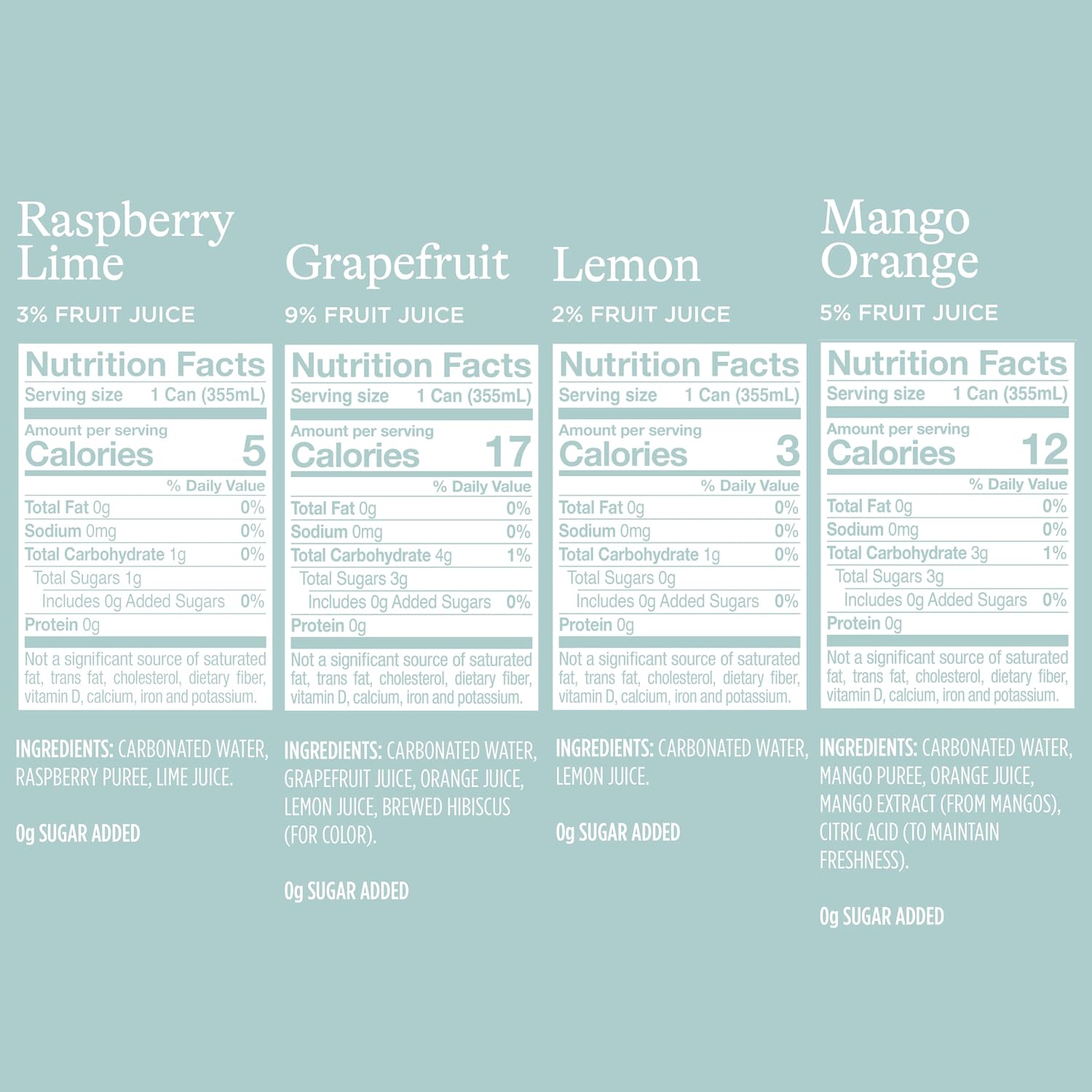
| Spindrift | 9–17 cal | 2–3g | Medium-high | 18-count variety |
| LaCroix | 0 cal | 0g | Medium | 12–24 count variety |
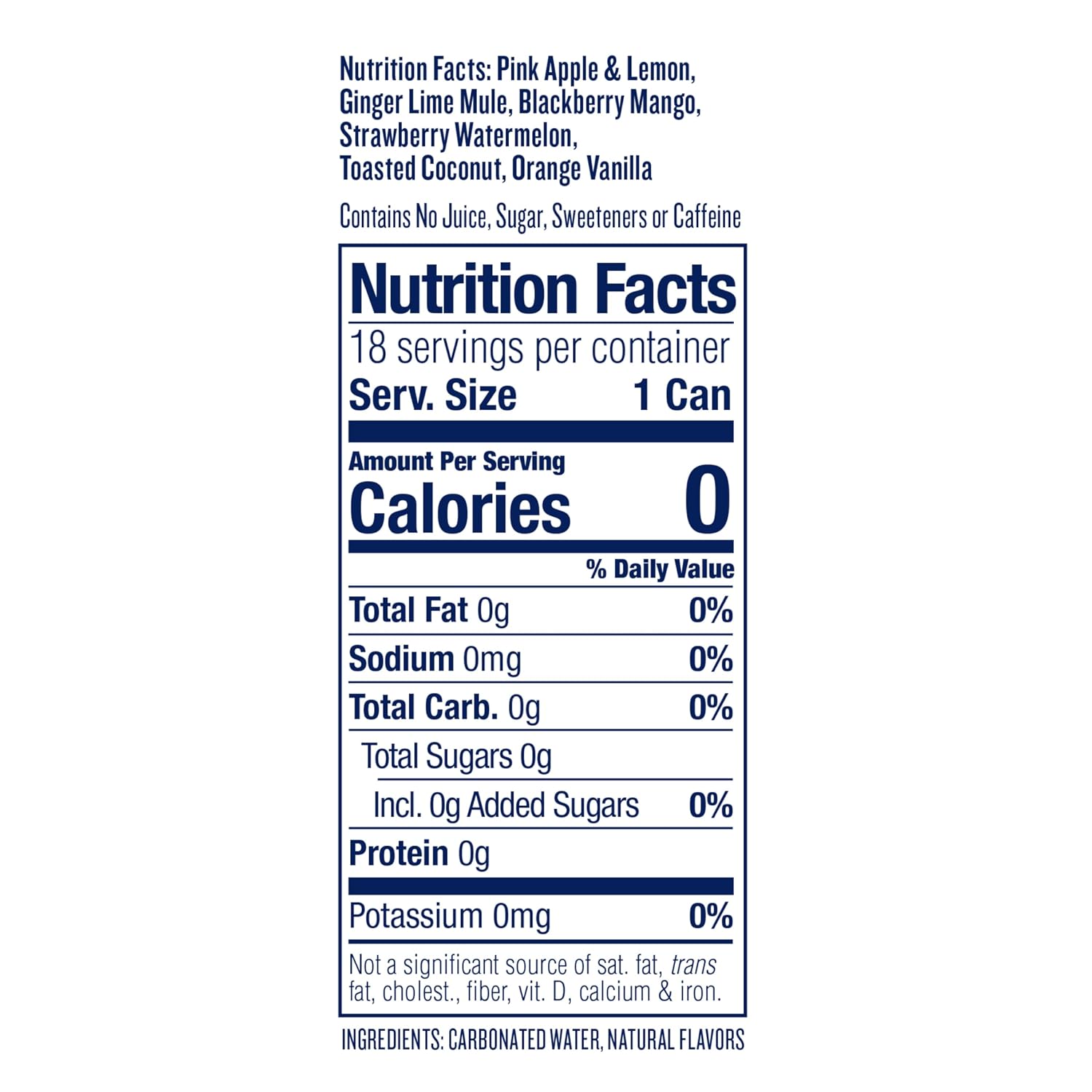
| Polar | 0 cal | 0g | High | 12-count variety |
| San Pellegrino CIAO | 0 cal | 0g | Medium | 24-count slim-can variety |
Nutrition data per published brand labeling. Carbonation characterizations reflect aggregated tasting observations published by Serious Eats in their sparkling water rankings and The Kitchn in their sparkling water taste test.
Brand-by-Brand Rankings
Spindrift: The Brand-Loyal Crowd’s Favorite
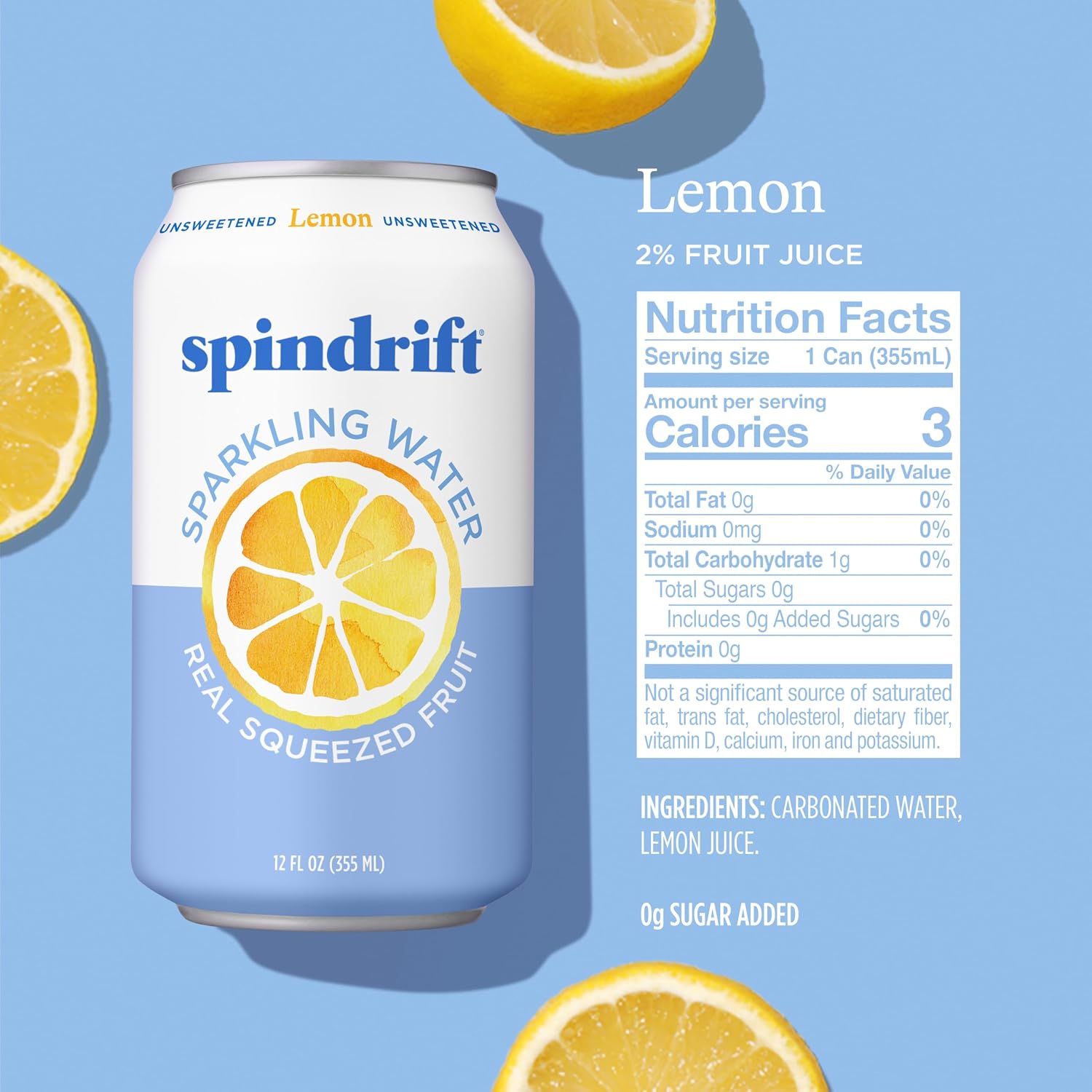
Spindrift occupies a category of its own, and its fans know it. The thing that keeps people coming back is the real-fruit ingredient list. Spindrift is made with actual squeezed fruit juice — lemon, raspberry, strawberry, grapefruit depending on the variety — which means it delivers what essence-based seltzers can only approximate: real tartness, a faint cloudy appearance in the can, and a flavor that reads as fruit rather than fruit-adjacent.
That tartness is worth flagging as a decision point, not a warning. As Bon Appétit notes in their sparkling water coverage, Spindrift’s flavor profile is more assertive than most competitors — closer to a very lightly sweetened sparkling lemonade than to plain seltzer. Fans cite this as the reason they keep buying. If you’re coming from a soda background, Spindrift is the easiest transition: there’s genuine flavor payoff with every sip.
The tradeoff is the calorie count. Spindrift runs 9–17 calories per can depending on flavor — trivial in isolation, but if you’re drinking several cans a day as a primary hydration strategy, it adds up in a way that zero-cal options don’t. It’s also priced above the LaCroix tier on a per-can basis.
For home entertainers and bar builds, Spindrift’s Lemon and Half & Half varieties have real utility as cocktail mixers. The juice content gives a drink more body than plain seltzer would.
Best for: Soda-switchers who want flavor they can taste. Anyone building a premium non-alcoholic bar setup. Buyers who trust a short, recognizable ingredient list.
Spindrift
$17.60
In stock on Amazon
Check price on AmazonLaCroix: The Gateway Brand That Grew Up
LaCroix is where most people start, and a surprising number of buyers stay. The brand helped define the zero-calorie flavored sparkling water category in the United States, and its sampler variety packs remain the dominant entry point for new sparkling water drinkers.
As Tasting Table notes in their comprehensive LaCroix flavor ranking, the brand’s appeal is partly the category it helped legitimize: zero-calorie flavored sparkling water that doesn’t taste medicinal. Essence-based flavoring, when done well, is a subtle game — you’re not tasting strawberry so much as the impression of strawberry, and for many drinkers that restraint is exactly what makes it drinkable at high volume. The Strawberry Peach variety in particular draws newer converts who describe it as a natural soda replacement.
The sampler format is the smart entry point for LaCroix. The variety pack lets you identify your two or three go-to flavors before committing to a single-flavor 24-pack. The honest critique: if you’re coming from Spindrift or any juice-based sparkling water, LaCroix will taste thin. That’s not a flaw — it’s a design choice. The brand is built around restraint. Spindrift drinkers rarely convert backward to LaCroix, while LaCroix drinkers sometimes graduate to Spindrift once they want more flavor intensity.
Best for: High-volume hydration. Calorie-zero household staples. First-time sparkling-water buyers who want a familiar brand with minimal risk.
Spindrift
$17.34
In stock on Amazon
Check price on AmazonPolar: The Discovery Brand
Polar is the one that surprises people. The Massachusetts-based brand has been around since 1882, but its sampler packs earn some of the most enthusiastic “I didn’t expect to like this” responses of the four brands covered here. The reason is the flavor combinations: Ginger Lime, Orange Vanilla, Cranberry Clementine — these aren’t standard seltzer plays. They’re closer to the flavor logic of a craft soda, using the sparkling-water format as a canvas for more adventurous pairings.
As Wirecutter notes in their sparkling water roundup, Polar consistently rates well for carbonation intensity. It’s among the more aggressively carbonated options in the category, which buyers who prefer a sharp, mouth-filling fizz tend to favor. That carbonation level also makes it a strong cocktail mixer for people who want the bubbles to hold up in a glass over ice.
The sampler format is Polar’s native habitat. Buyers who’ve been drinking LaCroix for years report genuine flavor discovery when they work through a Polar variety pack. The brand doesn’t carry Spindrift’s premium-ingredient story or San Pellegrino’s European provenance, but it delivers on flavor creativity at a price point that’s competitive with LaCroix.
Best for: Flavor-curious buyers who’ve plateaued on standard seltzer. Anyone building a mixer lineup for a home bar who wants variety. Households that go through enough cans that cost-per-unit matters.
Spindrift
$17.34
In stock on Amazon
Check price on AmazonSan Pellegrino CIAO: The Price Arbitrage Pick
San Pellegrino’s CIAO line is the most interesting value story of the four. The brand carries European mineral water credibility — San Pellegrino has been bottled in the Italian Alps since 1899 — but the CIAO slim cans are a modern, flavored, everyday-drinking format that’s more accessible than the classic 750ml glass bottle.
The Kitchn, in their sparkling water taste test, notes that San Pellegrino’s mineral water base gives CIAO a slightly different mouthfeel than domestic seltzer brands. There’s a faint minerality that reads as “European water” to people who are looking for it, and as imperceptible to those who aren’t. That textural difference is the clearest thing that separates CIAO from LaCroix or Polar on a blind tasting — Serious Eats makes a similar point in their sparkling water rankings, observing that true mineral water has more structural flavor than filtered seltzer, independent of any added flavoring.
One practical note that surfaces repeatedly among regular CIAO drinkers: the online price for the 24-count variety pack is often meaningfully lower than what grocery or specialty retailers charge for the same product. If you’re buying CIAO regularly, checking the online price before your next grocery run is worth the thirty seconds.
Best for: Price-conscious buyers who want brand credibility. Slow sippers and at-desk drinkers. Home entertainers who want something that reads “imported” on a drinks table without a premium bottle price.
Polar
$12.99
In stock on Amazon
Check price on AmazonFrequently Asked Questions
Does Spindrift taste noticeably different from LaCroix or plain seltzer? Yes, meaningfully so. LaCroix uses flavor essences — a faint, perfume-like hint of fruit that’s subtle by design. Spindrift uses actual squeezed juice, which produces real tartness and a more defined flavor. As Bon Appétit’s sparkling water coverage describes, the gap between juice-based and essence-based sparkling water is significant, not marginal. If you’ve only had essence-based seltzer, Spindrift will taste like a step toward real juice.
Is real-fruit sparkling water more caloric than essence-based options? Yes, though modestly. Spindrift runs roughly 9–17 calories per 12 oz can, versus zero for LaCroix, Polar, and San Pellegrino CIAO. For most people, that’s nutritionally immaterial. If you’re consuming sparkling water at high volume as your primary hydration source, the difference is worth knowing but unlikely to be meaningful in practice.
Does sparkling water lose carbonation during shipping? Based on aggregated buyer feedback across Spindrift, LaCroix, and Polar, canned variety packs generally arrive carbonated and intact. Canned products handle transit well; glass-bottle formats carry more breakage risk and are worth more careful consideration when ordering online.
Which sparkling water is best for replacing soda entirely? Spindrift is the most commonly cited answer, specifically because real-fruit flavor delivers the payoff that makes soda satisfying. LaCroix Strawberry Peach is the runner-up for buyers who specifically want zero calories. Both work — Spindrift is the easier transition, LaCroix is the longer-term daily driver for calorie-conscious buyers.
What is the difference between sparkling water and seltzer? The terms are often used interchangeably in the U.S., but there’s a technical distinction. Seltzer is plain water with added carbonation and no minerals. Sparkling mineral water — like San Pellegrino — naturally contains dissolved minerals from its source, which affect taste and mouthfeel. Most domestic brands, including LaCroix, Spindrift, and Polar, are technically carbonated water or seltzer, though they’re marketed as sparkling water. As Serious Eats explains in their sparkling water rankings, mineral content is the clearest taste differentiator: a true mineral water has more structural flavor than a filtered seltzer, independent of any added flavoring.
Is the CIAO variety pack worth ordering online rather than buying in store? For many buyers, yes. The online price for the 24-count CIAO variety pack is frequently lower than grocery or specialty store pricing for the same product. If CIAO becomes a household staple, the per-case savings on a recurring order are worth factoring into your decision.
The Decision Frame
If you want the most flavor-forward option and don’t mind a few calories: Spindrift.
If you want zero-cal, high-volume daily drinking at a proven brand: LaCroix, starting with the variety sampler to identify your flavors before committing to a full case of one flavor.
If you want the most carbonation and the most creative flavor combinations at a competitive price: Polar.
If you want European brand provenance and a consistent price advantage when ordering online: San Pellegrino CIAO.
None of these is a wrong answer. The sampler format exists precisely to let you run the comparison without overspending on a full case of something you might not love. Start there, identify your winner, then buy in bulk.