If you’ve ever grabbed something labeled “San Pellegrino” off a shelf and been surprised that it tasted completely different from the San Pellegrino you bought last time — you’re not imagining things. The brand actually makes several distinct product lines, and they don’t have a lot in common beyond Italian heritage and carbonation. San Pellegrino (formally S.Pellegrino, owned by Nestlé Waters) is best known in the U.S. for two things: the plain sparkling mineral water in the tall green glass bottle, and the flavored canned drinks — the Aranciata, Limonata, and Aranciata Rossa that have been fixtures in Italian restaurants for decades. More recently, the brand added a CIAO line aimed at the American ready-to-drink market and a Zero Sugar range that tries to preserve the Italian-soda aesthetic without the cane sugar load. This article breaks all three down side by side — flavor profile, sweetness level, carbonation behavior, value, and the specific situations each one actually fits.
| EDITOR'S PICKSanpellegrino Italian Sparkling… | Mid-tierSanpellegrino CIAO! Blood Orang… | Budget pickS.Pellegrino Sparkling Natural… | |
|---|---|---|---|
| Flavor | Blood Orange | Blood Orange | Unflavored |
| Size per Bottle | 11.15 fl oz | — | 11.15 fl oz |
| Sugar | — | 0g added | — |
| Calories | — | Low-cal | — |
| Price | $25.99 | $18.37 | $13.31 |
| See on Amazon → | See on Amazon → | See on Amazon → |
The Three Lines at a Glance
Before diving into each product in depth, it helps to see how they differ across the variables that matter most for a buying decision. The table below summarizes the key specs; detailed subsections below expand on each line with context you need before committing to a case.
| Line | Calories (per 11.15 oz) | Juice % | Sweetener | Approx. price (8-pack, May 2026) |
|---|---|---|---|---|
| Classic (Aranciata) | ~130 | ~16–20% | Cane sugar | $10–$15 |
| CIAO (Blood Orange) | ~70–90 | Lower than classic | Cane sugar | $12–$18 |
| Zero Sugar (Limonata Zero) | ~10 | Varies | Stevia/sucralose blend | $11–$16 |
Prices reflect observed retail and online ranges in May 2026; individual retailers vary.
Detailed Breakdown by Line
San Pellegrino Classic Flavored Cans
The San Pellegrino Sparkling Fruit Beverages — Aranciata (orange), Limonata (lemon), Aranciata Rossa (blood orange), and a handful of regional flavors — have been sold in the U.S. long enough that many drinkers treat them as the default Italian-soda benchmark. They are sweetened with cane sugar rather than high-fructose corn syrup, a distinction that reviewers across multiple platforms have flagged unprompted. Serious Eats, in their tested review “The Best Sparkling Waters, Tested and Reviewed,” noted the cleaner finish of cane-sugar-sweetened Italian sodas compared to HFCS-sweetened American alternatives — a difference that matters when you’re using these as premium mixers or serving them at a dinner party where the label will be seen.
VinePair, in their editorial feature “The Complete Guide to Italian Aperitivo Culture,” points to the Aranciata and Limonata as genuine fixtures of the Italian bar tradition rather than an American approximation. The fruit juice content is real — roughly 16–20% depending on the flavor — which places these in a different category from most American fruit sodas, where “natural flavor” does the heavy lifting with no actual juice present.
Where the classics work best:
- Aperitivo setups and cocktail mixers (Campari-and-Aranciata, Aperol-and-Limonata riffs)
- Guests who want something recognizably Italian and restaurant-familiar
- Situations where the label itself communicates quality — dinner parties, restaurant back-bars
- Buyers sensitive to corn syrup who want cane sugar confirmed on the label
The tradeoff: These are not low-calorie options. The Aranciata runs roughly 130 calories per 11.15 oz can. The format is also slightly awkward — generous enough that you feel committed to it, not quite large enough to replace a full drink for a very thirsty guest.
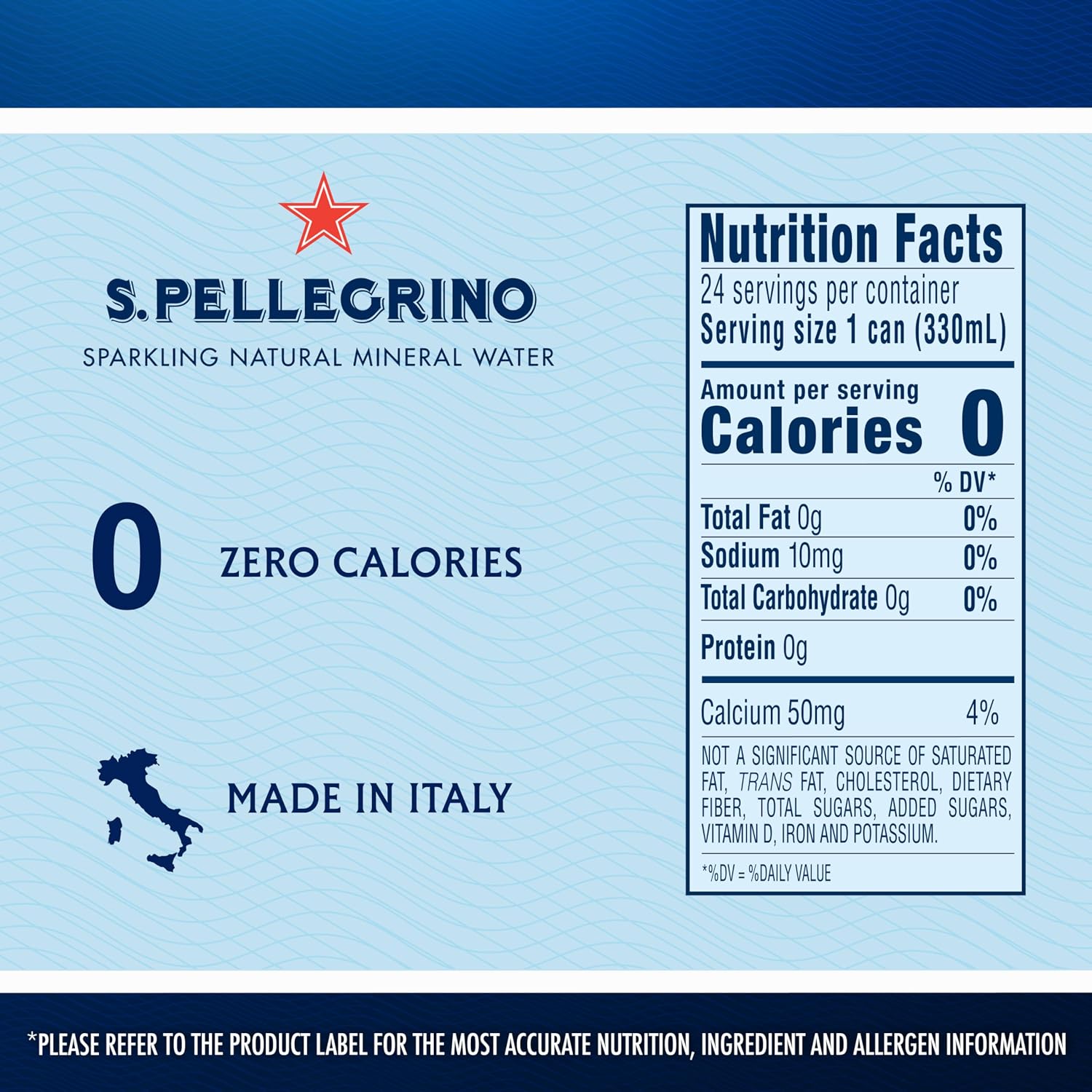
S.Pellegrino
$13.31
In stock on Amazon
Check price on AmazonSan Pellegrino CIAO
San Pellegrino CIAO launched into a crowded American sparkling-drink market with a specific positioning: lighter carbonation than the classics, a more aromatic and juice-forward flavor profile, and a can format that looks premium on a table. The flavors — Lime, Cherry, Blood Orange, and others — are aimed at the American palate rather than the Italian original.
Several things about CIAO are worth knowing before you commit to a case:
Carbonation longevity is a genuine differentiator. Serious Eats, in their sparkling water and sparkling beverage testing, identified carbonation retention after opening as one of the more meaningful variables separating premium sparkling drinks from budget options. CIAO performs well on this metric — buyers hosting events where drinks get poured, set down, and picked up again over an hour will notice the difference in a way that solo, drink-it-immediately consumers won’t.
The Blood Orange naming situation is a practical hosting insight. The word “blood” in a product name reliably creates hesitation among certain guests — particularly children and guests unfamiliar with the blood orange variety. If you’re sourcing CIAO for an event or bar setup, consider referring to it as “Ruby Orange” on your menu card or when describing it to guests. The flavor pulls near-universal approval once people taste it; the name is the only friction point.
Price volatility is the dominant buyer complaint. CIAO sits in a premium position relative to direct American competitors, typically $12–$18 for an 8-pack depending on retailer and format. That’s not outrageous, but it’s high enough that even a modest price increase changes the value calculus for buyers stocking cases for regular hosting use. If you’re building a recurring order, set a price alert rather than assuming subscription pricing holds month to month.
Juice content: CIAO does contain real fruit juice, but at a lower percentage than the classic line. The flavor profile reflects this — more aromatic and lighter rather than pulpy and juice-dense. Tasting Table, in their editorial roundup “Best Canned Sparkling Drinks for Mixers and Sipping,” positioned lighter fruit sparkling formats alongside other drinks that prioritize drinkability and aromatic presence over raw juice density — a category where CIAO competes well.
Where CIAO works best:
- Hosting and event setups where carbonation longevity and label presentation matter
- Guests who find the classic Aranciata too sweet or too intensely citrus-forward
- Non-alcoholic drink stations where you want something that looks like a cocktail
- Pairing with spirits as a lighter alternative to traditional soda mixers

Sanpellegrino
$18.37
In stock on Amazon
Check price on AmazonSan Pellegrino Zero Sugar
San Pellegrino’s Zero Sugar line — Limonata Zero, Aranciata Zero, and a small number of other flavors — uses a blend of sweeteners, typically stevia and/or sucralose depending on the market and formula vintage, to replicate the flavor of the original cans without the sugar load. The honest answer to “is it actually sweet enough?” depends entirely on your baseline.
Reviewers coming directly from regular soda without an adjustment period tend to find Zero Sugar underwhelming — not because it tastes bitter, but because the flavor peaks earlier and fades faster than a cane-sugar version. Reviewers who have already shifted away from full-sugar sodas, or who are using Zero Sugar as a cocktail replacement after reducing or eliminating alcohol, consistently report that it works well in that context.
Food & Wine, in their guide “How to Build a Great Non-Alcoholic Bar Cart,” specifically called out sparkling Italian sodas in zero-sugar formats as a credible option for sober-curious entertaining. The reasoning holds up in practice: the visual and aromatic cues of the original are intact — the can looks the same, the color reads as premium, the fizz behaves like a cocktail — which matters when you’re serving guests who might otherwise feel self-conscious about not drinking.
Where Zero Sugar works best:
- Health-conscious buyers who still want the Italian-soda aesthetic
- Cocktail replacement for people who’ve reduced or eliminated alcohol
- Mixers where you want citrus brightness without adding sugar to an already-sweet spirit base
- Guests managing blood sugar or following low-sugar diets
The honest tradeoff: Zero Sugar does not taste identical to the original. The sweetener blend is detectable, especially in the mid-palate where cane sugar would normally sustain the finish. If a guest’s first sip will set their impression and they’re coming in with high expectations based on the original, serve them the classic. If they’re managing sugar intake or have already reduced their sweetness threshold, Zero Sugar is genuinely good — not a compromise version, but a different product with its own strengths.
Sanpellegrino
$18.37
In stock on Amazon
Check price on AmazonCross-Demographic Appeal: Who Actually Drinks This
One of the more interesting patterns in San Pellegrino buyer behavior is how broad the profile actually is. The same brand credibly serves:
- A grandparent buying variety packs for grandchildren who want something “fancy but not junk food”
- A former alcohol drinker using CIAO or Zero Sugar as a satisfying, visually appealing substitute that doesn’t single them out at a dinner party
- An Italian expat validating the authenticity claim against their memory of the real thing
- A home entertainer building a premium non-alcoholic mixer station for an event where not everyone drinks
- A cocktail buyer sourcing Aranciata Rossa for a specific Campari application
That range is unusual. Most premium sparkling drinks skew either adult-and-sophisticated or family-friendly — San Pellegrino manages both, primarily because the visual language of the can communicates a quality signal that crosses age groups without any single demographic owning it. VinePair’s coverage in “The Complete Guide to Italian Aperitivo Culture” attributes part of this to the drinks’ genuine roots in Italian bar tradition, where non-alcoholic consumption alongside aperitivo is the norm rather than the exception.
Is Buying Online Cheaper Than In-Store?
On multipacks and subscription orders, usually yes — especially on the classic flavored line where volume SKUs are well-stocked. In-store retail for a single CIAO or Classic can runs $2–$3 in most markets. Subscription pricing can bring the per-can cost down meaningfully on the classic line. That said, pricing is not static. If price stability matters to your buying decision — particularly if you’re stocking for a bar program or regular event schedule — document your baseline price before committing to a recurring order and check periodically rather than assuming the rate holds.
Frequently Asked Questions
What is the difference between San Pellegrino CIAO and the classic flavored cans? The classic cans (Aranciata, Limonata, etc.) are higher in juice content, sweetened with cane sugar, and have a more intense, traditional Italian-soda flavor profile. CIAO is lighter, more aromatic, and aimed at the American market — closer in feel to a premium sparkling juice drink than a traditional Italian soda.
Does San Pellegrino hold its carbonation after opening? Carbonation retention is better than average for the category, as noted in Serious Eats sparkling beverage testing. No carbonated drink is indefinitely shelf-stable once opened. Standard best practice: reseal tightly, refrigerate immediately, and consume within 24 hours.
Is the Zero Sugar line actually sweet enough to replace regular soda? For buyers who have already reduced their sweetness baseline — yes, consistently reported as satisfying. For buyers transitioning directly from full-sugar sodas with no adjustment period, the flavor may feel like it drops off faster than expected.
Which San Pellegrino flavor is best for people who don’t normally like sparkling water? The classic Aranciata or Aranciata Rossa. Both are sweet enough and juice-forward enough that the mineral character recedes completely behind the flavor. They read as flavored Italian soda, not sparkling water with fruit added.
Are the CIAO cans made with real fruit juice? Yes, though at a lower percentage than the classic line. CIAO leads with aromatics and a lighter fruit note rather than the pulpy, juice-dense profile of the Aranciata.
Is it cheaper to buy San Pellegrino online than in stores? On multipacks and subscription orders, usually yes — but pricing fluctuates. Set a price alert if you’re planning a recurring order.
The Decision Rule
The right line depends on your specific situation, not on which one is objectively best:
If you’re hosting and presentation matters, start with CIAO. Carbonation longevity and the lighter profile work better for a two-hour event than the classic cans, and Blood Orange (rename it Ruby Orange on your menu if needed) pulls near-universal approval.
Sanpellegrino
$18.37
In stock on Amazon
Check price on AmazonIf you’re building a mixer station or want Italian authenticity on the label, the classic Aranciata or Limonata is the right call — cane sugar, real juice percentage, the original product.
S.Pellegrino
$13.31
In stock on Amazon
Check price on AmazonIf sugar is a genuine constraint and you still want the Italian-soda aesthetic, Zero Sugar is credible enough to serve — just don’t set the expectation that it’s identical to the original.
Sanpellegrino
$18.37
In stock on Amazon
Check price on Amazon