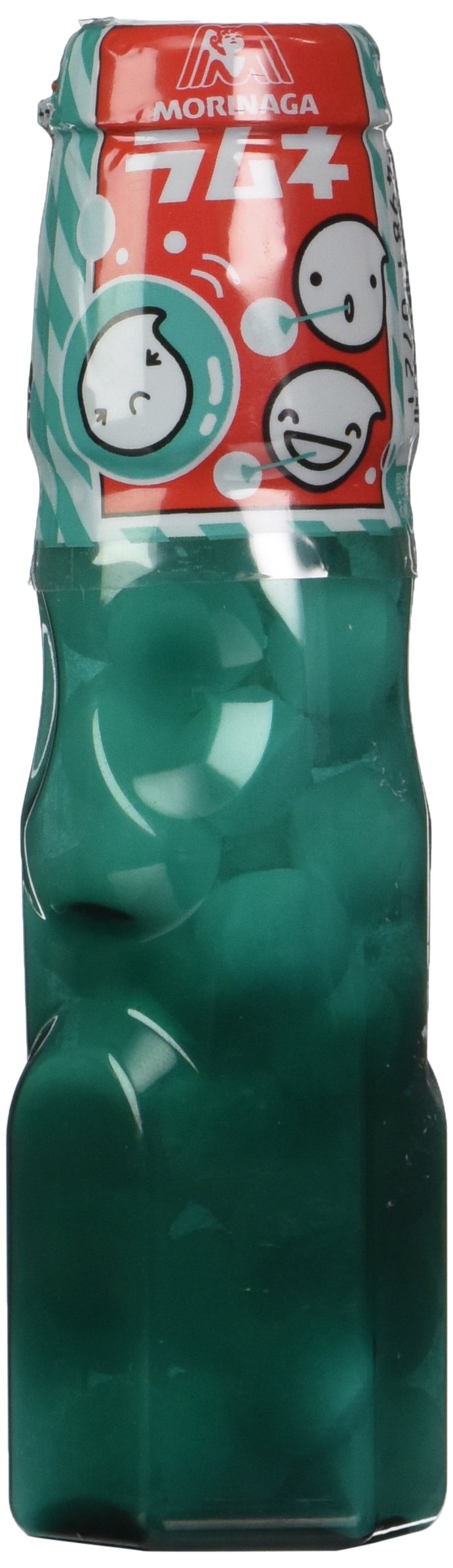
If you’ve ever seen a glass bottle sealed with a small marble instead of a bottle cap, you’ve already encountered Ramune — Japan’s iconic carbonated soft drink (the marble acts as the stopper, pushed inward to open the bottle, and it rattles around inside while you drink). Ramune has been bottled in Japan since 1884, and the Kimura brand is considered the gold standard, still producing single-origin glass-bottle versions in flavors ranging from classic lychee and melon to limited-edition sakura and matcha-soda hybrids. A single bottle typically runs $4–$6 at specialty importers, and a curated variety pack can land anywhere from $25 to $60 depending on the source and the rarity of the flavors included. What makes Ramune especially interesting for the soda collector right now — in May 2026 — is that the ecosystem around the drink has expanded dramatically. Candy, gift bundles, seasonal variety packs, and Ramune-flavored confections have turned what was once a straightforward import buy into a genuine category with real purchasing decisions to make. This guide maps that category and tells you exactly where the value is.
What “Ramune-Adjacent” Actually Means — and Why It Matters for Collectors
When you search for Ramune online, you’ll quickly discover that “Ramune” has become a flavor identity as much as a product. There are three distinct tiers of what gets sold under that umbrella, and collapsing them together is a rookie mistake that costs you either money or satisfaction.
Tier 1: Authentic imported glass-bottle Ramune. This is the original — Kimura Inryosui Co., Ltd. bottles, produced in Japan, imported in small quantities. Bon Appétit’s coverage of Japanese soda’s American moment specifically highlights Kimura as the benchmark, noting that the codd-neck marble bottle design is protected and cannot be legally replicated for import under most labeling agreements. These bottles retail at $4–$6 each, with 12-packs running $45–$65 through specialty importers. The flavor lineup rotates seasonally, and limited editions (sakura blossom in spring, yuzu citrus in winter) are genuinely scarce — they sell out and don’t restock until the following season.
Tier 2: Licensed Ramune candy and confections. Separately from the soda itself, several Japanese confectionery manufacturers produce Ramune-branded candy tablets — small, fizzy pressed-sugar discs that approximate the soda flavor profile. Morinaga and Nobel are the two major producers. These are not novelty junk; Serious Eats’ guide to Japanese convenience store snacks calls Nobel’s Ramune candy “a legitimately complex carbonated candy that captures melon and lychee with surprising fidelity.” A standard tube runs about $2–$3 per unit, and gift sets combining multiple flavors retail in the $12–$22 range. These are high-margin, high-gift-appeal products with long shelf lives — important for anyone building a gift set or planning an event.
Tier 3: Ramune-flavored American or third-party products. This tier includes domestically produced “Ramune-style” sodas (no marble mechanism, no Japanese origin), candy assortments that use “Ramune flavor” loosely, and variety packs assembled by American distributors mixing authentic bottles with snack fillers. Quality varies enormously. Some of these are legitimate gift-set plays; others dilute the brand experience in ways that will disappoint a recipient who knows what real Ramune tastes like.
The practitioner move is learning to identify which tier you’re sourcing from before you commit to a cart.
The Gift Set Landscape: How to Read What You’re Actually Buying
The gift set market for Japanese Ramune and Ramune candy has grown noticeably since 2024. Japan External Trade Organization data from their 2024 food export trends report shows Japanese confectionery exports to North America grew by roughly 14% year-over-year, with carbonated candy and soda-flavored snacks representing the fastest-growing subcategory. That growth has produced a crowded import marketplace with real variance in curation quality.
By the numbers:
- Authentic Kimura Ramune 12-pack (standard flavors): $45–$60 from specialty importers
- Premium limited-edition 6-pack (seasonal flavors): $30–$45
- Nobel or Morinaga Ramune candy gift set (6–8 tubes, gift-boxed): $14–$22
- Mixed Ramune soda + candy variety gift set (from curated importers): $35–$70
The tradeoffs here are real. A $55 authentic 12-pack is a statement purchase for a collector — it photographs beautifully, the marble mechanism is the talking point at any gathering, and the flavor variety genuinely holds up to exploration. But a $22 candy gift set can be the smarter buy for a casual gifting occasion, a cocktail-garnish spread, or an event where the visual appeal of the marble bottle isn’t the point. Food & Wine’s roundup of collectible international sodas notes that Ramune gift sets have become a reliable corporate gifting choice precisely because they straddle novelty and quality in a way that’s accessible without feeling cheap.
What to look for on a product listing to confirm you’re in Tier 1 or Tier 2:
- “Codd-neck bottle” or “marble stopper” in the product description confirms authentic Tier 1 soda
- “Kimura” or “Hata Kosen” as the named manufacturer confirms Japanese-origin soda
- “Morinaga” or “Nobel” as the candy manufacturer confirms Tier 2 licensed confection
- Any listing that doesn’t name a specific Japanese manufacturer for the soda is almost certainly Tier 3
Where to Actually Buy — Platform by Platform
Amazon (Subscribe & Save and standard marketplace): The widest selection, but the highest variance in seller quality. Aggregated reviews consistently flag two issues: authentication gaps (Tier 3 products mislabeled as imports) and shipping damage on glass bottles. The mitigation is buying from sellers with verified “Ships from Japan” or established import credentials and checking whether the listing names Kimura or Hata Kosen explicitly. For candy sets, Amazon is actually quite strong — Nobel and Morinaga candy tubes are shelf-stable, ship well, and the review volume makes quality signals reliable.
[PRODUCT: Kimura Ramune Variety Pack 12-bottle TIER:premium]
[PRODUCT: Nobel Ramune Candy Gift Set assorted flavors TIER:mid]
Beverages Direct and specialty import storefronts: For serious collectors, this is the more reliable channel for authentic glass-bottle Ramune. Specialty importers typically source directly from Japanese distributors, label seasonal availability clearly, and provide better per-bottle provenance. The tradeoff is price — expect to pay 10–15% more per bottle compared to Amazon marketplace pricing, and shipping costs on glass cases add up. For a gift purchase or a collector’s personal stock, that premium is usually worth it. For a catering order where authenticity matters less than volume, it may not be.
Goldbelly and direct-to-consumer gift platforms: These platforms have become the strongest channel for curated Ramune gift sets assembled by specialty importers. The curation quality tends to be higher — sets typically mix bottle varieties with matching candy, sometimes include a marble-mechanism instruction card for recipients who haven’t encountered Ramune before, and arrive in gift-ready packaging. Tasting Table’s overview of Japanese snacks available online specifically highlights Goldbelly-adjacent import curators as the best source for themed gift sets that combine authenticity with presentation value.
[PRODUCT: Japanese Ramune Soda and Candy Gift Box curated variety TIER:premium]
The Cocktail and Mixer Angle — a Second Use Case Worth Knowing
For the segment of this readership sourcing premium mixers and bar ingredients, Ramune has a secondary use case that’s underexploited: it functions as a sophisticated carbonated mixer with flavor complexity that Q Mixers and Fever-Tree don’t replicate. The lychee and yuzu variants in particular have found their way onto cocktail menus at Japanese-influenced bars, and home bartenders are catching up.
The practical tradeoff: authentic glass-bottle Ramune is priced and formatted for sipping, not for high-volume mixing. A $5 bottle used as a mixer in a single cocktail is a defensible splurge for a dinner party centerpiece drink, but it’s not a sustainable bar program ingredient. The Nobel Ramune candy, surprisingly, has a separate application here — dissolved in sparkling water as a rim sugar or flavoring agent, it introduces Ramune’s characteristic carbonated-melon flavor profile into formats where the bottle itself isn’t present. Several bartenders profiled in Serious Eats’ cocktail ingredient guides have noted this application specifically for yuzu and strawberry varieties.
If you’re sourcing for an event or a boutique bar, the decision framework looks like this:
- Showcase drink (one featured cocktail, high visual impact): Buy authentic Kimura glass-bottle Ramune in a single premium flavor. The marble stopper becomes part of the table theater.
- Flavor profile, high volume: Nobel candy dissolved into a simple syrup or sparkling-water base gives you the Ramune flavor note at a fraction of the per-serving cost.
- Gift set for a client or host: A curated mix of 4–6 Kimura bottles plus a Nobel candy assortment in the $40–$55 range hits the sweet spot of novelty, authenticity, and price.
The Decision Rule
If you’re a collector adding to a curated shelf: prioritize Tier 1 glass-bottle Ramune from named-manufacturer listings, buy seasonal editions as they appear, and treat candy sets as complementary rather than equivalent.
If you’re gifting to someone new to the category: a curated mixed set ($35–$55) from a specialty importer or Goldbelly-adjacent platform gives them the marble-bottle experience and the candy discovery in one package — it’s the highest-success-rate gift in this category.
If you’re sourcing for events or bar use: Nobel Ramune candy is your highest-leverage, most cost-efficient buy. The glass-bottle format is a centerpiece tool, not a pour-freely ingredient.
The one thing to avoid regardless of tier: any listing that doesn’t name a specific Japanese manufacturer for the soda and uses “Ramune-style” or “Ramune-flavored” without a country of origin. That’s almost always a Tier 3 product priced like Tier 1, and it will disappoint anyone who has had the real thing.
The Ramune category is bigger than most American soda collectors expect. The marble bottle is the hook, but the candy ecosystem and the gift-set infrastructure around it are mature enough now to reward a more deliberate buying strategy — and that’s exactly the kind of category where knowing what you’re looking at before you click is worth a few minutes of your time.