If you’ve started seeing the word prebiotic on soda cans at the grocery store and wondered what it actually means, here’s the short version: prebiotics are a type of dietary fiber that feeds the beneficial bacteria already living in your gut — different from probiotics, which are those bacteria. The idea behind prebiotic soda is straightforward: keep the fizzy, slightly sweet ritual you love, swap in ingredients that might do your digestive system a favor, and cut the sugar load dramatically. Three products are now fighting for that positioning — OLIPOP, Bloom Pop, and Pepsi Prebiotic — and they are not the same product at three different price points. They’re aimed at genuinely different buyers, and choosing the wrong one is an easy mistake to make. This piece maps out exactly where each one wins, where it falls short, and which buyer profile each one fits best.
| EDITOR'S PICKBloom Pop Prebiotic Soda 12 Pack | Mid-tierOLIPOP Prebiotic Soda Pop | Budget pickPepsi Prebiotic Cola | |
|---|---|---|---|
| Pack size | 12 cans | 12 cans | 8 cans |
| Can size | 12 oz | 12 oz | 12 fl oz |
| Caffeine | No caffeine | — | — |
| Calories | — | — | 30 cal |
| Prebiotic fiber | — | — | 5g |
| Sugar | — | — | 5g |
| Price | $18.99 | $16.13 | $7.97 |
| See on Amazon → | See on Amazon → | See on Amazon → |
What You’re Actually Comparing
Before you treat this as a pure taste contest, it helps to understand the decision variables that actually matter in this category.
Fiber dose and source. OLIPOP delivers 9 grams of dietary fiber per can via a proprietary botanical blend that includes cassava root fiber, chicory root inulin, Jerusalem artichoke inulin, and nopal cactus. Bloom Pop uses chicory root fiber and inulin, landing at 3 grams per can. Pepsi Prebiotic uses inulin derived from chicory root and comes in at 3 grams per serving. According to Healthline’s overview article “Prebiotics: Benefits, Foods, and More,” the typical clinically studied dose for measurable gut benefit starts around 5 grams daily — a threshold that puts OLIPOP in a meaningfully different tier on this single variable.
Sugar load. OLIPOP runs 2–5 grams of sugar per can depending on flavor. Bloom Pop comes in around 3–5 grams. Pepsi Prebiotic uses cane sugar plus stevia and sits at 5 grams per 12 oz serving. None of these are sugar-free, but all three sit well below a standard cola’s approximately 39 grams.
Sweetener profile. This is where Pepsi’s entry creates the most friction with existing consumers. OLIPOP uses a blend of cassava syrup, stevia, and fruit juice — reviewers consistently call out the absence of an artificial sweetener aftertaste as a decisive selling point, particularly for consumers who’ve already rejected diet soda. Bloom Pop leans on cane sugar and stevia similarly. Pepsi Prebiotic uses cane sugar plus stevia, but the balance in the cola variety draws repeated criticism, detailed below.
By the numbers — a quick comparison:
| Product | Fiber per can | Sugar per can | Approx. price per can |
|---|---|---|---|
| OLIPOP | 9 g | 2–5 g | ~$2.50–$3.00 |
| Bloom Pop | 3 g | 3–5 g | ~$1.80–$2.50 |
| Pepsi Prebiotic | 3 g | 5 g | ~$1.50–$2.00 |
Prices reflect aggregated retail observations as of May 2026; single-can pricing varies by pack size and retailer.
The Three Contenders, Evaluated
OLIPOP: The Harm-Reduction Play
Bon Appétit’s article “Is OLIPOP Actually Good for You?” notes that the brand doesn’t market itself primarily as a health product in the traditional supplement sense — it markets itself as a replacement ritual for people who already know they drink too much regular soda. The buyer profile that surfaces repeatedly in aggregated reviews is specific: someone with a self-described Coca-Cola or Dr Pepper habit who has tried and failed to cut back, and who now uses OLIPOP as a substitution strategy rather than a wellness supplement.
The Vintage Cola flavor is the clearest expression of this positioning. Reviewers who mention coming from a daily Coke habit call out two things almost universally: the caramel-forward flavor that feels cola-adjacent without being identical, and the total absence of the medicinal stevia finish that killed their interest in diet soda. Most honest reviewers also acknowledge it doesn’t taste exactly like Coca-Cola — it tastes like its own thing, and you either accept that trade or you don’t.
The 9 grams of fiber is the other genuine differentiator. VinePair’s article “The Rise of Functional Sodas in Bar Programs” notes that OLIPOP has found placement in upscale mocktail menus precisely because bartenders can present the fiber content as a substantive nutritional fact, not a marketing whisper. If you’re evaluating this for a home bar or restaurant program, that’s a meaningful talking point versus the 3-gram competitors.
The tradeoff: OLIPOP is the most expensive of the three by a meaningful margin, and the flavor catalog is wide enough that some flavors land much better than others. Tasting Table’s ranking piece “We Ranked Every OLIPOP Flavor” places Vintage Cola and Classic Grape among the strongest performers, while Strawberry Vanilla and Watermelon Wave draw more mixed reactions. Buy a variety pack before you commit to a case of a single flavor.
Best for: Former cola drinkers looking for a daily substitution habit they can actually sustain, and buyers who want the highest fiber dose of the three options.
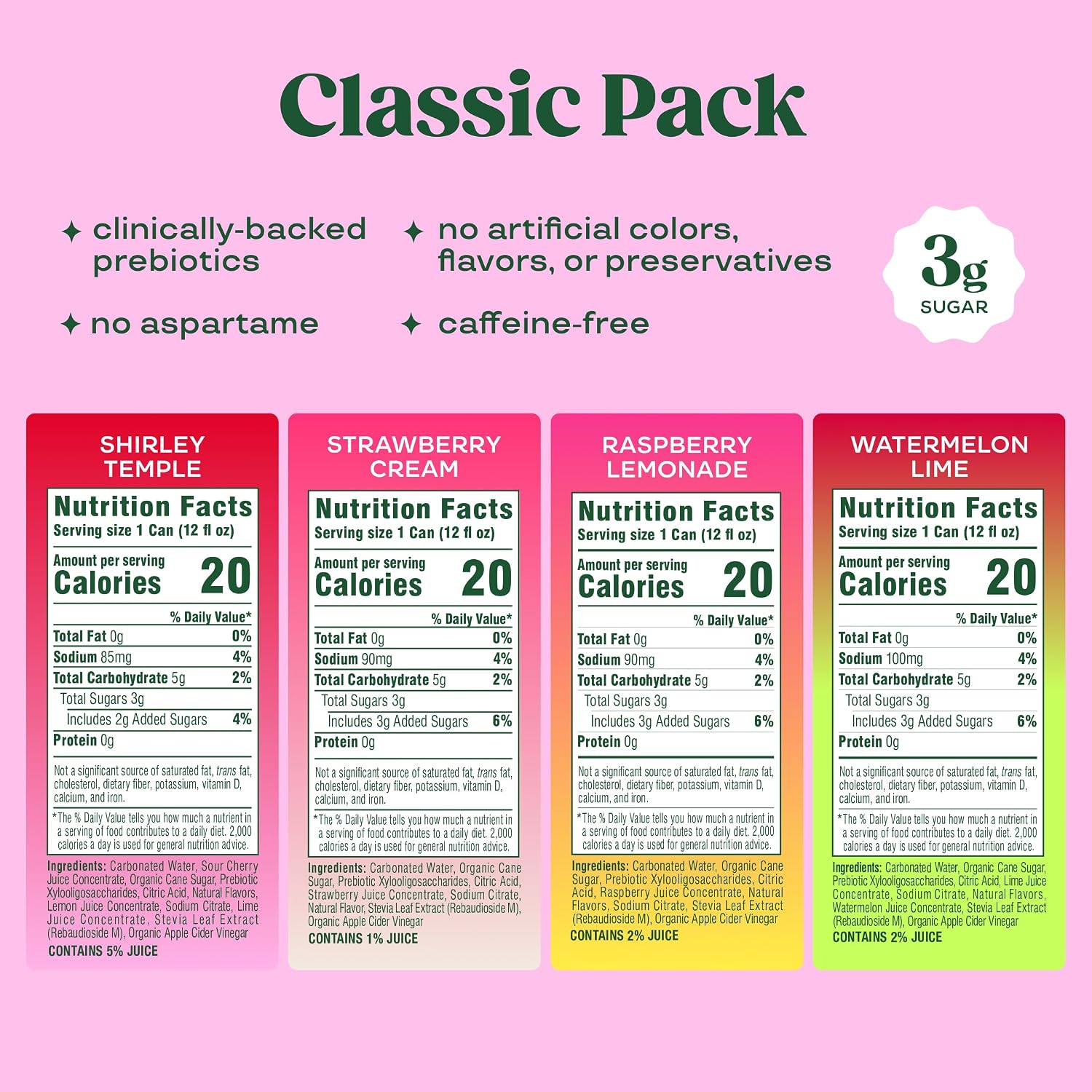
Bloom
$18.99
In stock on Amazon
Check price on AmazonBloom Pop: The Family-Friendly Middle Ground
Bloom Pop occupies an interesting position: priced between OLIPOP and Pepsi Prebiotic, it delivers a lighter fiber dose than OLIPOP, and it consistently earns the most household-consensus reviews of the three. Multiple aggregated buyer reviews mention that every member of the family — kids included — approved without complaint, which is not something you hear about OLIPOP’s more botanically complex flavors.
The standout claim in Bloom Pop’s review cluster is the no-bloating narrative. This recurs with unusual consistency across ratings: buyers who specifically expected prebiotic fiber to cause gas and bloating — as certain high-fiber foods sometimes do — report that Bloom Pop didn’t trigger it. Whether that’s the lower fiber dose (3 grams stays well below the threshold where inulin commonly causes GI distress in sensitive individuals) or the specific formulation, the pattern is consistent enough across aggregated reviews to take seriously.
Bloom Pop buyers also frequently mention multi-pack pricing as a motivating factor. The per-can price in larger packs is regularly noted as meaningfully better than single-can physical retail, which makes this the easiest value case of the three for regular household restocking.
The honest limitation: if you’re evaluating Bloom Pop against OLIPOP on gut-health credentials specifically, the 3-gram fiber dose is a real difference. As Healthline’s “Prebiotics: Benefits, Foods, and More” identifies, 5 grams daily is a general starting point for measurable prebiotic benefit. Bloom Pop can contribute toward that goal but is less likely to reach it alone from a single can. If you’re drinking one can a day and not eating other prebiotic-rich foods, OLIPOP’s dose does more of the work.
Best for: Households that need broad flavor consensus, buyers managing fiber sensitivity, and anyone who wants a meaningful step up from regular soda without committing to OLIPOP’s premium price point.
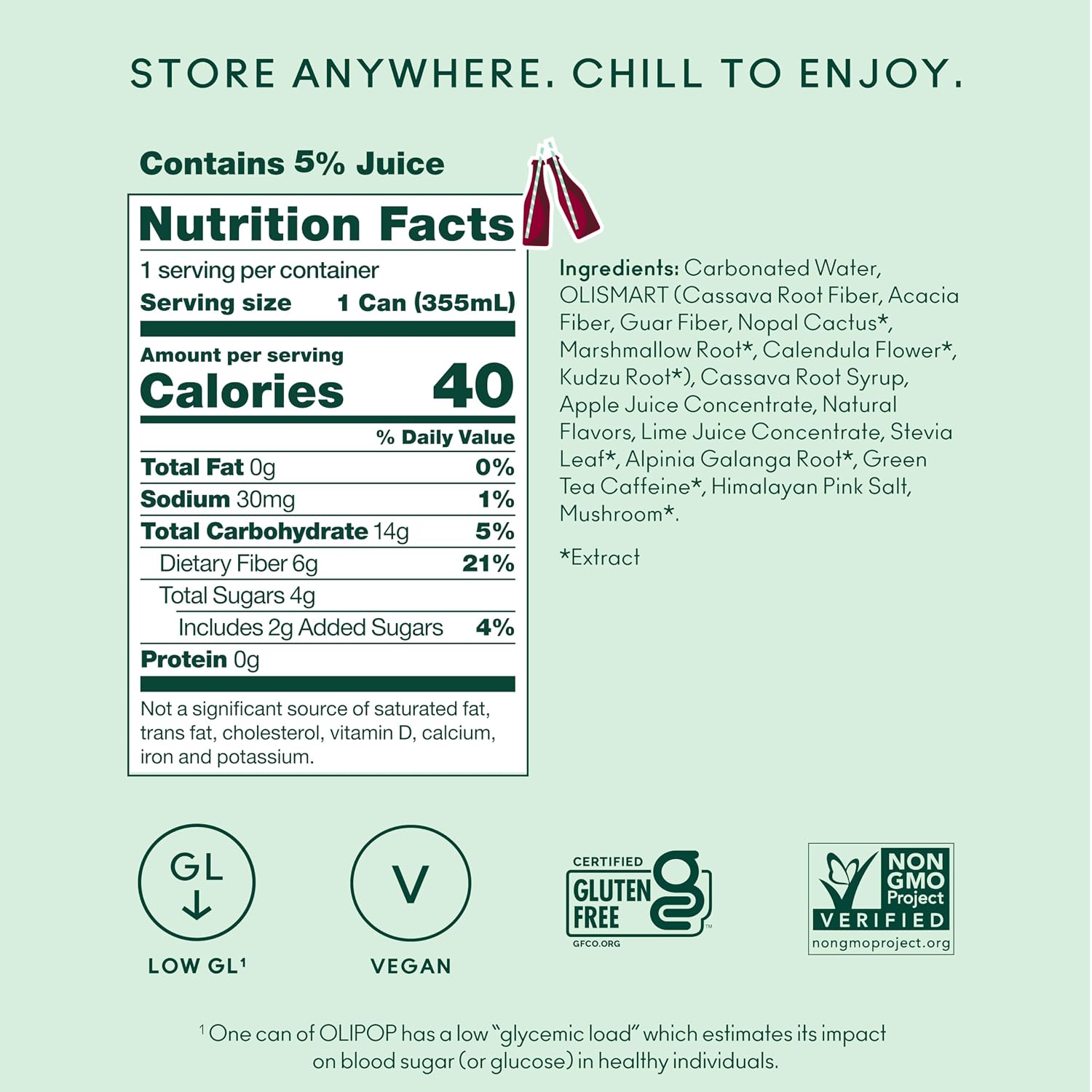
OLIPOP
$16.13
In stock on Amazon
Check price on AmazonPepsi Prebiotic: The Familiarity Gamble
Pepsi’s entry into this space is the most polarizing product in the category right now, and the split in reviewer sentiment breaks cleanly along flavor lines — which is itself an important signal about the brand’s execution.
The Cherry Vanilla variety draws the most positive response. Reviewers describe it as genuinely drinkable, pleasantly sweet, and meaningfully better than any diet cherry cola they’d previously tried. The fruit-forward flavor profile successfully masks the stevia finish that troubles the cola variety, and at the lowest price point of the three contenders, it lowers the barrier to experimentation considerably.
The Cola variety is a different story. Even reviewers who praised Cherry Vanilla describe the cola version as tasting watered down. The core problem is that cola’s flavor profile offers few places to hide an off-note: the balance between stevia’s bitter trailing note and the cane sugar’s upfront sweetness hasn’t been resolved in a way that satisfies people who actually love cola. OLIPOP Vintage Cola doesn’t taste like Pepsi, but it doesn’t taste wrong the way Pepsi Prebiotic Cola does to its harshest critics.
The case for Pepsi Prebiotic is straightforward: it’s the lowest price point, the most widely distributed, and for consumers who primarily want to reduce sugar intake rather than maximize fiber, the 3 grams of inulin plus the familiar brand name lowers the barrier to entry significantly. For a buyer who doesn’t want to think hard about functional beverages and just wants a slightly better version of something recognizable, Pepsi Prebiotic Cherry Vanilla is a reasonable default.
Best for: Budget-conscious buyers, consumers making a first move away from full-sugar soda, and retailers or event planners who need maximum brand recognition at the lowest cost-per-can.
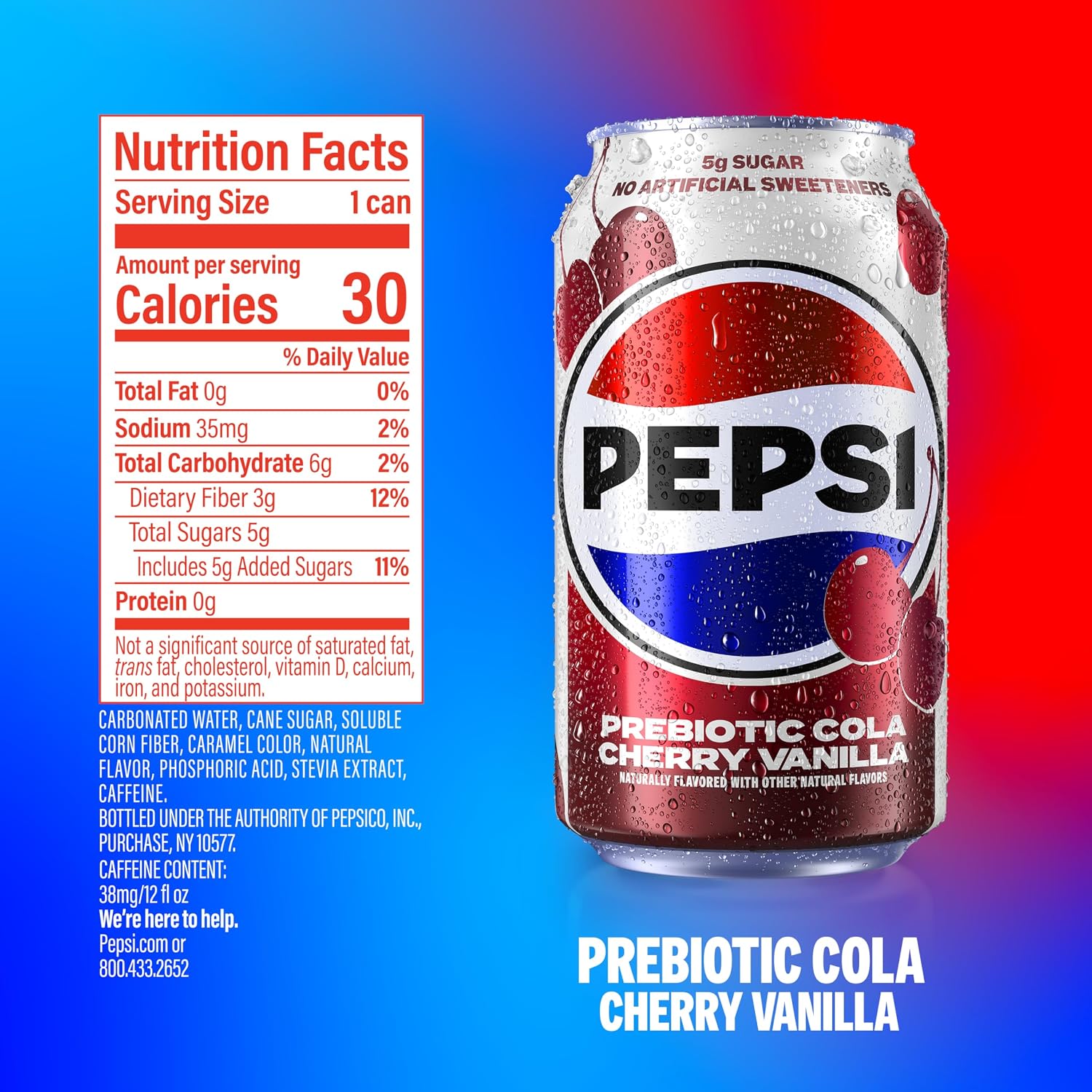
Pepsi
$7.97
In stock on Amazon
Check price on AmazonFrequently Asked Questions
Does prebiotic soda actually help with digestion or gut health? It can contribute, within limits. Healthline’s “Prebiotics: Benefits, Foods, and More” confirms that inulin and chicory root fiber are among the most studied prebiotics and do measurably feed beneficial gut bacteria. The practical caveat is dose — 3 grams from one can of Bloom Pop or Pepsi Prebiotic is a meaningful contribution to a fiber-rich diet but isn’t a standalone intervention. OLIPOP’s 9-gram dose gets closer to ranges studied in clinical contexts. No soda replaces dietary variety, but prebiotic soda is a more defensible swap than plain sparkling water if gut support is genuinely part of your goal.
Which prebiotic soda tastes most like regular cola? Aggregated reviews suggest OLIPOP Vintage Cola is the closest match for former Coca-Cola drinkers specifically — not because it’s identical, but because it avoids the stevia aftertaste that makes most reduced-sugar sodas feel like diet drinks. Pepsi Prebiotic Cola consistently draws “watered down” comparisons even from buyers who enjoy the Cherry Vanilla variety.
Is OLIPOP appropriate for people managing blood sugar? OLIPOP’s 2–5 grams of sugar per can is dramatically lower than regular soda, and the fiber content slows sugar absorption. That said, no soda brand should substitute for medical guidance. Anyone managing diabetes or insulin sensitivity should consult a physician — a framing several OLIPOP reviewers actually use, noting they got physician sign-off before making it a daily habit.
Why do some people dislike the taste of Pepsi Prebiotic Cola specifically? The most common complaint is a stevia-forward bitterness in the finish. The Cherry Vanilla formulation masks this more successfully with fruit flavor. Cola’s simpler flavor architecture offers fewer places to hide an off-note, and reviewers who grew up drinking full-sugar Pepsi are the most likely to find the cola variety unsatisfying by comparison.
Are prebiotic sodas worth the higher price versus regular diet soda? If taste alone is the variable and you’ve already accepted diet soda, probably not. If you’ve rejected diet soda because of sweetener aftertaste — the dominant OLIPOP buyer profile — then the premium is the cost of actually enjoying the drink rather than tolerating it. The fiber benefit is real but shouldn’t be the sole justification for the price difference.
Does Bloom Pop cause bloating the way some high-fiber drinks do? The pattern across aggregated reviews is notably consistent: buyers who expected bloating from the fiber content report it didn’t happen. The 3-gram dose likely stays below the inulin threshold that triggers GI distress in sensitive individuals. Carbonation-related bloating is always possible from any sparkling drink, but the fiber-specific complaint appears rarely in Bloom Pop reviews.
The Decision Rule
If you’re buying for yourself and you have a cola habit you’re trying to break without picking up a medicinal-tasting diet drink: OLIPOP Vintage Cola is the pick. The fiber dose is substantive, the taste is the most validated among former cola drinkers, and the price premium over a regular Coke is small enough to absorb comfortably as a daily habit. As Bon Appétit’s “Is OLIPOP Actually Good for You?” puts it, the brand’s real pitch is behavioral, not biochemical — it succeeds when it replaces something worse.
If you’re buying for a household where you need everyone — kids, partners, picky in-laws — to agree without a trial period: Bloom Pop is the lowest-friction option. The flavor profile is broadly appealing, the no-bloating feedback is consistent across reviews, and multi-pack pricing makes the economics reasonable for regular restocking.
If you’re adding a prebiotic option to a restaurant or bar program and need brand recognition to do the selling for you: Pepsi Prebiotic Cherry Vanilla is the accessible entry point — but stock OLIPOP alongside it for guests who ask what the more functional option is, a pairing strategy consistent with VinePair’s coverage of functional sodas in bar programs.
And if you’re building a variety pack for a health-focused event or gifting situation: lead with OLIPOP’s flavor range per Tasting Table’s ranked guide, add Bloom Pop for the family-friendly angle, and skip Pepsi Prebiotic Cola unless you’re specifically testing mass-market appeal. The Cherry Vanilla earns its place; the cola formulation, for now, does not.