If you’ve seen the words “prebiotic soda” everywhere lately and wondered what they actually mean, here’s the short version: a prebiotic is a type of dietary fiber that feeds the beneficial bacteria already living in your gut. Unlike a probiotic, which introduces live bacteria, a prebiotic is essentially food for the microbiome you already have. Prebiotic sodas take that concept and pack it into a sparkling drink — typically somewhere between 2 and 9 grams of fiber per can — while still tasting like the cola, root beer, or cream soda you grew up with. The category took off after OLIPOP pioneered the format around 2018, and by mid-2026 it includes legacy brands like Pepsi launching their own version alongside smaller challengers like Bloom Pop. This article is a flavor-by-flavor breakdown of what real buyers actually report tasting, where each brand’s lineup earns genuine praise, where it falls short, and which one makes sense for your situation.
| EDITOR'S PICKBloom Pop Prebiotic Soda 12 Pack | Mid-tierOLIPOP Prebiotic Soda Pop | Budget pickPepsi Prebiotic Cola | |
|---|---|---|---|
| Pack size | 12 cans | 12 cans | 8 cans |
| Can size | 12 oz | 12 oz | 12 fl oz |
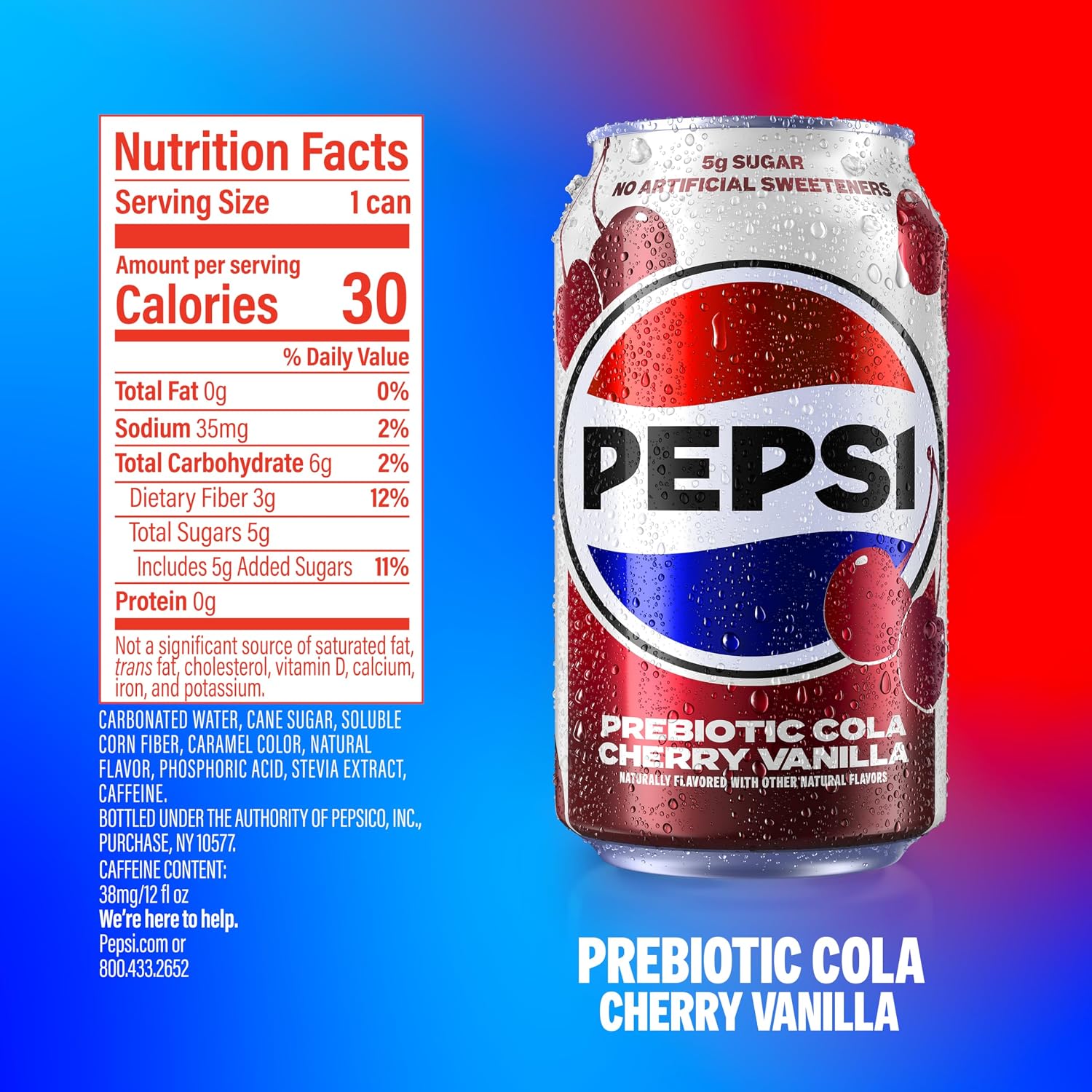
| Calories | — | — | 30 |
| Prebiotic fiber | — | — | 5g |
| Sugar | — | — | 5g |
| Caffeine-free | ✓ | — | — |
| Price | $18.99 | $16.13 | $7.97 |
| See on Amazon → | See on Amazon → | See on Amazon → |
The Flavor Reality Check: What Buyers Actually Say Brand by Brand
Let’s skip the marketing language and go straight to the honest signal: aggregated buyer reviews, ingredient-label analysis, and the pattern that emerges when you read a few hundred of them back to back. Three brands define the current market, and each occupies a distinct tier.
OLIPOP: The Premium Pioneer With a Spotty Roster
OLIPOP is still the brand that defined the category, and its Vintage Cola remains its most emotionally loaded flavor. Across aggregated reviews, the pattern is consistent: buyers who are actively reducing their consumption of regular Coke describe the Vintage Cola as a genuine functional substitute — not identical, but close enough to satisfy the craving without triggering a return to the original. Tasting Table’s full-lineup review of OLIPOP (Tasting Table, “We Tried Every OLIPOP Flavor,” tastingtable.com) notes that the Vintage Cola achieves a convincing retro cola character that holds up across the full can. Several reviewers specifically describe surprise — they expected a health-drink compromise and got something that actually tastes like soda. That emotional beat matters for anyone stocking it as a household substitute for a 2-liter Coke habit.
The Cream Soda and Grape flavors are the family-friendly safe bets. Reviews across retail platforms consistently describe these as flavors kids reach for without needing to be talked into them — a non-trivial data point if you’re buying for a household with multiple ages.
The Root Beer, however, is OLIPOP’s clearest weak link. The complaint is recurring across reviews: the root beer doesn’t taste like root beer. The issue appears to be the balance of botanicals against the sweetener blend; the result reads more like a generic brown soda than the specific wintergreen-and-vanilla character that root beer loyalists expect. If root beer is the flavor you’re specifically trying to replace, the OLIPOP version is a risky default.
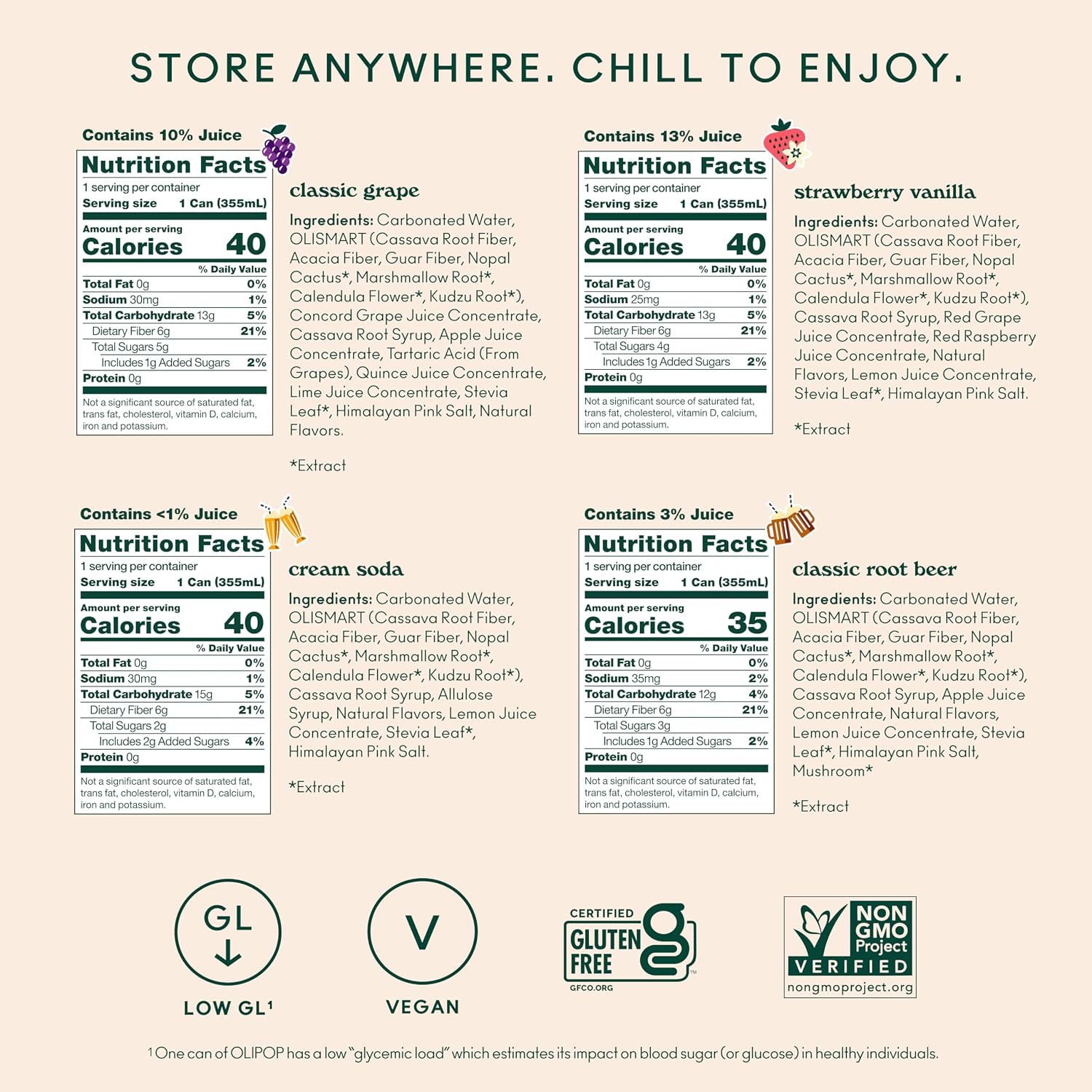
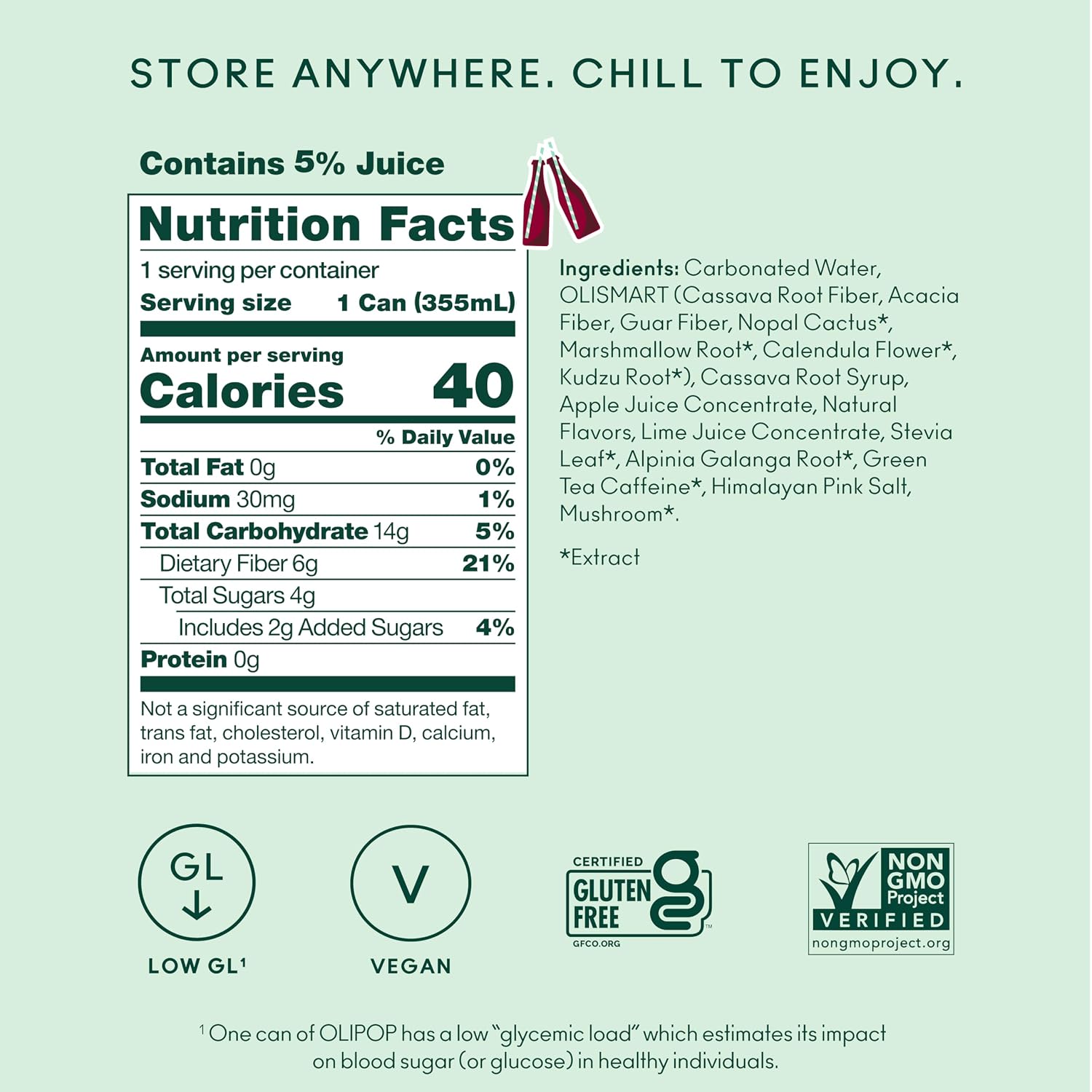
OLIPOP fiber per can: 9 grams of plant fiber — inulin, Jerusalem artichoke, kudzu root, and others — per OLIPOP’s published nutrition facts (OLIPOP official product nutrition facts and ingredient disclosures, olipopdrinks.com, accessed May 2026). Sweetened with cassava syrup and stevia. No high-fructose corn syrup, no aspartame.
Approximate price range: $2.49–$2.99 per can at multipack online retail pricing, mid-2026.
Bloom
$18.99
In stock on Amazon
Check price on AmazonBloom Pop: The Budget Challenger With Two Standout Flavors
Bloom Pop entered the awareness of many prebiotic soda buyers after OLIPOP raised its prices — a pattern that shows up explicitly in reviews, where buyers describe switching specifically because the cost-per-can math changed. That’s a useful frame: Bloom Pop isn’t necessarily trying to out-innovate OLIPOP; it’s positioning as the brand you reach for when the category leader gets expensive.
Its two strongest flavors by review enthusiasm are Shirley Temple and Strawberry Cream. The Shirley Temple in particular earns unusually enthusiastic notes — reviewers describe it as tasting genuinely celebratory, with the grenadine-and-citrus character intact. This makes Bloom Pop a genuinely interesting option for the home entertainer or cocktail-mixer audience: a prebiotic Shirley Temple as a mocktail base, or as a mixer with spirits, is a practical use case that the flavor actually supports.
The Strawberry Cream reviews follow a similar pattern — reviewers keep returning to the word “real,” as in it tastes like actual strawberries rather than strawberry candy. For a category that tends toward artificial-adjacent flavors, that’s notable.
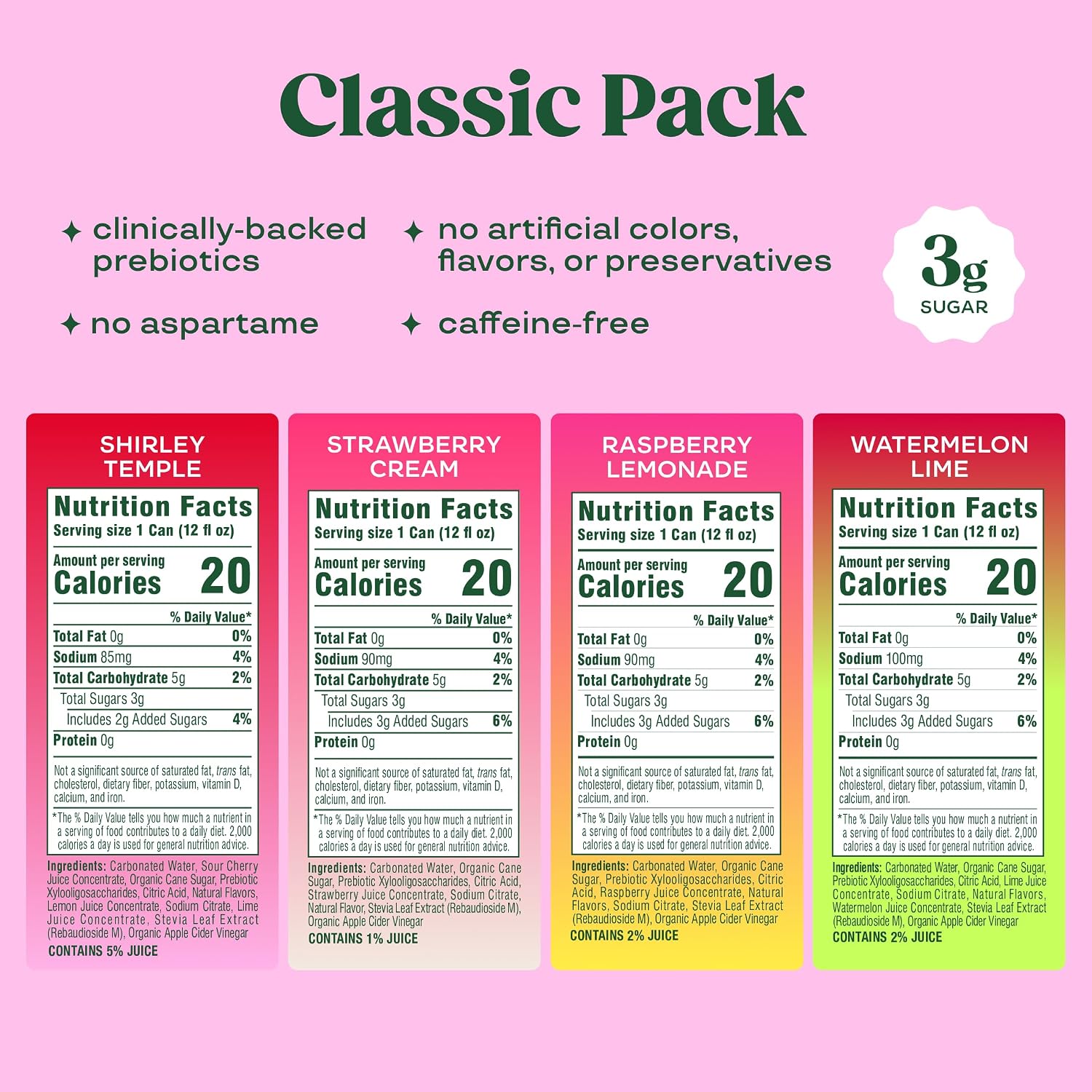
Bloom Pop’s prebiotic fiber content runs lower than OLIPOP’s — typically around 3–4 grams per can depending on the SKU, per Bloom Nutrition’s published label data (Bloom Pop product label and FAQ, bloomnutrition.com, accessed May 2026). It uses inulin as its primary prebiotic fiber source and is also HFCS-free. If fiber dose is a priority for the gut-health angle, that gap from OLIPOP’s 9 grams is worth knowing before you commit to a case.
Approximate price range: $1.79–$2.29 per can at multipack online retail pricing, mid-2026.
Pepsi
$7.97
In stock on Amazon
Check price on AmazonPepsi Prebiotic Cola: The Mid-Tier Legacy Entry With Polarized Reviews
Pepsi Prebiotic Cola launched with the obvious strategic logic: put a prebiotic claim on a name people already trust, and let distribution do the work. Per PepsiCo’s 2024 launch press release (PepsiCo press release: Pepsi Prebiotic Cola launch, pepsico.com, 2024), the formula uses inulin fiber and targets the same health-curious cola buyer that OLIPOP has been cultivating for years.
The review polarization here is sharper than with either of the other brands. On one end: buyers describe it as a satisfying, familiar cola that doesn’t taste like a compromise. On the other end: buyers describing the exact same flavor call it chemical or artificial-tasting, with the aftertaste being the specific point of failure.
This isn’t a quality-control problem — it’s a sweetener-sensitivity split. Pepsi Prebiotic uses a blend of cane sugar and stevia, per its published label. Stevia has a well-documented bitter aftertaste that a meaningful portion of the population perceives more intensely. Serious Eats has covered this phenomenon in its overview of non-nutritive sweeteners and taste sensitivity (Serious Eats, overview of non-nutritive sweeteners and taste sensitivity, seriouseats.com), explaining that individual variation in sweetener perception is significant and consistent enough to predict negative reviews among affected tasters. If your household falls into that group, the Pepsi Prebiotic aftertaste is likely to read as chemical regardless of the base cola quality. That’s the tradeoff the reviews are actually describing, even when the reviewers themselves don’t frame it that way.
Pepsi Prebiotic does not use artificial sweeteners in the traditional sense — no aspartame, no sucralose. But stevia is a non-nutritive sweetener, and for buyers who react to it, the effect is functionally similar.
Approximate price range: $1.99–$2.49 per can at multipack online retail pricing, mid-2026.
OLIPOP
$16.13
In stock on Amazon
Check price on AmazonBy the Numbers: Fiber, Sweeteners, and Price at a Glance
| Brand | Fiber per Can | Prebiotic Source | Sweetener | Est. Price/Can |
|---|---|---|---|---|
| OLIPOP | 9 g | Inulin, Jerusalem artichoke, kudzu, others | Cassava syrup + stevia | $2.49–$2.99 |
| Bloom Pop | 3–4 g | Inulin | Cane sugar + stevia | $1.79–$2.29 |
| Pepsi Prebiotic | 3 g | Inulin | Cane sugar + stevia | $1.99–$2.49 |
Prices reflect mid-2026 multipack online retail averages. Single-can retail prices vary by market. Fiber and ingredient data sourced from each brand’s published nutrition labels.
Consumer Reports has noted in its coverage of functional beverages (Consumer Reports, “Functional Beverages: What the Labels Really Mean,” consumerreports.org) that prebiotic fiber quantities on soda labels are generally reliable and regulated under standard nutrition-facts disclosure rules — meaning the gram counts above reflect real formulation differences, not marketing rounding.
How to Actually Choose: The Decision Framework
You’ve read enough to know the category. Here’s the if/then logic that should drive your actual purchase.
If you’re buying as a Coke substitute for someone actively reducing sugar intake: OLIPOP Vintage Cola is the pick. The flavor accuracy is highest, the fiber dose is highest, and the reviews from people in exactly that situation are the most consistently positive in the category. The emotional investment buyers describe — surprise that it works — is real signal, not marketing. The Tasting Table evaluation (Tasting Table, “We Tried Every OLIPOP Flavor,” tastingtable.com) reinforces this, noting the Vintage Cola as the standout performer in OLIPOP’s lineup.
If you’re buying for a household with kids, or for a home entertaining context where you want variety: Bloom Pop Shirley Temple and Strawberry Cream are your safest bets for enthusiastic reception. The Shirley Temple especially works as a mocktail or a mixer, which extends its use case for the adult table. OLIPOP Cream Soda and Grape round out a kid-friendly lineup if you want to mix brands.
If root beer is your target flavor: Do not default to OLIPOP. The reviews are too consistent on this point. A traditional craft root beer — a small-batch producer or a well-regarded regional brand — is likely to satisfy more reliably than any prebiotic root beer currently on the market.
If stevia aftertaste is a known issue for you or your household: Pepsi Prebiotic is high-risk. The polarized reviews map closely onto the known split between people who taste stevia’s bitterness and people who don’t, as Serious Eats documents in its non-nutritive sweetener overview (Serious Eats, overview of non-nutritive sweeteners and taste sensitivity, seriouseats.com). OLIPOP also uses stevia, but reviewers flag the aftertaste less frequently — possibly because the higher fiber content and the more complex botanical blend masks it. Test a single can before committing to a multipack of either brand.
If price-per-can is your primary constraint and you still want the prebiotic claim: Bloom Pop is the honest answer. You’re giving up fiber dose (3–4 g vs. OLIPOP’s 9 g), but you’re getting two genuinely well-reviewed flavors at a lower price point. The tradeoff is explicit; it’s not a hidden compromise.
Frequently Asked Questions
Does OLIPOP actually taste like real cola or root beer? For cola: yes, with caveats. Reviewers consistently describe the Vintage Cola as a convincing substitute, especially for buyers transitioning away from regular Coke — a finding echoed in Tasting Table’s full-lineup evaluation (Tasting Table, “We Tried Every OLIPOP Flavor,” tastingtable.com). For root beer: no, not reliably. The root beer flavor is the most common disappointment in OLIPOP’s lineup, with reviewers noting it doesn’t deliver the specific flavor signature root beer drinkers expect.
Is Pepsi Prebiotic sweetened with artificial sweeteners? No artificial sweeteners in the traditional sense — no aspartame, no sucralose. Pepsi Prebiotic uses cane sugar and stevia, per PepsiCo’s published nutrition information (PepsiCo press release: Pepsi Prebiotic Cola launch, pepsico.com, 2024). Stevia is a natural, non-nutritive sweetener, but it produces a bitter aftertaste in a significant portion of the population. Whether that registers as “artificial” is individual, but the ingredient itself is plant-derived.
Which prebiotic soda flavor do kids prefer? Based on reviewer reports from parents across the category, OLIPOP Cream Soda and Grape are the most frequently described as kid-approved, with Bloom Pop’s Strawberry Cream earning similar notes. The Shirley Temple from Bloom Pop appeals to kids who know the mocktail already.
Can prebiotic sodas actually help with gut health? The fiber is real and the mechanism is legitimate — inulin and other prebiotic fibers do feed beneficial gut bacteria. Consumer Reports’ coverage of functional beverages (Consumer Reports, “Functional Beverages: What the Labels Really Mean,” consumerreports.org) confirms that the prebiotic fiber category has genuine scientific grounding, while noting that the degree of benefit depends heavily on overall diet context. Whether a single can per day moves the needle meaningfully depends on the rest of what you eat; 9 grams from OLIPOP is a meaningful contribution toward a daily fiber goal, while 3 grams from Bloom Pop or Pepsi Prebiotic is a smaller fraction. These are sodas with a genuine functional ingredient, not medical treatments.
Is Bloom Pop a good substitute for OLIPOP if the price is too high? Yes, with scope limitations. Bloom Pop’s Shirley Temple and Strawberry Cream are genuinely strong flavors that reviewers describe with real enthusiasm. If those flavors match what you want, Bloom Pop is a legitimate alternative, not a downgrade. If you specifically want the cola or vintage soda flavors that OLIPOP has refined, Bloom Pop’s current lineup doesn’t offer a direct parallel.
How much fiber is in each prebiotic soda per can? OLIPOP: 9 grams per can, per OLIPOP’s published nutrition facts (OLIPOP official product nutrition facts and ingredient disclosures, olipopdrinks.com, accessed May 2026). Bloom Pop: approximately 3–4 grams depending on the SKU, per Bloom Nutrition’s published label data (Bloom Pop product label and FAQ, bloomnutrition.com, accessed May 2026). Pepsi Prebiotic: 3 grams per can, per PepsiCo’s published nutrition information (PepsiCo press release: Pepsi Prebiotic Cola launch, pepsico.com, 2024). If fiber dose is a meaningful part of why you’re buying in this category, OLIPOP has a clear lead.