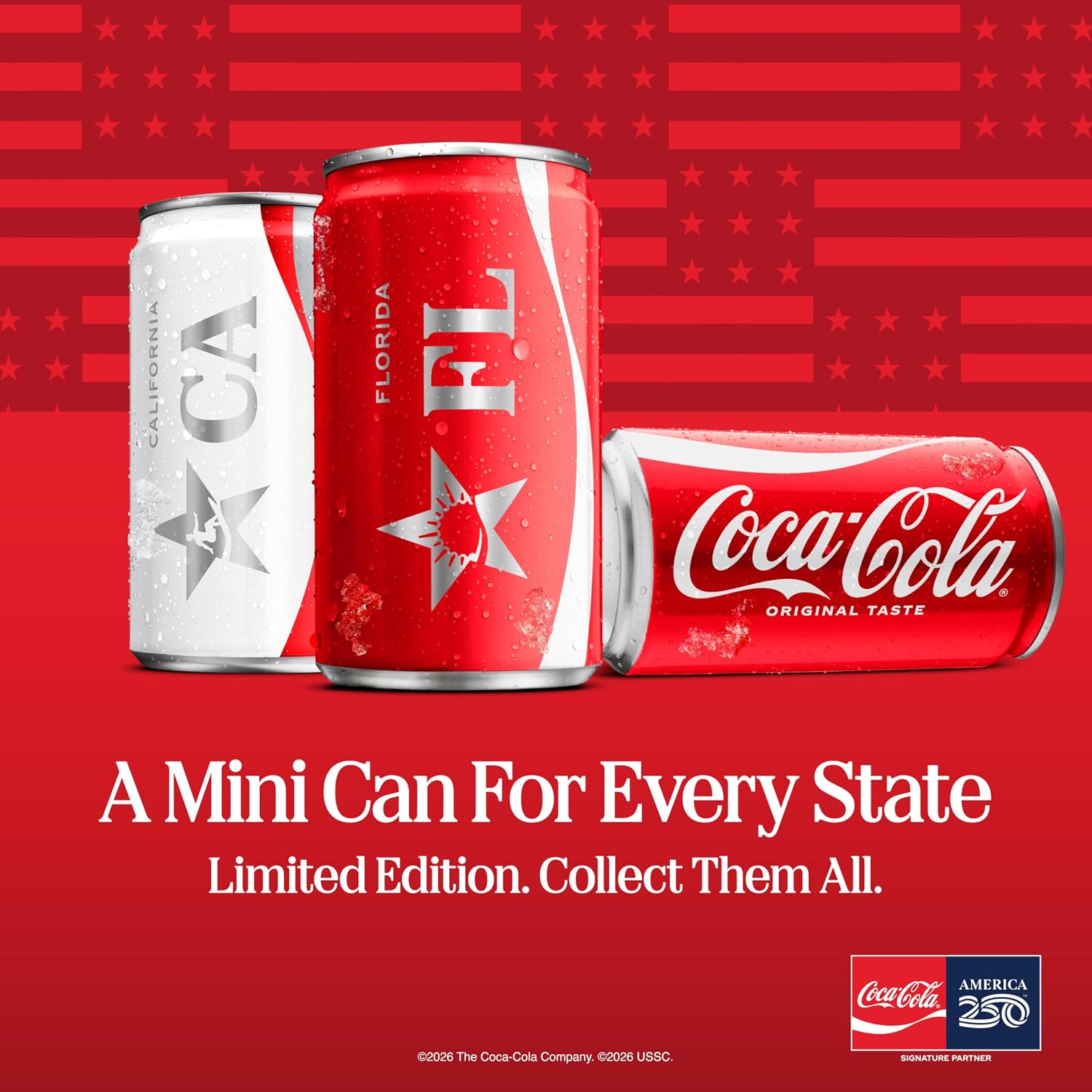
If you’ve ever cracked open a standard 12-ounce can of soda — that’s the familiar tall aluminum cylinder you’d find in any gas station cooler — only to leave half of it flat and warm on the counter, you already understand the appeal of mini cans. Mini cans are the same sodas you know, just packaged in a smaller 7.5-ounce format: less carbonation to lose, less sugar to consume in one sitting, and a more manageable portion if you’re just looking for a quick sip rather than a full drink. Variety packs take that a step further by bundling multiple flavors into one order, which is ideal for households with different tastes, offices with diverse preferences, or anyone who gets bored drinking the same thing every day. This guide ranks the best mini can variety packs currently available, tells you exactly what each one does well (and where each falls short), and helps you figure out which one fits your specific situation — budget, use case, and all.
Why the Per-Ounce Math Actually Matters Here
Before we get into rankings, it’s worth being honest about the cost structure of mini cans, because it shapes every purchase decision in this category.
By the numbers:
- Standard 12-pack of 12 oz cans: roughly $0.04–0.06 per ounce
- Mini can 24-pack (7.5 oz cans): roughly $0.07–0.10 per ounce
- The premium: approximately 50–70% more per ounce, depending on retailer and pack size
That premium is real, and it’s not going away. You’re paying for convenience, portion control, and in the case of variety packs, flexibility. The question is whether the use case justifies it — and for a meaningful subset of buyers, it clearly does. Consumer Reports’ overview of soda packaging trends notes that the mini can segment has grown consistently since 2018, driven almost entirely by portion-conscious consumers and households that entertain frequently. Tastingtable’s rankings of mini soda formats echo the same theme: the buyers who stick with minis long-term are the ones who were consistently leaving half a can unfinished before they switched.
If you’re buying minis to save money versus standard cans, you’re pointed in the wrong direction. If you’re buying them because you never finish a full can, or because you need a range of flavors for a party or office fridge, the math flips in your favor quickly.
The Coca-Cola Mini 24-Pack Variety: The Office Standard
The Coca-Cola Mini 24-Pack Variety — which typically bundles Coke, Diet Coke, Coke Zero Sugar, and sometimes Sprite across 24 cans — is the most consistently reviewed variety pack in this segment, and the pattern across those reviews is hard to argue with.
Reviewers repeatedly call it out as the ideal office fridge solution. The logic is straightforward: a shared office refrigerator needs to serve multiple tastes without forcing anyone to commit to a full 12-ounce drink mid-morning. The variety format handles that neatly. A single person can grab a Coke Zero at 10 a.m. and a regular Coke at lunch without cracking two full cans and wasting either one.
The flavor mix itself is well-balanced for broad appeal. Coke, Diet Coke, and Coke Zero cover the full sweetness spectrum — full sugar, classic diet, and the newer zero-sugar formula that reviewers consistently rate as closer to the full-sugar original than Diet Coke. If your office or household has people across all three preferences, this pack is genuinely hard to beat for coverage.
The honest tradeoffs: The Coca-Cola variety pack doesn’t give you anything adventurous. If everyone in your household drinks regular Coke and nothing else, you’ll end up with orphaned cans of Diet Coke sitting in the back of the fridge. And at the per-ounce premium noted above, you’re paying more than you need to if you only want one flavor. This pack earns its place when flavor diversity is the actual goal.
If X, then Y: If you’re buying for a mixed-preference group of four or more people, this is the pick. If you’re buying for one or two people with identical tastes, a single-flavor mini pack is more efficient.
Mountain Dew Mini Cans Variety: The Gaming Session Pack
Mountain Dew mini cans occupy a genuinely specific niche, and the reviews make it explicit in a way you don’t see with other brands. Across aggregated verified-purchase reviews for the Mountain Dew mini variety, a disproportionate number of buyers mention gaming sessions by name — specific titles like Call of Duty and Fortnite appear in review text — making this the clearest use-case-defined product in the mini can category.
The appeal is functional: gaming sessions run long, you want something cold and carbonated at arm’s reach, but a 12-ounce can goes flat before you finish it if you’re in the middle of a match. A 7.5-ounce mini stays fresh longer once opened and delivers the same flavor hit in fewer sips. Reviewers consistently describe it as “the right amount” — a phrase that comes up repeatedly across Mountain Dew mini reviews and almost nowhere else in the category.
The variety in Mountain Dew’s mini packs typically spans original Dew, Code Red (cherry), and occasionally Voltage (citrus-raspberry) depending on the specific SKU. For Dew loyalists, this is a rare chance to rotate flavors without committing to a full 12-pack of each.
The honest tradeoff: Mountain Dew is a polarizing brand — people who love it tend to love it intensely, and people who don’t are unlikely to be converted by the mini format. This is not a variety pack to buy for a mixed crowd. It’s a pack to buy for one or two enthusiasts who want options within a flavor family they already like.
If X, then Y: If you’re a Dew drinker who wants to rotate flavors during long sessions at home, this is your pack. If you’re buying for a group that includes Dew skeptics, the Coca-Cola variety will serve you better.
Pepsi Wild Cherry Mini Cans: Buy with Eyes Open
Pepsi Wild Cherry mini cans have a genuine fanbase — the flavor is distinct, genuinely cherry-forward in a way that reads more like real fruit than the medicinal cherry notes in some competitors — and the mini format is a good match for it. Cherry soda is often too sweet to finish a full 12-ounce can in one go, so the 7.5-ounce size is actually well-suited to the flavor profile.
But there is a shipping problem with this product that deserves a direct callout rather than a buried footnote.
Across multiple verified-purchase review threads, buyers report receiving dented cans — and not minor cosmetic dents. The specific complaint pattern involves raised metal on the interior edge of the dent, which is a structural concern: a can with raised internal metal may have compromised its seal. Two out of twelve cans arriving in this condition is the specific ratio that appears in multiple independent reviews, which suggests this is a packaging or fulfillment issue rather than isolated bad luck.
What to do if your Pepsi Wild Cherry minis arrive dented: Do not drink from any can where the dent includes raised or sharp interior metal — the seal integrity is uncertain. Document the damage with photos before opening the package, and contact the retailer’s customer service immediately. Most fulfillment-based retailers will replace damaged units, but you need to report within the standard window (often 30 days).
The honest tradeoff: The flavor is genuinely good and the reviews that focus on taste are enthusiastic. But the shipping damage pattern is too consistent to ignore. If you order this product, inspect every can before refrigerating. If you’re buying for an event and can’t absorb the risk of damaged units, the Coca-Cola or Mountain Dew variety packs have cleaner track records on fulfillment.
If X, then Y: If you’re a Wild Cherry loyalist and can inspect on arrival, it’s worth it. If you’re buying unseen for a gift or event without time to swap damaged units, the risk is meaningful.
Mug Root Beer Mini Cans: The Discovery Pack
Mug Root Beer is a PepsiCo brand that has been on shelves for decades, but something unusual happens in the mini can reviews: buyers consistently write about it as though they’ve discovered it for the first time. Phrases like “didn’t expect to like this as much as I did” and “why haven’t I been drinking this all along” appear across multiple independent reviews — an enthusiasm that’s rare for a mainstream national brand and almost never shows up for Pepsi or Coke products at this scale.
The likely explanation is that the mini can format is doing real marketing work here. Buyers who pick up a mini variety pack or a small Mug mini pack are lower-commitment — they’re sampling rather than investing in a 12-pack — and that lower barrier to entry is apparently converting people who had mentally filed root beer away as something they didn’t drink.
Mug Root Beer itself is a creamy, vanilla-forward root beer with moderate carbonation — reviewers consistently describe it as smooth and less sharp than A&W, which has a slightly more assertive bite. In the 7.5-ounce mini format, the sweetness stays manageable.
If X, then Y: If you have people in your household who are root beer-agnostic or have never really given it a chance, a Mug mini pack is a low-stakes way to run that experiment. The discovery rate in reviews is high enough to suggest it converts more often than not.
Frequently Asked Questions
Do mini cans go flat faster than standard 12 oz cans once opened? No — and this is one of the underappreciated advantages of the format. Because a 7.5-ounce can holds less liquid, you’re more likely to finish it before carbonation escapes. A can you finish in five minutes doesn’t go flat. The per-ounce premium starts to look more reasonable when you factor in how much carbonation you lose from a 12-ounce can you only drink halfway.
What is the actual cost-per-ounce penalty for buying mini cans versus standard packs? Plan for a 50–70% premium per ounce. A standard 12-pack of 12 oz cans typically runs $0.04–0.06 per ounce depending on brand and retailer. Mini can 24-packs typically land at $0.07–0.10 per ounce. The variety format sometimes adds a small additional premium over single-flavor mini packs.
Are mini cans a good choice for kids’ lunches? Yes, and this is one of the most consistent use cases in reviews. A 7.5-ounce can is a more appropriate serving size for children than a 12-ounce can, and the smaller format means less wasted soda and less sugar per serving. The Coca-Cola variety packs and Mug Root Beer minis both appear frequently in reviews from parents citing exactly this context.
Which mini can variety pack gives you the most flavor diversity? The Coca-Cola 24-Pack Variety covers the widest spectrum — full sugar, classic diet, and zero-sugar across two or three distinct cola profiles. For non-cola diversity within a single brand family, the Mountain Dew variety spans meaningfully different flavor profiles (citrus, cherry, original) even though they share the same DNA.
What should I do if my mini cans arrive dented? Photograph every can before opening the outer packaging, then inspect each individually. A cosmetic dent on the side of a can with no raised or sharp interior metal is generally considered safe by food safety standards — the National Soft Drink Association’s packaging guidance confirms that minor exterior dents without seal compromise don’t affect product safety. However, any dent involving raised interior metal, a compromised seam, or the top or bottom of the can should be treated as a potential seal failure. Report to the retailer immediately with photos, and don’t consume from questionable cans.
The Bottom Line
Mini can variety packs aren’t for everyone — the per-ounce premium is real, and if you reliably finish a full 12-ounce can every time, single-flavor standard packs are more efficient. But if the “I never finish a full can” problem is familiar to you, or if you’re buying for a mixed-taste group, office, or event, the variety format earns that premium quickly.
The clear-cut decision rules:
- Office or mixed-household buying → Coca-Cola Mini 24-Pack Variety, no close second
- Solo or duo gaming / long-session use → Mountain Dew Mini Variety, purpose-built for this
- Root beer discovery or kids’ lunches → Mug Root Beer minis, genuinely surprising upside
- Wild Cherry loyalists with time to inspect → Pepsi Wild Cherry minis are worth it; know the damage risk going in
The format is simple. The tradeoffs are knowable. Pick the pack that matches your actual use case and you’ll be ahead of the people still leaving half a can flat on the counter.