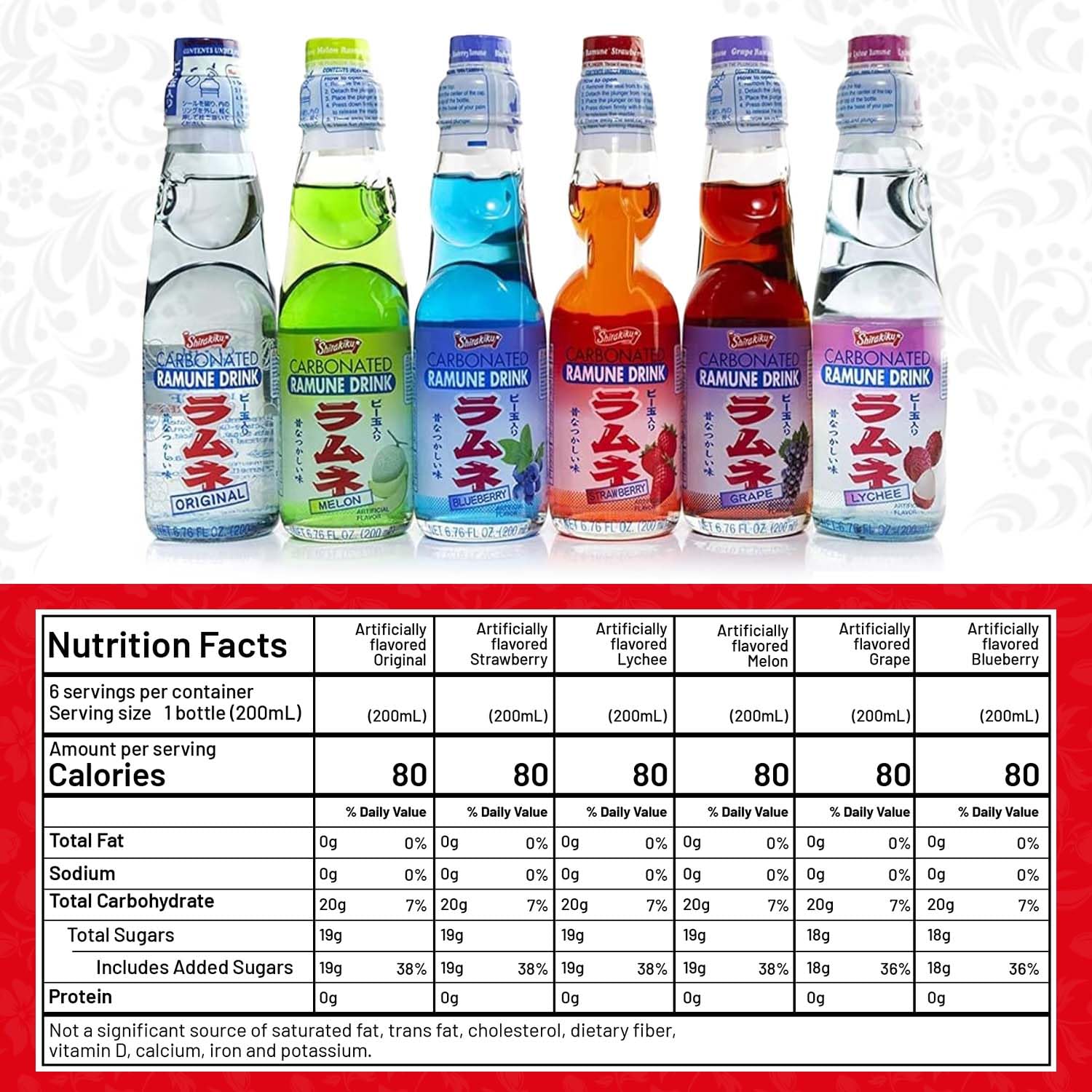
If you’ve never encountered Ramune (pronounced “ra-moo-nay”) before, here’s the short version: it’s a Japanese carbonated soft drink — basically a flavored sparkling soda — sold in a distinctively shaped glass bottle sealed not with a twist cap but with a small glass marble. To open it, you use a plastic plunger that comes with the bottle to push the marble down into a pinched chamber inside the neck, which then rattles around while you drink. The whole ritual is genuinely delightful, which is a big reason Ramune has a passionate following well outside Japan. If you’ve seen the bottles at anime conventions, Japanese grocery stores, or floating around in specialty food shops, you already know the vibe. This guide is for buyers who are past the novelty phase and now want to understand what they’re actually ordering — which brands are worth the price, which flavors are legitimately good versus gimmicky, and how to read an Amazon listing before clicking “add to cart” on a 30-pack.
| EDITOR'S PICKRamune Japanese Marble Soda Cho… | Mid-tierSangaria Ramune | Budget pickRamune Japanese Soda Variety Pa… | |
|---|---|---|---|
| Flavor variety | Choose your flavor | Peach | Multiple flavors |
| Bottle count | 9 | 6 | 5 |
| Bottle size | — | 6.76 fl oz | — |
| Brand | Ramune | Sangaria | Ramune |
| Price | $31.99 | $26.99 | $18.14 |
| See on Amazon → | See on Amazon → | See on Amazon → |
The Two-Brand Reality: Kimura vs. Sangaria
Before you get deep into flavor comparisons, you need to understand that almost every Ramune you’ll find on Amazon comes from one of two producers: Kimura Drink Co. and Sangaria. Knowing the difference changes how you shop.
Kimura is the prestige tier. Founded in 1884, it’s widely credited — including in Serious Eats’ overview of the category — as the brand that popularized the Codd-neck marble bottle format still used today. Kimura bottles run $4–$6 per unit when purchased individually and are typically sold in packs of six or twelve through specialty importers. The carbonation is noticeably sharper than the competition, and the glass bottle contributes to a cleaner flavor profile — glass doesn’t interact with the liquid the way plastic does. Collectors and gifters tend to gravitate toward Kimura for those reasons. Importers like Bokksu Snacks and Japan Centre (both of which sell through Amazon’s marketplace) are your most reliable sources.
Sangaria is the high-volume, accessible tier. You’ll find it in 30-packs for $25–$35 — that’s roughly $0.90–$1.15 per bottle — making it the obvious choice for parties, bar programs, or anyone who wants to stock a variety tray for a backyard event without sweating the per-unit cost. The carbonation is gentler, the sweetness profile is softer, and the bottles are a bit smaller. Per aggregated reviews across Amazon and Tasting Table’s overview of Japanese sodas available online, Sangaria is consistently described as approachable and crowd-pleasing, even if it doesn’t have the same snap as Kimura.
By the numbers:
| Brand | Typical Price Per Bottle | Bottle Size | Carbonation Level (per reviews) |
|---|---|---|---|
| Kimura | $4–$6 | 200 mL | High / sharp |
| Sangaria | $0.90–$1.15 | 190 mL | Moderate / soft |
The decision rule is simple: if it’s a gift, a tasting flight, or a premium mixer, buy Kimura. If it’s a party or variety display, Sangaria is the smarter math.
Flavor Tiers: What’s Worth Ordering and What’s a Gimmick
Ramune comes in somewhere north of 50 documented flavors — Eater’s guide to Japanese convenience store drinks puts the active SKU count even higher when you factor in regional and seasonal releases. For Amazon buyers, the practical universe is smaller: maybe 15–20 flavors with reliable import availability. Here’s how to think about them in tiers.
Tier 1: The Anchors (Order These First)
Original (Lemon-Lime): This is the baseline. Every serious comparison starts here. The flavor is light, citrus-adjacent, slightly floral — closer to a yuzu-kissed sparkling water than a Western lemon-lime soda. VinePair’s piece on Ramune as a cocktail mixer specifically calls out the original flavor as the most versatile for pairing with spirits because it doesn’t compete with other flavors. If you’re building a mixer shelf, this is your workhorse.
Watermelon: Consistently ranks at the top of aggregated Amazon review pools for the Kimura line. The flavor reads as genuinely melon-forward rather than candy-adjacent — a distinction that reviewers keep returning to. It’s one of the few “fruit flavor” Ramunes that doesn’t taste synthetic.
Strawberry: The second most-reviewed flavor in Sangaria’s variety packs, and for good reason. It’s sweet but not aggressively so, and it works well as a standalone drink for guests who are skeptical of novelty flavors.
Tier 2: The Interesting Ones (Worth Exploring If You’re Building Variety)
Lychee: This is where Ramune starts doing something that Western sodas almost never attempt. Lychee flavor in Ramune — particularly in the Kimura SKU — is described by reviewers as closer to the actual fruit than most lychee-flavored beverages available in the U.S. market. It pairs well as a mixer, and it’s a strong pick for anyone building a Japanese-themed event tray.
Melon (Cantaloupe): Slightly more polarizing than watermelon. The flavor leans sweeter and more candy-coded, which some buyers love and others find one-dimensional. Worth including in a variety pack but probably not a standalone order.
Peach: Shows up in Sangaria variety packs more often than Kimura’s line. Soft, approachable, and reliably popular with younger drinkers and anyone who tends toward light fruit flavors. Reviewers consistently describe it as the “safe” pick for guests who might be uncertain about novelty flavors.
Grape (Muscat): Available from both brands but most commonly associated with Kimura’s single-flavor packs. The muscat grape variety used in the flavoring reads as more fresh and less candy-like than generic “grape soda” — think of it as the midpoint between a fruit soda and a sparkling juice. Worth ordering once.
Tier 3: The Novelty Tier (Buy for the Experience, Not the Flavor)
This is where Ramune earns its reputation for chaos. Flavors like takoyaki (octopus ball), curry, yakitori, and kimchi exist — and yes, they are exactly what they sound like. Kimura produces most of the extreme savory flavors, often as limited seasonal releases tied to regional festivals in Japan.
Are they good? Not particularly, by most accounts. Reviewers across multiple Amazon listings for the novelty flavors note that the experience is more about the spectacle than the drink itself — the carbonation makes the savory flavor profiles genuinely strange, in a way that’s entertaining for a tasting game but not something you’d reach for twice. Tasting Table’s overview of Japanese sodas flags these exactly this way: worth buying once for a party or a conversation starter, but don’t anchor a variety order around them.
The decision rule for Tier 3: If you’re running a tasting event, a games night, or you’re shopping for a gift basket with personality, grab one or two novelty flavors. If you’re stocking a bar or a household, skip them.
Reading Amazon Listings Without Getting Burned
Import listings on Amazon have real quality variance, and the category has enough quirks to trip up buyers who aren’t paying attention.
Check the seller, not just the listing. Ramune has a short shelf life relative to domestic sodas — most Kimura product is marked best-by within 12–18 months of production. Reviewers on multiple listings have flagged receiving product with fewer than 3 months remaining on the best-by date, which is particularly problematic for the marble bottle format since older product can show carbonation loss before opening. Stick to sellers with recent positive reviews specifically mentioning condition on arrival.
Variety packs are not all created equal. Several Amazon listings sell “random assortment” variety packs where the flavor mix isn’t disclosed upfront. These tend to run heavier on whatever the slowest-moving flavors are — which, per pattern analysis of review content on those listings, often means you’ll get more curry and takoyaki than watermelon and lychee. If flavor control matters to you, buy single-flavor packs or packs with explicit flavor lists in the product description.
Weight matters for shipping costs on Subscribe & Save. Glass-bottle Ramune is heavy. A 12-pack of Kimura runs roughly 7–8 lbs shipped. If you’re setting up a Subscribe & Save order, run the per-bottle math including shipping on non-Prime SKUs — the economics shift considerably.
Watch for the “plastic bottle” variant. Some import listings — particularly lower-priced Sangaria SKUs — are plastic bottle versions. The marble mechanism still works, but the flavor profile changes: reviewers consistently note a slightly flatter, more muted taste in plastic versus glass. It’s not a dealbreaker for a party supply order, but if you’re buying for a gift or a bar program, verify the material in the listing description.
How to Build a Smart First Order
If you’re new to buying Ramune online and want a starting inventory that covers all your bases, here’s the frame:
For household variety (2–4 people, casual drinking): A 12-pack Kimura variety set in original, strawberry, and watermelon gives you the flavor range to understand the category without committing to a specialty flavor you might not finish. Look for a listed assortment, not a random mix.
For a party or event tray: Two Sangaria 30-packs in different flavor groupings plus one Kimura 6-pack in original to show guests the glass-bottle experience. Total spend: roughly $65–$80 for a display that handles 30+ guests and gives you a visual centerpiece.
For a cocktail program or bar shelf: Start with Kimura original in a 12-pack. VinePair’s mixer-focused coverage specifically recommends original Ramune as a substitute for club soda in light citrus cocktails — the marble-bottle presentation adds theater, and the sharper carbonation holds up better under ice than the Sangaria line.
For a gift: A single-flavor 6-pack of Kimura in an unusual flavor (lychee or muscat grape) plus one novelty flavor (curry or takoyaki, clearly labeled) makes a genuinely memorable gift for anyone who’s curious about Japanese food culture. Price point lands at $25–$35 shipped, which sits comfortably in the “interesting and useful” gift range.
The Ramune category rewards a little homework upfront — once you know which brand tier matches your use case and which flavors are genuinely worth the order, it’s one of the most repeatable and crowd-pleasing specialty soda categories available through Amazon’s import marketplace.