If you’ve ever grabbed a bottle of ginger beer at a specialty grocery store and felt a flicker of sticker shock, you’re not imagining things. Ginger beer — a carbonated, non-alcoholic beverage made with real ginger root, sugar, and citrus — has quietly become one of the most stratified categories in the mixer aisle (mixers are ready-to-pour beverages designed to be combined with spirits, or sipped straight as a premium soft drink). A four-pack of Fever-Tree Ginger Beer can run you more than a decent bottle of mixer rum. Reed’s sells a comparable can for half that price. Q Mixers lands somewhere between the two, with a distinct pitch about carbonation intensity and sweetener choice. If you’re stocking a home bar, catering a party, or building out a restaurant back bar, the brand you choose doesn’t just affect flavor — it affects your per-drink cost in a way that compounds fast. This guide breaks down the math, names the tradeoffs, and gives you a clear decision rule at the end.
Why Ginger Beer Brand Choice Actually Matters (More Than People Admit)
The default assumption in a lot of home bar setups is that ginger beer is ginger beer — pick whatever’s on sale, pour it over ice with your spirit of choice, done. Reviewers at VinePair and Serious Eats have pushed back on this across multiple published taste tests, noting that ginger beer varies enormously across brands in three dimensions that directly affect cocktail quality: heat level (how much actual ginger bite you get), carbonation persistence (whether the bubbles last through a full glass), and sweetness balance (which determines whether the mixer competes with your spirit or complements it).
That variation matters because a Moscow Mule or Dark and Stormy isn’t just spirit-plus-fizz — the ginger beer is doing real flavor work. Bon Appétit’s mixer coverage has made the case that a quality mixer should be assertive enough to hold its own against a standard 1.5 oz spirit pour without disappearing into sweetness, drawing a real line between commodity ginger sodas and purpose-built mixers. Fever-Tree, Reed’s, and Q have all staked claims on different sides of that line. Understanding exactly where each lands — and what you’re actually paying per ounce — is the whole game.
The Three Brands, Broken Down
Fever-Tree Ginger Beer
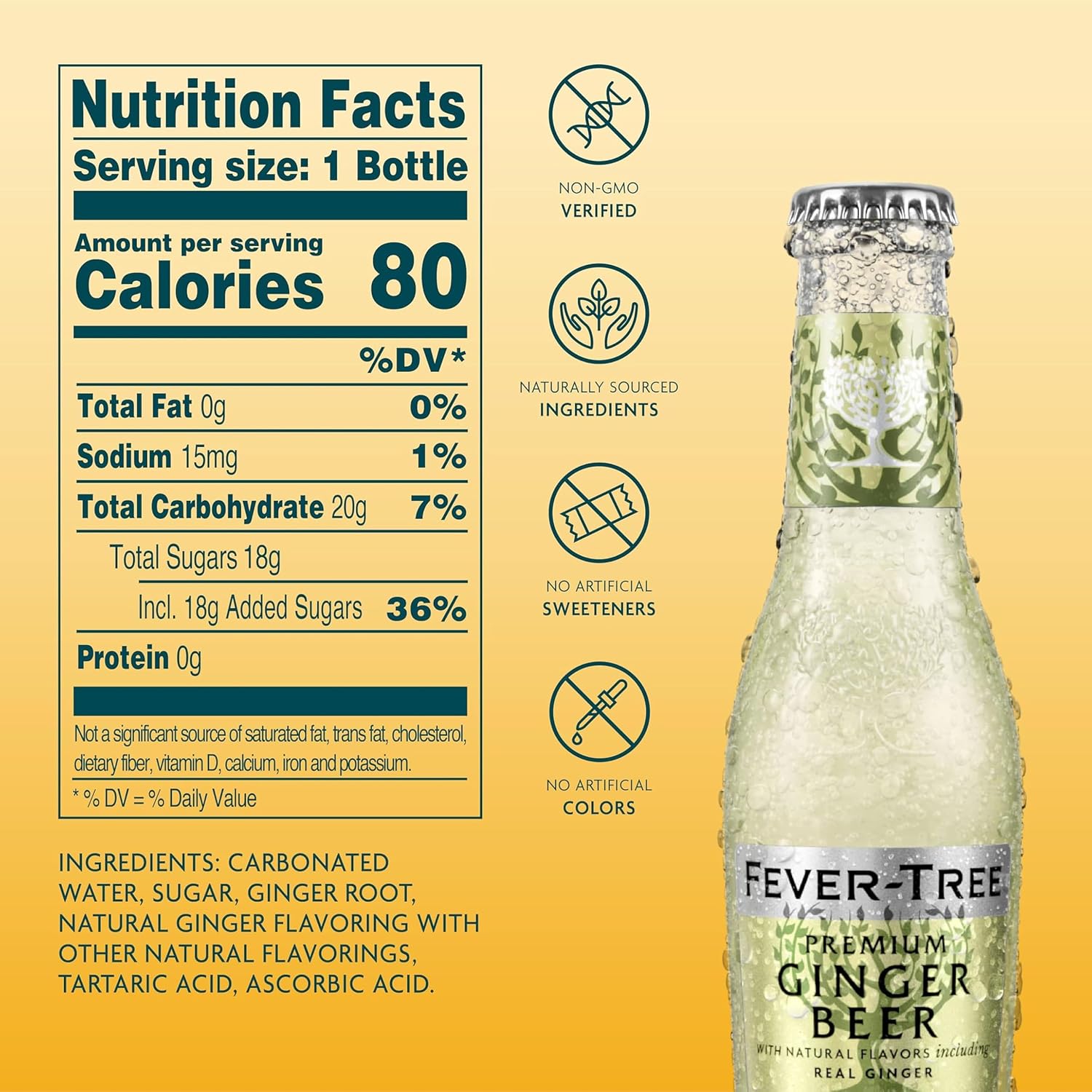
Fever-Tree is a UK-founded brand, launched in 2004, built around the premise that premium spirits deserve premium mixers. Their ginger beer uses multiple ginger varieties sourced from different growing regions. The result, per aggregated reviews in Serious Eats’ “The Best Ginger Beers for Cocktails and Drinking Straight” and Tasting Table’s “The Best Ginger Beer Brands Ranked,” is a relatively dry, medium-heat profile with fine carbonation that holds well in a mixed drink. Reviewers across both outlets consistently describe the flavor as clean and not cloying. The trade-off is straightforward: Fever-Tree is the most expensive of the three on a per-ounce basis in nearly every retail channel.
The 200mL (6.8 oz) glass bottle format is single-serve by design — you open one, pour the whole thing, and nothing sits open losing carbonation. For buyers who prioritize consistency and presentation, that single-serve engineering is a meaningful feature, not just packaging aesthetic.
Best for: Vodka-based cocktails, gifting, home bars where presentation matters alongside performance.
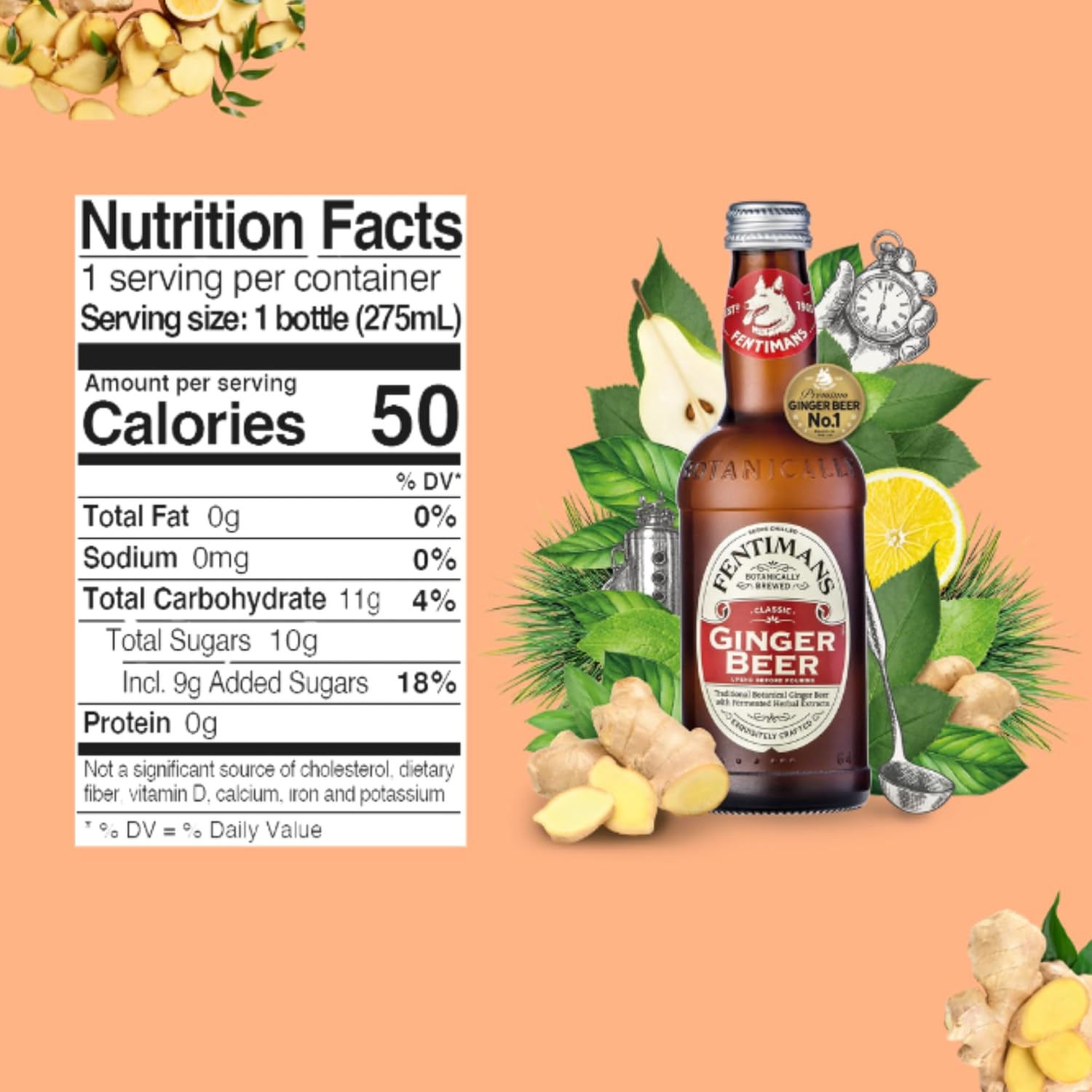
Fentimans
$44.99
In stock on Amazon
Check price on AmazonReed’s Extra Ginger Brew
Reed’s is the American incumbent. The brand has been producing ginger beer in the United States since 1987, predating the premium mixer boom by nearly two decades. Their Extra Ginger Brew variant — which is what most serious buyers are comparing against the UK imports — is notably spicier and carries a more assertive ginger heat than Fever-Tree. Tasting Table’s “The Best Ginger Beer Brands Ranked” puts Reed’s among the top choices for straight sipping specifically because of that heat intensity, and VinePair’s “The Best Ginger Beers to Buy Right Now” echoes the same finding for spirit pairings where the base liquor has strong character of its own.
The cost profile is substantially lower than both competitors, particularly when bought in 12-can variety cases. The trade-off is carbonation: reviewer notes in Serious Eats’ “The Best Ginger Beers for Cocktails and Drinking Straight” and VinePair’s “The Best Ginger Beers to Buy Right Now” mention that Reed’s can lose its fizz faster than the imported alternatives, particularly in open cans. If you’re pouring two drinks back-to-back, that’s manageable. If you’re pouring one drink every 45 minutes at a dinner party, the back half of an open 12 oz can may underperform.
Best for: Bourbon and dark-spirit drinks, straight sipping, high-volume setups where ginger intensity matters more than carbonation longevity.
Q
$20.94
In stock on Amazon
Check price on AmazonQ Mixers Ginger Beer
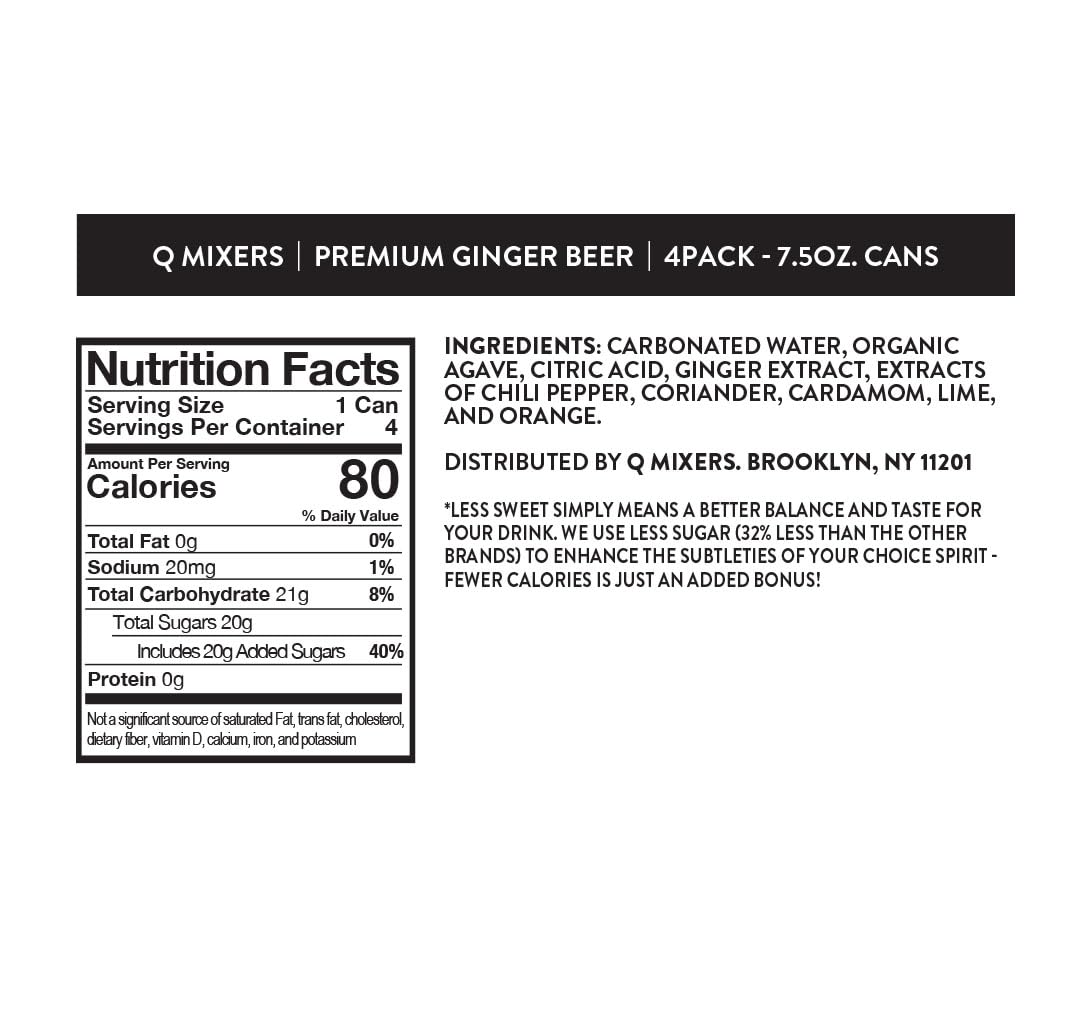
Q Mixers is the youngest of the three (founded 2007) and the most explicitly cocktail-focused in its branding. Q’s product materials emphasize higher carbonation pressure than industry standard and the use of organic agave as the sweetener in place of cane sugar. Serious Eats’ “The Best Ginger Beers for Cocktails and Drinking Straight” has flagged Q’s carbonation as a genuine differentiator from its competitors, describing it as especially effective for drinks served over full ice packs where carbonation dilution is a real concern. The heat profile sits between Fever-Tree’s restraint and Reed’s assertiveness.
The 7.5 oz can format is notable from an operational standpoint: it’s a reasonable single-cocktail portion that minimizes the open-can waste problem that dogs Reed’s 12 oz cans. Whether the agave sweetener reads as a benefit or a liability depends on your spirit pairing — it performs well with botanical spirits like gin, and less clearly with bourbon, where the caramel-forward flavor profile of the spirit doesn’t always align with agave’s distinctive sweetness.
Best for: Gin-based cocktails, boutique bar programs, event catering where carbonation consistency matters across a multi-hour service window.
Fever-Tree
$36.72
In stock on Amazon
Check price on AmazonThe Numbers: What You’re Actually Paying Per Ounce
Here’s where the conversation gets concrete. Prices below reflect typical retail pricing across major online beverage retailers and direct-to-consumer storefronts as of mid-2026. Per-ounce figures are based on the most commonly purchased multipack formats.
| Brand | Common Format | Approx. Price | Per-Ounce Cost | Tier |
|---|---|---|---|---|
| Fever-Tree Ginger Beer | 24-pack 200mL bottles | ~$38–$44 | ~$0.24–$0.27/oz | Fentimans — $44.99 |
| Q Mixers Ginger Beer | 24-pack 7.5oz cans | ~$28–$34 | ~$0.22–$0.26/oz | Fever-Tree — $36.72 |
| Reed’s Extra Ginger Brew | 24-pack 12oz cans | ~$22–$28 | ~$0.09–$0.12/oz | Q — $20.94 |
At first glance, Reed’s looks like the obvious winner on cost. But the unit of analysis that actually matters for a bar or home entertainment setup isn’t cost per ounce in isolation — it’s cost per completed cocktail portion, accounting for how much of the bottle or can you use per drink and how much goes flat before the next pour.
Fever-Tree’s single-serve bottles eliminate the open-can problem entirely. Reed’s 12 oz cans deliver more mixer per unit, but the carbonation fade after an open can sits out is real. Q’s 7.5 oz cans split the difference — a near-single-cocktail portion with minimal waste and that reported carbonation intensity preserved through the final pour.
Food & Wine’s “The Best Ginger Beers, Tested and Reviewed” frames this well: the premium you pay for Fever-Tree or Q is partially an insurance policy against a flat or overly sweet drink, not just a brand signal. That reframe is useful when you’re calculating cost for an event rather than a single purchase.
Where Pairing Logic Diverges
Understanding flavor profiles isn’t just academic — it maps to specific spirit pairings in ways that determine whether you should be running all three brands in rotation or committing to one.
Bourbon-based drinks (Kentucky Mule, Dark and Stormy variants): Reed’s Extra Ginger heat pairs well here. Bourbon has enough caramel and wood character to support an aggressive ginger bite. VinePair’s “The Best Ginger Beers to Buy Right Now” consistently flags Reed’s as the better call when the spirit is doing heavy flavor lifting and you want the ginger to match rather than defer.
Vodka-based drinks (Moscow Mule, vodka buck): This is where Fever-Tree’s cleaner, drier profile earns its price premium. Because vodka is intentionally neutral, a sweeter or more aggressive mixer can overwhelm the drink. Serious Eats’ “The Best Ginger Beers for Cocktails and Drinking Straight” specifically recommends lighter-bodied, less sweet ginger beers for vodka applications — a description that aligns directly with Fever-Tree’s flavor profile.
Gin-based drinks (gin buck, gin mule variants): Q’s agave-sweetened profile and high carbonation work well with gin’s botanical complexity. Bon Appétit’s mixer coverage points to carbonation intensity as particularly important with botanical spirits, where the fizz helps carry aromatics to the nose rather than suppressing them under sweetness.
Straight sipping and mocktail applications: Reed’s and Fever-Tree both have committed straight-sipping followings. Tasting Table’s “The Best Ginger Beer Brands Ranked” consistently places Reed’s at the top for standalone drinking due to heat intensity. Fever-Tree’s dryness and fine bubble structure make it appealing to drinkers who prefer minimal sweetness.
The Decision Frame: If X, Then Y
You’ve now got the profiles, the math, and the pairing logic. Here’s how to use it cleanly.
If you’re stocking a home bar primarily for vodka cocktails and want zero risk of a disappointing drink for guests: Fever-Tree is the call. The per-ounce premium is real, but the single-serve format eliminates carbonation waste, and the flavor profile is purpose-built for this use case. The 24-pack is the format where the price-per-bottle comes closest to reasonable for regular buyers.
Fentimans
$44.99
In stock on Amazon
Check price on AmazonIf you’re a bourbon or dark-spirit drinker who cares more about ginger punch than mixer elegance: Reed’s Extra Ginger Brew delivers the most heat per dollar by a significant margin. The carbonation trade-off is manageable if you’re pouring in sequence. The 24-can multipack is where the value case is strongest, and for high-volume home entertaining it’s hard to argue against.
Q
$20.94
In stock on Amazon
Check price on AmazonIf you’re running a boutique bar program or catering cocktail events where carbonation consistency matters across a multi-hour service window: Q Mixers is the operational choice. The 7.5 oz can format reduces mid-can waste, the carbonation holds up longer per the reviewer notes in Serious Eats’ “The Best Ginger Beers for Cocktails and Drinking Straight,” and the agave profile gives you flexibility across spirit categories. The price sits close to Fever-Tree at scale, but the consistency dividend is worth it in a professional context.
Fever-Tree
$36.72
In stock on Amazon
Check price on AmazonIf you’re building a curated gift pack or hosting an event with mixed preferences: There’s a strong case for running all three simultaneously. A Fever-Tree, Q, and Reed’s variety spread lets guests and bartenders dial in the heat and sweetness level they prefer, and the comparative tasting element becomes part of the event itself. For gifting, Fever-Tree’s glass-bottle aesthetic justifies its packaging premium in a way that cans simply don’t.
The ginger beer category looks simple until you start running the numbers. Once you do, the brand that fits your setup becomes clear — and the margin between a fine drink and a genuinely great one turns out to be smaller than the price gap between these three brands suggests.
How the Tiers Compare
For readers weighing price against capability, here’s how the standout picks break down by budget level.
Best Budget Pick
At $20.94, this is the value option in this lineup — it covers the essentials without the premium-tier cost, the smart starting point if you’re weighing price against capability.
Q
$20.94
In stock on Amazon
Check price on AmazonBest Mid-Range Pick
At $36.72, this is the balanced choice — it closes most of the gap to the high end while staying well short of premium pricing, which is why it’s the pick most buyers actually land on.
Fever-Tree
$36.72
In stock on Amazon
Check price on AmazonBest Premium Pick
At $69.79, this is the top performer here — you pay for it, but if capability and longevity matter more than the upfront cost, this is the one to beat.
Fentimans
$44.99
In stock on Amazon
Check price on Amazon