Ginger beer — not to be confused with ginger ale, which is milder and sweeter — is a carbonated soft drink made with real ginger root, and ideally it delivers a sharp, spicy kick alongside its fizz. It’s the backbone of classic cocktails like the Moscow Mule and the Dark ‘n’ Stormy, but plenty of people drink it straight because a great ginger beer is genuinely interesting on its own. The problem is that “premium” on the label doesn’t always mean “spicy” in the glass. If you’ve stocked a bar with Fever-Tree or grabbed a case of Fentimans for a party and felt vaguely let down by the heat level, you’re not alone — and you’re in the right place. This breakdown cuts through the marketing to tell you which bottle actually delivers heat, which one wins on complexity, and which one your guests will reach for on a hot Saturday afternoon without needing a cocktail recipe to justify it.
| EDITOR'S PICKFentimans Sparkling Ginger Beer… | Mid-tierFever-Tree Ginger Beer – Premiu… | Budget pickQ GINGER BEER with Real Ginger… | |
|---|---|---|---|
| Pack count | 12 | 24 | — |
| Bottle size | 9.3 fl oz | 6.8 fl oz | 7.5 fl oz |
| Calories | — | — | 80 per can |
| Sweetener | — | — | Organic agave |
| Craft-brewed | ✓ | — | — |
| Price | $44.99 | $36.72 | $20.94 |
| See on Amazon → | See on Amazon → | See on Amazon → |
The Core Tension: Flavor Complexity vs. Spice Heat
Here’s the tradeoff that nobody puts on the label: the craft ginger beer category has largely optimized for flavor complexity at the expense of actual spice intensity. Botanically brewed, slow-fermented, and botanically layered products can taste sophisticated and rounded — and still leave you wondering where the burn went.
Across editorial tasting panels compiled by Serious Eats in their drinks editorial “The Best Ginger Beers” and VinePair in their staff review roundup “The Best Ginger Beers for Moscow Mules and Beyond,” the pattern that emerges is consistent: buyers who purchase premium ginger beer for cocktails or for the sensory experience of spice are frequently disappointed by brands that lead with sweetness and aromatic ginger flavor but pull back before delivering heat. The buyer who expects to feel something in the back of their throat — the way a well-made homemade ginger beer does — is shopping in a category where most products won’t meet that standard.
That gap matters enormously when you’re making sourcing decisions. Buying 24 bottles of a ginger beer that turns out to be mild is a real cost: money, storage space, and a bar program or pantry that now underperforms. So let’s name the tradeoffs brand by brand.
Brand-by-Brand Breakdown
Fever-Tree: The Standard-Setter That Undershoots on Spice
Fever-Tree Ginger Beer is the most widely stocked premium ginger beer in boutique retailers, specialty grocers, and upscale bar programs across the U.S. as of mid-2026, and its reputation is largely deserved — with one important caveat. Tasting Table’s staff ranking “Every Major Ginger Beer Ranked” and Food & Wine’s cocktail mixer review “Best Ginger Beers for Cocktails” both position Fever-Tree as a benchmark for flavor quality, praising its use of three varieties of ginger root and its balanced carbonation. What both sources also note, in different framings, is that the product’s heat level is restrained.
Reviewer sentiment documented in those editorial panels is consistent: tasters report getting flavor without meaningful spiciness. One frequently cited characterization describes Fever-Tree Standard as ginger-forward but not spicy, which is precisely the distinction that matters when you’re buying for a Moscow Mule where the ginger beer needs to stand up against the sharpness of vodka and lime.
Fever-Tree Light compounds this issue. Described in the Tasting Table staff tasting “Every Major Ginger Beer Ranked” as noticeably milder than regular Fever-Tree — which was already on the gentle end — the light version is not the answer if spice is your primary purchase criterion. It earns its place as a lower-calorie, mixable option with genuine ginger flavor, but buyers expecting regular Fever-Tree’s profile and receiving something softer have noted their surprise.
The price escalation problem is Fever-Tree-specific and worth flagging for repeat buyers. At current mid-2026 retail, Fever-Tree 24-packs are priced at a meaningful premium over Q and Fentimans equivalent quantities, and that trajectory affects the value calculation for high-volume bar buyers and households on recurring delivery plans.
Packaging note: Glass-bottle Fever-Tree varieties have generated repeated complaints about shipping damage on online orders. Reviewers describe bottles arriving broken, attributed to inadequate inner padding in standard shipping configurations. If you’re ordering glass-bottle Fever-Tree, that risk is worth factoring into your total cost.
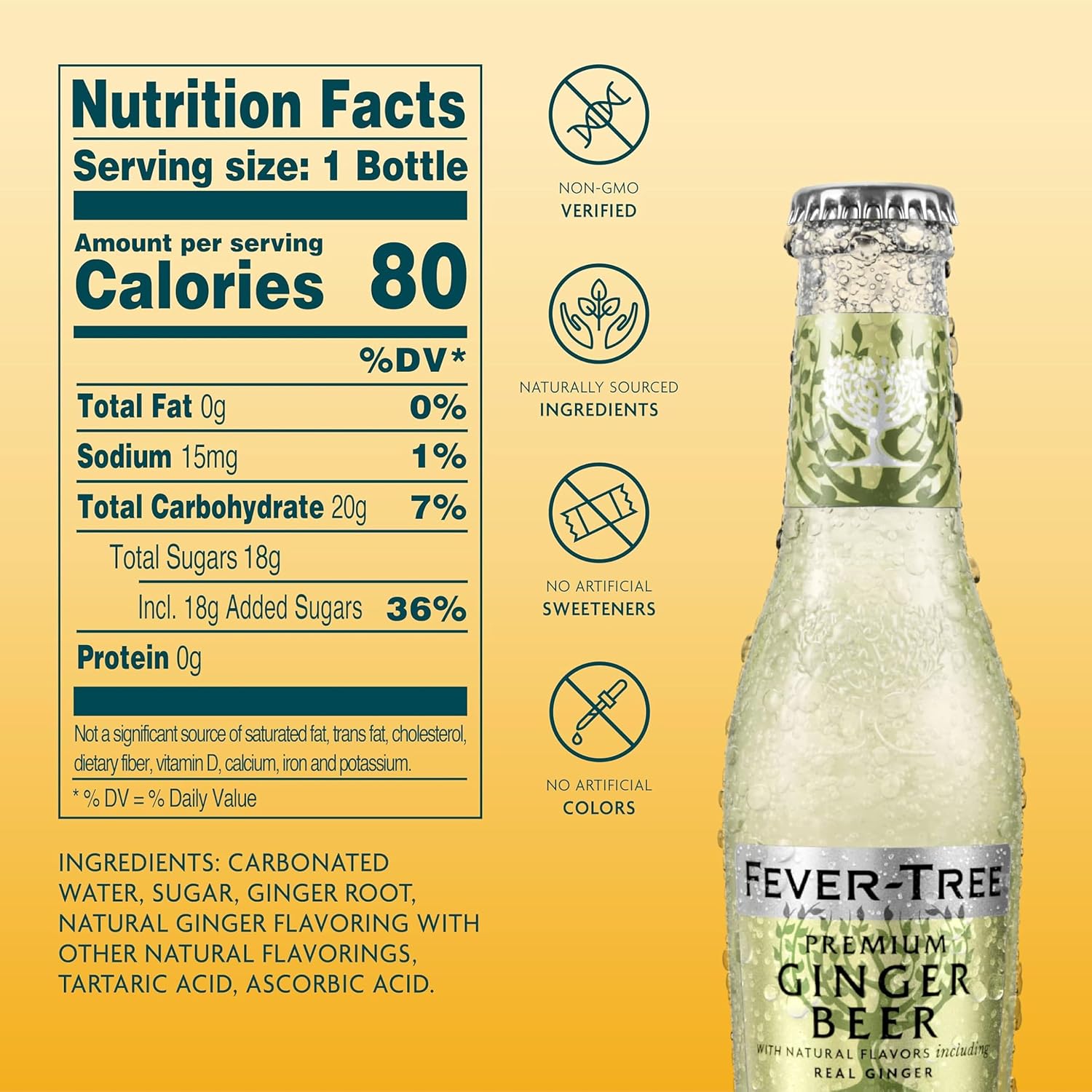
Fever-Tree
$36.72
In stock on Amazon
Check price on AmazonFentimans: Fermentation Depth for the Flavor-Curious Buyer
Fentimans Ginger Beer is the product in this category most often described in terms of authenticity — and the reasons are rooted in its actual production method. Fentimans uses a botanical brewing process that involves genuine fermentation, which creates a complexity of flavor that purely carbonated ginger beverages can’t replicate. Serious Eats’ ginger beer drinks editorial “The Best Ginger Beers” identifies fermentation as a key differentiator for consumers looking for a drink with layered, evolving flavor rather than a flat sweet-ginger note.
Is Fentimans actually fermented? Yes — the brand uses a traditional botanical brewing process with a ginger root extract that undergoes fermentation before carbonation. The alcohol content in the finished product is below 0.5% ABV, classifying it as non-alcoholic, but the fermentation step contributes to the flavor complexity that distinguishes it from brands using ginger flavoring or extract alone.
Spice positioning: Fentimans lands in the middle of this three-brand comparison for heat. It delivers more spice complexity than Fever-Tree Standard, with the fermentation adding a slightly funky, tangy edge that amplifies the perception of spice. It is not, however, the blunt-force heat instrument of the category — that position belongs to Q.
Food & Wine’s editorial review “Best Ginger Beers for Cocktails” notes that Fentimans is the brand most likely to satisfy drinkers who came to ginger beer through culturally specific reference points — places and traditions where fermented ginger beverages are a real baseline — rather than through mainstream American soda culture. That’s a meaningful framing for a specific and demanding buyer.
Glass bottle shipping damage is also a Fentimans issue. Reviewers ordering the 9.3 oz glass bottles online report the same pattern as Fever-Tree glass: inadequate packaging and bottles arriving broken. This is a category-level problem with glass-bottle specialty sodas, not a brand-specific quality issue, but it represents real cost exposure on premium orders.
Fever-Tree
$36.72
In stock on Amazon
Check price on AmazonQ Ginger Beer: The Cocktail Buyer’s Clearest Answer
If Fever-Tree is the flavor-first choice and Fentimans is the depth-and-complexity choice, Q Ginger Beer is the spice-first choice — and it isn’t close. Across VinePair’s mixer roundup “The Best Ginger Beers for Moscow Mules and Beyond,” Tasting Table’s staff tasting “Every Major Ginger Beer Ranked,” and Food & Wine’s cocktail-specific review “Best Ginger Beers for Cocktails,” Q Ginger Beer earns the most consistent consensus for actual heat intensity among mainstream premium brands. The word editorial tasters reach for is “aggressive,” which in this context is a compliment.
Q achieves this through a specific formulation approach: high carbonation, real ginger, and a restrained sweetness level that lets the spice read clearly rather than getting buried under sugar. Serious Eats’ drinks editorial “The Best Ginger Beers” notes that the lower residual sweetness is a deliberate mixer-oriented design choice — less sugar means the ginger beer won’t overwhelm or sweeten a cocktail, it will contribute structure and heat.
Moscow Mule performance: Q is the consensus pick for Moscow Mules among editorial reviewers who evaluate ginger beers specifically in cocktail contexts. The spice holds up against vodka; the carbonation is assertive enough to stay present after ice dilution; the sweetness doesn’t compete with lime. Tasting Table’s staff tasting describes the heat signature as the clearest differentiator between Q and softer competitors — reviewers who switch back to Fever-Tree Standard after benchmarking Q describe the latter as lacking the heat they’d come to expect.
Can you drink Q on its own? Yes, and editorial sources consistently say so — but with a caveat. Q is formulated as a mixer first, which means the carbonation is higher than most stand-alone sipping sodas and the sweetness is lower than what many casual drinkers expect. Buyers who like the Fever-Tree flavor profile but want more spice may find Q slightly austere. Buyers who come from a background of very dry, very fizzy soda — or who are simply heat-seekers — often prefer Q straight over ice.
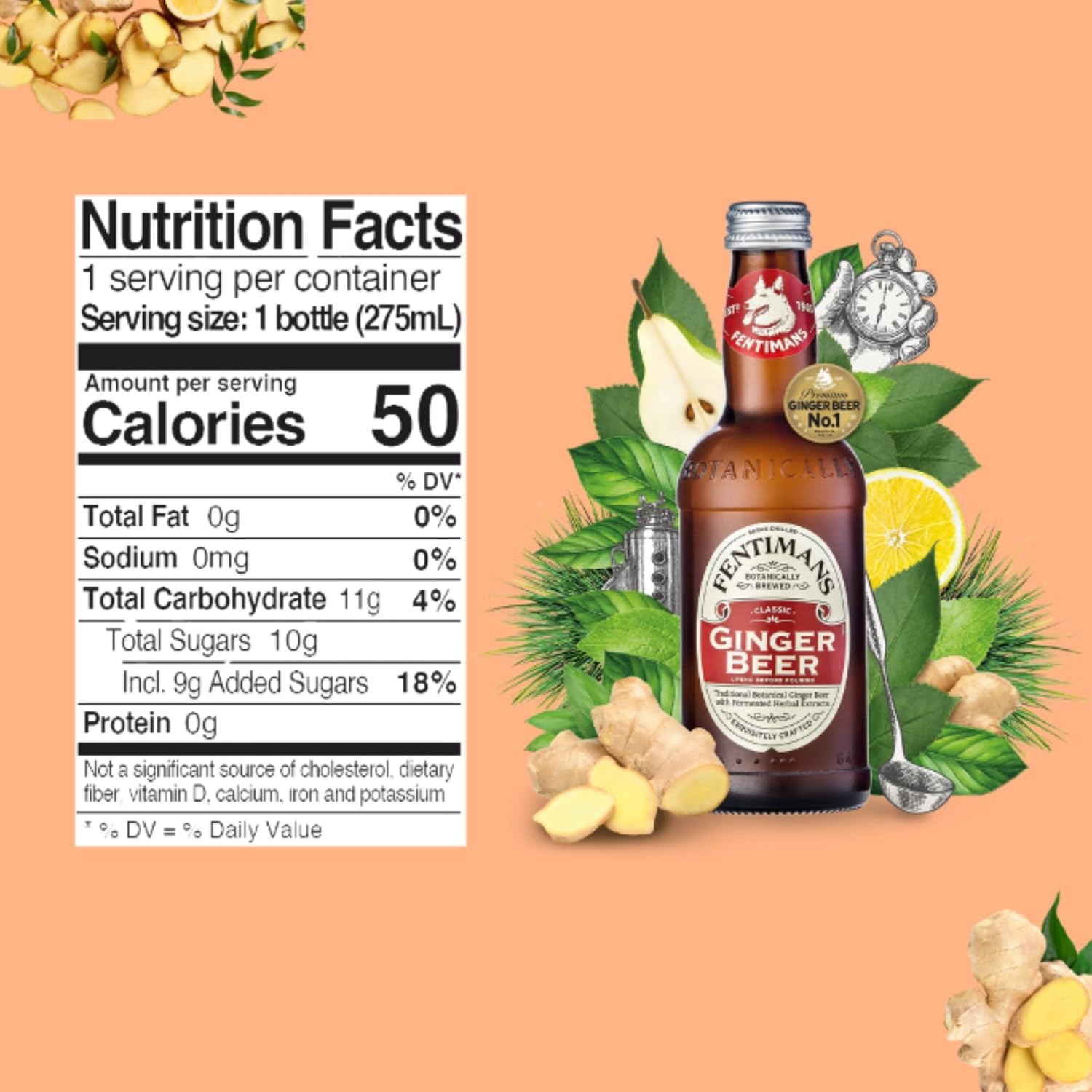
Fentimans
$44.99
In stock on Amazon
Check price on AmazonSide-by-Side Comparison
| Brand | Spice Intensity | Fermented? | Glass Bottle Shipping Risk | Best Use Case | Tier |
|---|---|---|---|---|---|
| Q Ginger Beer | High | No | Low (can format available) | Cocktail mixing, Moscow Mules | Fentimans — $44.99 |
| Fentimans | Medium | Yes | High (glass bottles) | Sipping, flavor-forward cocktails | Fever-Tree — $36.72 |
| Fever-Tree Standard | Low–Medium | No | Medium (glass varieties) | Mixed drinks where heat isn’t priority | Fever-Tree — $36.72 |
| Fever-Tree Light | Low | No | Medium | Low-calorie mixing | Q — $20.94 |
The Cock ‘n Bull Variable
A fourth brand deserves mention because it appears in editorial reviews for all three primary brands as a point of comparison: Cock ‘n Bull Ginger Beer. Buyers who seek it out are loyal and specific in their praise — describing it as a legacy American ginger beer with genuine heat and a sweetness level that sits between Q’s restraint and Fever-Tree’s rounded profile. VinePair’s roundup “The Best Ginger Beers for Moscow Mules and Beyond” acknowledges Cock ‘n Bull as a historically significant entry in the category, particularly given its association with the original Moscow Mule’s popularization in the United States.
The defining feature of Cock ‘n Bull as a purchasing decision is its distribution: it is essentially unavailable in local retail chains across most U.S. markets, which drives its buyers to online ordering specifically. If you find it in a local store, that’s an anomaly. The brand’s audience is narrow precisely because discovery requires either regional luck or deliberate searching.
Frequently Asked Questions
Which ginger beer is the spiciest and most intense? Based on aggregated editorial consensus across VinePair’s “The Best Ginger Beers for Moscow Mules and Beyond,” Tasting Table’s “Every Major Ginger Beer Ranked,” and Food & Wine’s “Best Ginger Beers for Cocktails,” Q Ginger Beer earns the clearest endorsement for heat intensity among widely available premium brands. Buyers who prioritize burn over flavor complexity consistently choose Q.
Is Fentimans ginger beer actually fermented? Yes. Fentimans uses a botanical brewing process that includes a fermentation step, resulting in a finished product below 0.5% ABV. The fermentation contributes to Fentimans’ characteristic flavor complexity and slight tartness — meaningfully different from brands using ginger extract or flavoring alone, as noted in Serious Eats’ drinks editorial “The Best Ginger Beers.”
Which ginger beer is best for Moscow Mules? Q Ginger Beer is the cocktail-mixer consensus pick for Moscow Mules across the editorial sources reviewed here. Its high carbonation, low residual sweetness, and strong ginger heat hold up against vodka and lime in ways that milder brands don’t. Fentimans is a close second for buyers who want fermentation complexity in the drink. Fever-Tree Standard works well when heat intensity isn’t the primary goal.
Why do glass ginger beer bottles sometimes arrive broken from online orders? This is a recurring cross-brand complaint documented in editorial buyer notes for both Fentimans and Fever-Tree glass-bottle products. The issue is inadequate inner packaging — glass bottles require foam or molded inserts to survive standard carrier handling, and some configurations ship with insufficient protection. It is not a brand quality issue, but it is a real cost risk on glass-format orders. Buyers ordering glass-bottle specialty sodas should check recent packaging notes before ordering in quantity.
Is Fever-Tree Light ginger beer as spicy as the regular version? No. Tasting Table’s staff tasting “Every Major Ginger Beer Ranked” describes Fever-Tree Light as milder than standard Fever-Tree, which is already on the lower end of heat intensity for premium ginger beers. Buyers who want spice should not expect the Light version to compensate — it is a lower-calorie product optimized for mixing, not for spice delivery.
Is Q Ginger Beer good enough to drink on its own without mixing? Yes, with a caveat. Q’s high carbonation and low sweetness are designed for mixer performance, which means the drinking experience straight is more austere than Fentimans or Fever-Tree. Heat-seekers and dry-soda fans typically enjoy Q on its own. Buyers accustomed to sweeter premium sodas may find it dry. It’s worth ordering a small quantity to benchmark before committing to a case for straight sipping.
The Decision Rule
If you’re buying for cocktail performance and spice is the primary variable — choose Q. The editorial math is simple: Moscow Mule reviewers who’ve compared brands side by side at Tasting Table, VinePair, and Food & Wine come back to Q with the most consistency.
If you’re buying for a sipping experience, a culturally literate crowd, or a bar program where flavor depth matters as much as heat — choose Fentimans. The fermentation is real and it shows in the glass, and Serious Eats’ drinks editorial specifically flags it as the right choice for buyers with demanding flavor benchmarks.
If you’re buying for a mixed event where not everyone wants spice, you’re layering ginger beer into lower-heat cocktails, or you’re stocking a premium bar where the Fever-Tree brand carries its own signal value — Fever-Tree Standard still earns its place. Just don’t expect it to bite.
And if price trajectory is a factor in your sourcing calculus, Fever-Tree’s documented premium positioning at current mid-2026 retail is a real consideration for high-volume buyers. Q and Fentimans have remained more stable in price comparisons noted across editorial roundups, making them easier to budget across seasonal reorders and event planning.